E-Business
Sophos Identifies Top Ransomware Families in Africa

Cyber security vendor Sophos has identified the top ransomware families that affected Africa in 2017.
According to Sophos, the Ceber ransomware accounted for 80% of attacks in Africa, followed by WannaCry (17%), and others like Jaff (1%), Locky (1%) and Petya (0.5%).
One of the most active kinds of ransomware out there, Cerber encrypts the files of infected users and demands money in exchange for enabling access to their files. It works even if a user is not connected to the Internet, so they can’t stop it by unplugging their PC.
Cerber, sold as a ransomware kit on the Dark Web, remains a dangerous threat, says Sophos, adding the creators of Cerber continuously update the code and charge a percentage of the ransom that the “middle-men” attackers receive from victims.
Regular new features make Cerber not only an effective attack tool, but perennially available to cyber criminals, the cyber security firm notes.
“This Dark Web business model is unfortunately working and, similar to a legitimate company, is likely funding the ongoing development of Cerber. We can assume the profits are motivating the authors to maintain the code,” says Dorka Palotay, SophosLabs security researcher and contributor to the ransomware analysis in the SophosLabs 2018 Malware Forecast.
The WannaCry ransomware attack was a May 2017 worldwide cyber attack by the WannaCry ransomware cryptoworm, which targeted computers running the Microsoft Windows operating system by encrypting data and demanding ransom payments in the Bitcoin crypto-currency.
“Looking at the whole world, WannaCry was responsible for 45.3% of the ransomware attacks, while in Africa this value is only 17%,” Palotay says.
“In Africa, clearly Cerber was the biggest ransomware threat this year, since 80% of the ransomware lookups was caused by Cerber, while this number is only 44.2% if we look at the whole world. Regarding the smaller families, the results are very similar.”
The SophosLabs 2018 Malware Forecast report recaps ransomware and other cyber security trends based on data collected from Sophos customer computers worldwide from 1 April to 3 October 2017.
One key finding shows that while ransomware predominately attacked Windows systems in the last six months, Android, Linux and MacOS platforms were not immune.
“Ransomware has become platform-agnostic. Ransomware mostly targets Windows computers, but this year, SophosLabs saw an increased amount of crypto-attacks on different devices and operating systems used by our customers worldwide,” says Palotay.
She notes that for the first time Sophos saw ransomware with worm-like characteristics, which contributed to the rapid expansion of WannaCry.
“This ransomware took advantage of a known Windows vulnerability to infect and spread to computers, making it hard to control.
“Even though our customers are protected against it and WannaCry has tapered off, we still see the threat because of its inherent nature to keep scanning and attacking computers. We’re expecting cyber criminals to build upon this ability to replicate as seen in WannaCry and NotPetya, and this is already evident with Bad Rabbit ransomware, which shows many similarities to NotPetya.”
E-Business
Nigeria @ Risks Losing Digital Control- NiRA

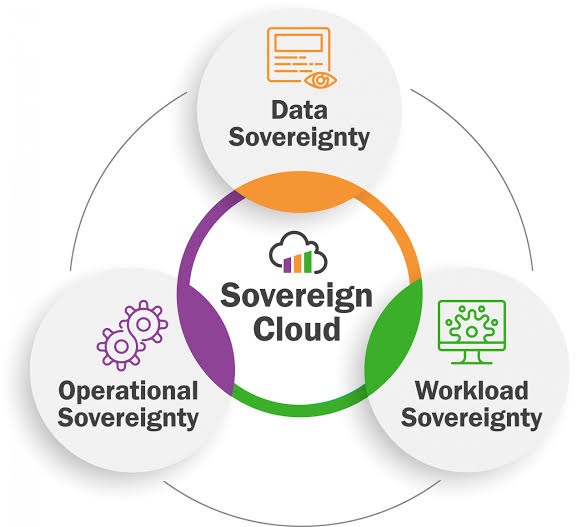
Nigeria is at risks losing digital control of its cyberspace following the alarming surge in cyberattacks in the country.

The surge show a dangerous shift from opportunistic cybercrime, facing approximately 4,710 threats weekly and ranking as a top target for cybercriminals in Africa.
Nigeria Internet Registration Association (NiRA) recently warned that the trend weakens the country’s control over its digital identity and limits economic gains from its expanding online ecosystem.
Speaking at the .ng Media Advocacy and Capacity Building Initiative for the Nigerian Information Technology Reporters Association (NITRA), organised by NiRA in Lagos, Adesola Akinsanya, president, NiRA, questioned who truly owns Nigeria’s digital presence, stressing that the answer lies in deliberate choices regarding domain name adoption and the narratives shaping the country’s digital ecosystem.
He likened the widespread adoption of foreign domains to building assets on land owned by others, where control, legal authority, and economic benefits ultimately reside outside the country.
According to him, many Nigerian businesses operating on domains such as .com are effectively anchoring their digital operations on infrastructure beyond national control.
Industry stakeholders at the event noted that while Nigeria’s digital economy continues to expand driven by increasing internet penetration and a vibrant tech ecosystem a significant portion of the value generated is lost through payments tied to foreign domain registration and hosting services.
Seyi Onasanya, chief operating officer, NiRA, described domain names as “digital real estate,” emphasizing their role as a foundational layer of the modern economy.
She stated that countries that prioritise local domain systems are better positioned to retain value, strengthen trust, and enhance digital competitiveness.
Onasanya added that although country-code domains account for nearly 40 percent of global domain registrations, Nigeria still records relatively low adoption of its .ng domain despite its large population and millions of small and medium enterprises.
Experts at the forum warned that dependence on foreign domains contributes to capital flight, weakens national branding, and exposes businesses to external regulatory risks.
They stressed that every domain name represents a potential economic asset linked to transactions, jobs, and overall GDP growth.
Beyond economic implications, speakers highlighted trust and security as critical issues.
Ridwan Badmus, legal and cybersecurity expert, noted that Nigeria’s regulatory framework is evolving to support a more secure digital environment, including policies encouraging government institutions to adopt local domains and hosting services.
He explained that the .ng domain benefits from enhanced security features such as DNS Security Extensions (DNSSEC) and improved monitoring systems, which strengthen resilience against cyber threats.
E-Business
CIBN Allegedly Hit by 250GB Data Breach

Chartered Institute of Bankers of Nigeria (CIBN), the country’s apex professional body for bankers, is reportedly at the centre of a major cybersecurity incident following claims that its internal database estimated at about 250GB has been compromised and leaked online by an unidentified threat actor, according to the Guardian.

The alleged breach, which surfaced recently on underground cybercrime forums, is said to involve a wide range of sensitive institutional and personal data belonging to members of the banking profession.
According to preliminary assessments of sample files circulating online, the exposed information reportedly includes full names, email addresses, phone numbers, residential and business addresses, membership records, scanned identification documents, certificates, and even internal source codes linked to digital systems.
While the authenticity of the full dataset has not been independently verified, cybersecurity observers note that the scale of the alleged leak is consistent with a growing pattern of attacks targeting financial institutions and professional bodies across Nigeria’s banking ecosystem.
Chartered Institute of Bankers of Nigeria, established in the early 1960s and chartered to regulate banking professionalism in the country, plays a central role in setting ethical and educational standards for bankers nationwide.
It counts major financial institutions, including the Central Bank of Nigeria and commercial banks, among its corporate members.
In recent years, the institute has itself acknowledged rising cyber risks affecting the financial sector, warning that banks and related institutions face increasing exposure to digital attacks, including website hijacking, ransomware threats, and data breaches targeting sensitive financial information.
This latest allegation adds to a series of reported cyber incidents involving Nigerian financial institutions, where attackers have increasingly focused on exploiting personal data for identity theft and phishing schemes.
Cybersecurity analysts say Nigeria has witnessed a broader surge in data breaches across banking, telecoms, and government systems, with millions of records reportedly circulating on the dark web in recent years.
The alleged CIBN breach, if confirmed, would further highlight vulnerabilities in institutional data protection frameworks and the growing sophistication of cybercriminal operations targeting financial ecosystems.
However, CIBN has not issued an official confirmation or denial regarding the alleged breach.
But, the need for immediate forensic investigation, member notification protocols, and a comprehensive audit of the institute’s digital infrastructure cannot be overlooked.
Authorities and data protection regulators are also expected to assess the claims as part of broader efforts to curb escalating cyber threats within Nigeria’s financial services sector.
E-Business
Kaspersky MDR Introduces Major Updates, Strengthening Detection and Investigation Capabilities

Kaspersky Managed Detection and Response now offers enhanced automation and incident management features, introduces a new offering for industrial and embedded systems, and delivers an improved customer experience. These advancements bolster security and enable a faster, more efficient response to threats.

Kaspersky MDR is adopted by organisations across a vast range of industries worldwide. In 2025, the solution detected up to three high-severity incidents driven by human activity daily, reducing response time by approximately 22% compared to the previous year.
This result, highlighted in a Global Report by Kaspersky Security Services, reflects enhanced efficiency driven by advanced automation, increased detection rules and the continuously perfected and dedicated expertise of Kaspersky’s specialists.
Keeping in mind that threats are becoming increasingly sophisticated and challenging to detect, Kaspersky recognises that solutions must be continuously refined. This principle is also applied to Kaspersky MDR, which is now being enhanced through a series of important updates designed to improve its value and deliver a better experience for customers.
New MDR offering for embedded and industrial systems
Kaspersky Embedded Systems Security 4.0 (KESS) and KICS for Nodes 4.5 now features a unified MDR agent. For embedded environments, this integrated approach simplifies onboarding and enhances manageability, enabling faster and more dependable MDR deployment. In industrial settings, it decreases operational complexity, strengthens resilience, and streamlines ongoing maintenance.
Enhanced detection and investigation capabilities
Kaspersky MDR now benefits from enhanced container telemetry provided by Kaspersky Endpoint Security for Linux 12.4. This advancement significantly improves visibility into containerised environments, boosts threat detection accuracy, and accelerates the identification of risks within container infrastructures.
Kaspersky MDR now also supports automated file transfers upon analyst request through Kaspersky Anti Targeted Attack 8.0 and Kaspersky Next EDR Expert 8.0. With advanced MDR integration enabled, relevant files are shared automatically, eliminating manual end-user actions. This streamlines collaboration, accelerates incident investigations, and enables faster responses to targeted attacks.
MDR incidents can now be escalated directly from the MDR portal to the Kaspersky Global Emergency Response Team for comprehensive investigation and response. This capability ensures end-to-end management of complex cyberattacks, from the initial response and evidence collection to identifying the primary attack vector and developing an effective mitigation plan.
MDR incidents can now be automatically exported to Kaspersky SIEM 4.0 for advanced analysis and correlation with other security events. This enhancement expands investigative capabilities while maintaining MDR as the central hub for incident management and response.
Enhanced accessibility and customer experience
A one-click incident escalation from Kaspersky Next EDR Expert to MDR is now available, empowering customers with greater control over incident management and ensuring rapid access to expert analysis and response guidance.
Kaspersky MDR now also provides enriched incident notifications via Telegram that allow real-time updates with priority levels, affected assets, tailored recommendations, and direct links to incidents, enabling customers to access vital information instantly without the need to log into the portal.
Furthermore, the MDR portal has been fully optimised for mobile devices and tablets, offering comprehensive access to all core functionalities. These improvements collectively allow customers to monitor incidents and manage their MDR services anytime and anywhere, thereby significantly increasing responsiveness and operational agility.
“At Kaspersky, we are committed to continuously enhancing our MDR to stay ahead of evolving cyber threats and protect organisations worldwide from all industries, 24/7. These latest updates bring extended integrations with the Kaspersky product portfolio, smarter automation and new features that enable quicker and even more precise responses – all to improve user experience because in today’s threat landscape, agility and precision are more critical than ever,” comments Renat Turianov, Kaspersky MDR Product Owner at Kaspersky.
E-Business2 days agoLagos Unveils Cybersecurity Guidelines to Tackle Rising Digital Threats
E-Financial2 days agoCitiTrust Heads to Appeal Court over Alleged Ponzi Scheme
Telecom2 days agoNBC Warns Broadcasters Against Bullying Guests, Passing Opinions as Facts
Telecom2 days agoWATRA Secretary sees Resilience as a Critical Link in West Africa’s Digital Economy
News2 days agoFG Borrows N100Bn from Unclaimed Dividends, Dormant Bank Accounts
Telecom2 days agoTech Shake-Up: Snap Cuts Hundreds as AI Drives Efficiency Push
Telecom2 days agoWhy Nigeria Must Embrace .ng Now – NiRA Reveals Five Critical Steps
News2 days agoFG Carpets W/Bank, Denies Alleged Diversion of Federation Revenue