The 2.3GHz frequency band evokes so much emotion each time it is mentioned and it did live up to its controversial nature as divergent views greeted the planned licensing of the remaining slot on the frequency band most commonly used for broadband wireless commercial service delivery.
The 2.3GHz frequency band is considered very important in the race leading up to broadband revolution because it helps operators provide mobile services that are potentially much more transformative than any lone technological item and it is the next cash cow for financially haemorrhaging telcos.
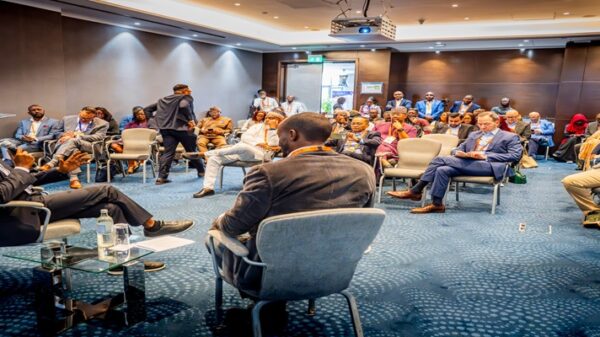
At stakeholders’ forum on the best option for licensing the remaining slot on the 2.3GHz yesterday, major internet service providers in the country, rejected the plan by the Nigerian Communications Commission (NCC) to auction the 2.3GHz frequency band on which they operate.
They said that licensing another operator on 2.3GHz will not be in the interest of the country.
NCC had already licensed part of the 2.3 GHz frequency band (TDD) in slots of 20 Mhz per operator to three operators- Mobitel, Spectranet and Multi-Links.
Swift Networks on the other hand is a licensed Fixed Wireless Operator operating in the 3.5GHZ frequency Spectrum.
Atul Ojiha, chief operating officer, Spectranet in a paper presented on behalf of Mobitel, Spectratnet and DoPC, advised NCC to allot 10MHz extra each to the three existing operators that had expressed willingness to negotiate and pay for the additional spectrum frequency.
The remaining 10MHz, he said, should be used as guard bands to stop interference (a major technical issue significantly impairing delivery of efficient broadband services) among the three operators.
The absence of guard bands among existing operators in the 2.3GHz band, according to Ojiha, has been the cause of inter-operator interference and inter-system interference with other services on the 2.3GHz band.
The direct consequence of this, he said, was compromise quality of service, leading to poor customer experience as well as low adoption and, by extension, low revenue for operators.
Additional spectrum, according to Ojiha, will provide the affected operators with the needed capacity to deliver efficient and affordable broadband services to consumers.
This, he stressed, would further assist in deepening Internet penetration in the country.
“There is negligible non-existent fixed wire line infrastructure in the country. It’s not viable to build a wire line network due to the exorbitant cost of Right of Way and other bottlenecks; international bandwidth cost is very high in comparison to other parts of the world,” he said.
Nodding in agreement, Charles Anudu, managing director of Swift Networks said though the affected operators were Swift Networks’ competitors, the case on ground required that he should support them.
Anudu, said that rather than complicating the challenges among ISPs by licensing a fourth operator on the 2.3GHz, the NCC should allocate the 30MHz of the remaining slot to the three existing operators.
“Our regulator should not multiply the misery in the segment of the IT industry. We cannot strengthen the weak by weakening the strong. The more we continue to fragment the segment, the more miserable we will become,” he said.
According to him, no ISP in the country is currently offering real broadband experience to its customers due to inadequate spectrum.
“The reasons many ISPs cannot expand to other parts of the country is because they are hardly financially viable. This includes Swift Networks too. If they say they need 30GHz to expand their services, why not give it to them,” Audu said.
Mr. Johnson Salako, chief executive officer, Mobitel, warned that if the NCC auctioned the additional slot on the band to a new operator, it would compound the problems of the current operators.
He said, “The 2,3GHz spectrum is not the only spectrum that can be used for broadband service. The NCC has said it will be licensing the 2.5GHz spectrum, which means that there are huge opportunities for anybody who requires spectrum.”
According to Salako, limited spectrum restricts operators’ ability to migrate from the current WiMax-based technology, which is being phased out globally, further impairs the development of the sector.
He explained that newer technologies with ability to provide cheaper and more efficient broadband access depended heavily on adequate and dedicated spectrum.
The implication of auctioning the remaining slot on the 2.3GHz band to a new operator, according to the Mobitel boss, is that the three existing operators will remain stuck on the 20MHz and face the risk of being enmeshed in technology lock out.
Dr. Eugene Juwah, executive vice-chairman, NCC, said the forum was in line with the commission’s policy of participatory regulation among other things.
Juwah, who was represented by Okechukwu Itanyi , NCC’s executive commissioner , Stakeholder Management said that the objective was to provide an avenue for stakeholders and users of the 2.3 GHz band to discuss, criticise, exchange ideas and proffer options that would help the NCC in arriving at a decision on the further licensing of the remaining 40 MHz bandwidth in the band for the benefit of all Nigerians.
He said, “With global development centred on availability of broadband services, the commission is on a regular basis inundated with several requests for frequencies to deliver the services. This has posed severe challenges as the frequencies sought for are scarce.
“In no distant future, the industry predicts the development and indeed deployment of more spectral efficient technologies that would be able to deliver more with less frequency spectrum and also improve on interference mitigation techniques available for a harmonious and interference free coexistence.”
2.3Ghz Auction Rings Debate
cwadmin5 Mar 20130 Comments
The 2.3GHz frequency band evokes so much emotion each time it is mentioned and it did live up to its controversial nature as divergent views greeted the planned licensing of the remaining slot…
c
Published by
cwadmin
Trained and practicing journalist passionate about telecommunications, fintech, cybersecurity, and digital economy reporting.
You May Like

MTN Nigeria's ₦1.62 trillion network Investment builds 100 million subscribers using more data than ever

FG Plans Regulation of Internet Access for Nigerians below 16 Years

The Leadership Reset Powering West Africa’s Customer Experience Revolution

Digital Parks, Master Power Plan New Data Centre Facility in Lagos

GSM Revolution @25: Industry Leaders to Examine Nigeria’s Digital Future