The wind of ePayment system is blowing across the length and breadth of Nigeria’s economic courses with the maritime sector not left behind as the Council for the Regulation of Freight Forwarding in Nigeria (CRFFN) will by March 2012 unveil a multi-user payment card for her members Nigeria CommunicationsWeek can reveal.
CRFFN Act No. 16 of 2007 was enacted into law on 30th of April, 2007. The council was formally inaugurated on 18th of August, 2008 and charged with, among other responsibilities, to regulate and control the practice of freight forwarding, and to promote the highest standard of competence, practice and conduct among members of the profession.
The regulatory body is also responsible for determining the standards of knowledge and skill to be attained by persons seeking to be registered as freight forwarders in the country and raising those standards from time to time in accordance with international practice.
Mr. Olayiwola Shittu, member, CRFFN Governing Council, at a stakeholders meeting on ePayment put together by Intermarc Consulting limited, exclusively told Nigeria ComunicationsWeek that the multi-user card “works as an identity card for our members. It also works as an ATM card for transaction including payments of charges through PoS terminal.”
Apart from serving as a-cash-less economic tool, Shittu affirmed that the card operates as a data bank for the holder, “where the identity of the individual can be downloaded. And it also works as a Pass-ID into the control areas in the customs terminals.”
The role of operators in the maritime sector in raising the stake of corrupt practices in Nigeria following the United Nations/World Bank reports that with corruption, Nigeria’s economy as a nation has been wasted and drained to the tune of $350 billion or more through fraud and mismanagement since independence, Shittu, was optimistic that the introduction of multi-user card fort the freight forwarders would not only reduce movement of cash in the nation’s ports but would help track fraud in the system.
“If we get it right in the maritime industry through ePayment other sector in Nigeria will feel the impact, because people do not know the volume of cash that moves in the maritime industry. Our international frontiers via cargo clearance, is indeed a major contributor, as evidenced in the Corrupt Index study by Transparency International, 2008.
Speaking on measures adopted by the council to checkmate breaches of ethical conduct by practitioners, he said CRFFN set up an investigating panel last year as appropriate sanctions would soon be enforced on defaulters.
“Freight forwarding is a noble profession; nevertheless, there is a need to ensure compliance with standards in the freight forwarding business in the country. Before now, touting had been the order of the day at the ports. But owing to the fact that freight forwarding is an international business, there is the need for practitioners to imbibe international best practices in their respective businesses.”
“With the inauguration of the investigating panel, we have laid a solid foundation to re-position the freight forwarding business and profession in Nigeria,” he said.
Shittu also opined that freight forwarding could be used to boost employment and wealth creation in the country.
Freight Forwarders Fight Corruption with Multi-User Card
Comms Week28 Feb 20120 Comments
The wind of ePayment system is blowing across the length and breadth of Nigeria’s economic courses with the maritime sector not left behind as the Council for the Regulation of Freight…
C
Published by
Comms Week
Trained and practicing journalist passionate about telecommunications, fintech, cybersecurity, and digital economy reporting.
You May Like

Cyberattack Sends IMO Crashing Back to Earth

NCC’s Anti-Scam Platform Goes Live Next Month

Nigeria's $1 Trillion Dream and the Great Corporate Exodus
FG Targets 200 New Telecom Sites before December
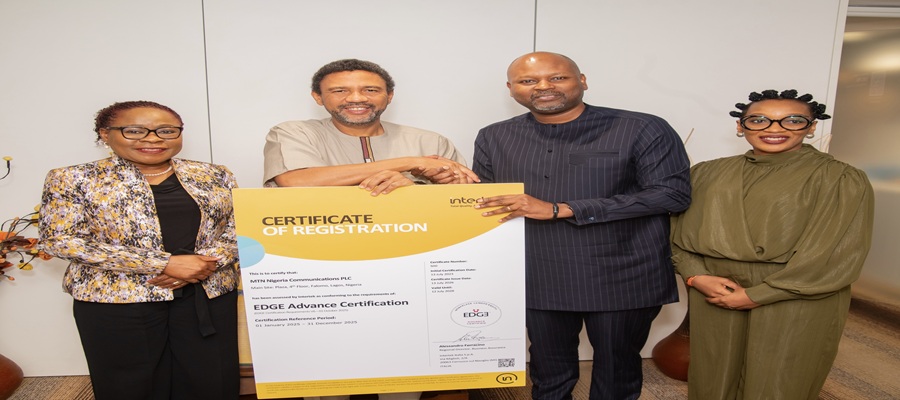
MTN Nigeria Receives EDGE Advanced Certification from IFC for Advancing Gender Equality