Avalanche of bandwidth from several undersea cables infrastructure to the country’s shores have crashed the cost of the commodity supplied through satellite technology by 50%, Nigeria CommunicationsWeek can now report.
Bandwidth a major ingredient for telecommunications service delivery especially for data and video has been elusive to operators in the country in terms of cost.
Officially, Nigeria is swimming in an ocean of bandwidth with the avalanche of undersea cable systems each with landing points on the shores of the country and the pace of the present broadband revolution in the country is hinged on availability and cost of bandwidth.
Nigeria CommunicationsWeek investigations revealed that few years ago a mega byte per second bandwidth from satellite technology was sold at $7,200, but presently the same mega byte is sold for $3,600 representing 50 percent drop in price.
This development is attributed to considerable drop in the cost of the commodity from undersea cable infrastructure which cost between $300 and $400 in Lagos.
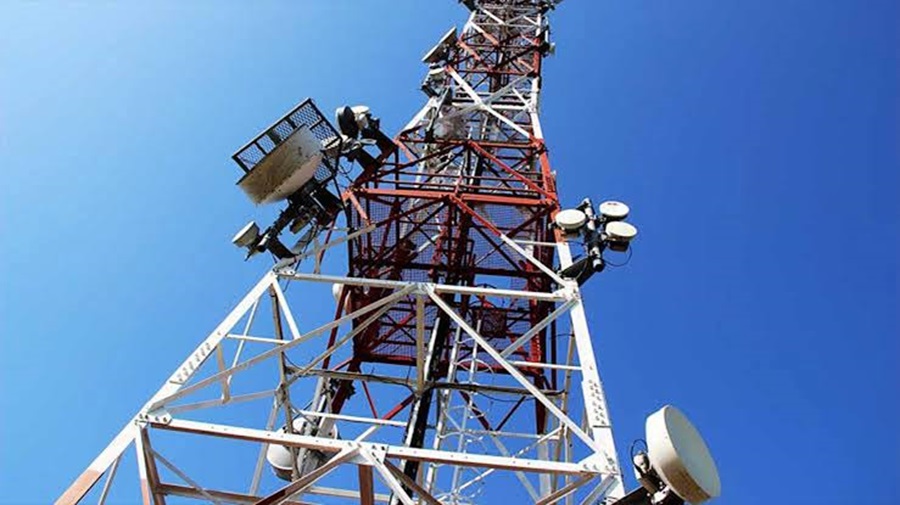
Satellite internet generally relies on three primary components: a satellite in Geostationary orbit (sometimes referred to as a geosynchronous orbit or GEO), a number of ground stations known as gateways that relay the Internet signal to and from the satellite via radio waves (Microwave), and a VSAT (Very-small-aperture terminal) dish antenna with Transceiver, located at the subscriber's home or business.
Other components of a satellite Internet system include a Modem at the user end that translates the signal from and back to a computer, and a centralized Network operations center (NOC) for monitoring the entire system.
Working in concert with a broadband gateway, the satellite operates a Star network topology where all network communication passes through the network's hub processor, which is at the center of the star.
With this configuration, the number of remote VSATs that can be connected to the hub is virtually limitless.
Nigeria CommunicationsWeek gathered that in spite of the huge price differentials between bandwidth from undersea cable and satellite technology, organizations and companies still subscribe to satellite bandwidth.
Anurag Garg, managing director, Direct On PC, a major Internet Service Provider, explained that, because of unstable nature of service from undersea cable which often times suffer from cuts which disrupt its services, big organizations that want 100 percent internet without downtime subscribe to satellite.
He noted that, lack of national fibre network has also made it necessary for operators to use satellite technology to serve cities where there are no fibre to link Lagos where undersea cable land.
It was also learnt that the use of bandwidth from satellite technology accounts for 20% of the 200 STMs demanded by operators and organizations in the country.
Undersea Cables Crash Cost of Satellite Bandwidth by 50%
cwadmin20 May 20130 Comments
Avalanche of bandwidth from several undersea cables infrastructure to the country’s shores have crashed the cost of the commodity supplied through satellite technology by 50%, Nigeria…
c
Published by
cwadmin
Trained and practicing journalist passionate about telecommunications, fintech, cybersecurity, and digital economy reporting.
You May Like

NCC’s Anti-Scam Platform Goes Live Next Month
FG Targets 200 New Telecom Sites before December

MTN Nigeria Receives EDGE Advanced Certification from IFC for Advancing Gender Equality

ALTON Backs Zero-rated Access to Educational Platforms Programme

NITDA Boss Outlines Vision for Data Centre Investment