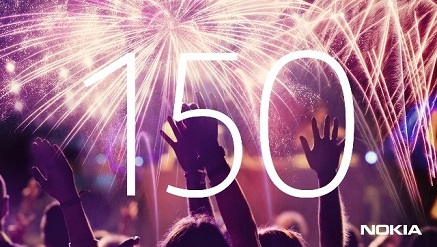
Nokia Networks, formerly Nokia Siemens Network, in its new avatar three strong businesses – Nokia Networks, HERE, and Nokia Technologies, as it celebrates 150 years of existence.
Literally, every nook and corner of the world, young and old; everywhere the Nokia brand is strongly etched on people’s heart.
Perhaps this is the only brand globally that everyone can instantly recall. Invention and reinvention has all along been the biggest driving force of the company to attain this cult status for the last one-and-half century.
The Finnish multinational company has a long history of successful change and innovation, adapting to shifts in markets and technologies.
From its humble beginning with one paper mill, the company established itself in many sectors over the time: cables, paper products, tires, rubber boots, consumer and industrial electronics, plastics, chemicals, telecommunications infrastructure and more.
In 1967, Nokia Corporation was created to have five businesses: rubber, cable, forestry, electronics and power generation.
It first entered the telecommunications equipment market in 1960 when an electronics department was established at Finnish Cable Works to concentrate on the production of radio-transmission equipment.
In 1982, Nokia introduced the first fully-digital local telephone exchange in Europe, and the world’s first car phone.
The first GSM call was made with a Nokia phone over the Nokia-built network of a Finnish operator called Radiolinja in 1991, and in the same year Nokia won contracts to supply GSM networks in other European countries.
By 1998, Nokia was the world leader in mobile phones, a position it enjoyed for more than a decade.
In 2007, Nokia combined its telecoms infrastructure operations with those of Siemens to form a joint venture named Nokia Siemens Networks (NSN).
NSN became a leading global provider of telecommunications infrastructure.
New Nokia and Vision
In 2013, Nokia moved to make two transformative transactions – purchased Siemens’ stake in NSN and announced the sale of all of Nokia’s Devices & Services business to Microsoft.
Following the closing of the devices business transaction in 2014, Nokia announced its new vision and strategy, building on its three strong businesses - Nokia Networks, HERE, and Nokia Technologies.
At the Capital Markets Day in London on Nov 14, 2014, the company outlined its vision: to expand the human possibilities of technology.
The company’ strategic pillars now are: to accelerate leadership in radio; to grow Professional Services; to win in technology transition to Telco Cloud; and target opportunities in Internet of Things and data analytics.
Kannan K., press and social media manager, Nokia Networks, in a statement to Nigeria CommunicationsWeek reiterated that “The Company has strategies in place for each business, which have been aligned around a common vision for Nokia.
“That vision is all about connecting things as well as people; billions of sensors are coming online to create the Programmable World”
Nokia technology is grounded in real life. It is pragmatic in its application of technology to serve people.
Its innovation focuses on meeting real human need, using technology to positively impact people’s lives each day.
Nokia Clocks 150, Says Reinvention Tops its Tech Leadership Mantra
Comms Week11 May 20150 Comments
Nokia Networks, formerly Nokia Siemens Network, in its new avatar three strong businesses – Nokia Networks, HERE, and Nokia Technologies, as it celebrates 150 years of existence. Literally, every…
C
Published by
Comms Week
Trained and practicing journalist passionate about telecommunications, fintech, cybersecurity, and digital economy reporting.
You May Like

NCC’s Anti-Scam Platform Goes Live Next Month
FG Targets 200 New Telecom Sites before December

MTN Nigeria Receives EDGE Advanced Certification from IFC for Advancing Gender Equality

ALTON Backs Zero-rated Access to Educational Platforms Programme
NITDA Boss Outlines Vision for Data Centre Investment