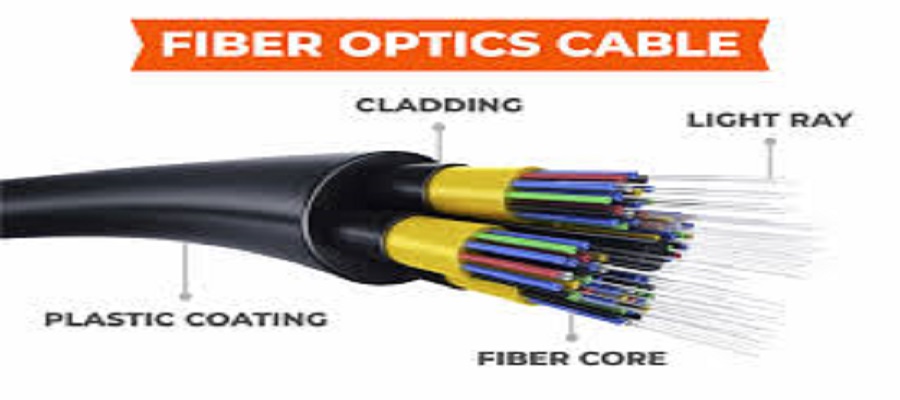
Nigerian Communications Commission (NCC) has said that more than 5,000 fibre-optic cable cuts linked to road construction, excavation and related civil works were recorded in the first six months of 2026.

The commission said that the damage is disrupting telecommunications services, increasing operators’ costs and exposing businesses and essential public services to avoidable interruptions.
Aminu Maida, executive vice chairman, NCC, disclosed the figure at a stakeholders’ workshop on the protection of fibre-optic infrastructure during road construction and rehabilitation.
He said the scale of the incidents showed the need to prevent damage rather than wait to repair networks after they had been cut
Maida said fibre networks support banking, healthcare, education, government services, commerce, security and emergency communications.
He recalled the widespread telecommunications disruption in February 2024, when fibre cuts affected millions of Nigerians and caused congestion on alternative networks as subscribers switched providers.
He said a Standing Committee on the Protection of Fibre Optic Cables had been established by the Federal Ministries of Works and Communications, Innovation and Digital Economy to improve coordination before, during and after road construction.
The committee was later expanded to include the Office of the National Security Adviser and the Nigeria Security and Civil Defence Corps because of the critical nature of telecommunications infrastructure.
Raphael Adelador, permanent secretary of the Federal Ministry of Works, said road construction and telecommunications infrastructure often occupy the same physical space, making coordination essential.
Adelador called for better mapping of fibre routes and improved information sharing so contractors and consultants know where telecommunications infrastructure is located before excavation begins.
He said damage to fibre networks could lead to service disruptions, lost productivity, financial losses and inconvenience to citizens.
Representing Nadungu Gagare, permanent secretary, Federal Ministry of Communications, Innovation and Digital Economy, Stanley Musa, director of Telecoms and Postal Services, said the protection of telecommunications infrastructure was a shared national responsibility.
The Permanent Secretary said that the government was working with relevant stakeholders to strengthen compliance with technical standards and right-of-way requirements, improve information sharing and develop clearer procedures for infrastructure protection.
Air Vice Marshal Effiom Ewa, director of Critical National Standards and Infrastructure Protection at the Office of the National Security Adviser, said fibre-optic infrastructure had been designated as critical national information infrastructure and warned that damage caused by negligence, interference or actions that expose the infrastructure to damage could attract legal consequences.
Air Vice Marshal Ewa called for strict compliance with established procedures during construction and maintenance activities.
The two-day workshop brought together representatives of government ministries and agencies, security organisations, telecommunications operators, contractors and other stakeholders to develop practical measures for reducing fibre damage during construction projects.
The stakeholders are expected to strengthen coordination, information sharing and accountability so that road development does not undermine the digital infrastructure supporting Nigeria’s economy.