

Telecom
Spectranet Looks to Deepen Fixed Broadband Penetration in Nigeria – Awasthi

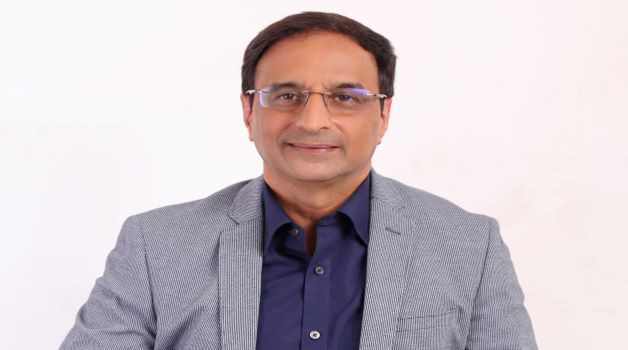
Ajay Awasthi is the chief executive officer of Spectranet Nigeria. He spoke on the efforts of the Internet Service Provider in deepening broadband penetration in Nigeria.

As a major player in Nigeria’s Fixed Broadband segment, through your fiber optic based Fixed Broadband service offering, how will you describe the pace of Nigeria’s broadband penetration and its impact on digital infrastructure?
Fixed Broadband penetration in Nigeria is at abysmally low levels currently at about 0.1%. This pales in comparison to overall broadband ( including mobile broadband) penetration which, as per the latest figures by NCC, is at 42.27 %.
Just to put these figures in the right perspective, the worldwide Fixed Broadband penetration in 2021(as per Statista) is 16.7% with Europe leading the table with 34.7% penetration.
Fixed Broadband services have the capability to deliver extremely cost effective, high quality and high-speed access to internet. It can play a significant role in overall development of world class digital infrastructure in the country.
It’s quite clear that there is a lot of ground to be covered to increase Fixed Broadband penetration to even half of the worldwide penetration level. Being the foremost ISP in Nigeria, Spectranet is keen to lead the effort to increase the FBB penetration to the next levels within the next 2-3 years.
Spectranet as a pioneer in launching 4G LTE services in Nigeria. What was the trigger for launching Fiber based Fixed Broadband services?
Culturally, we are an extremely data analytics and insight driven company with a deep sense of commitment towards proactively serving the needs of customers. Be it being the first to recognize the changing trends in data consumption and offering relevant products or anticipating and eliminating the causes of their pain points.
Post COVID, we have been keenly observing the key shifts in usage behaviour of our customers. A post COVID data user wants high speed internet access with low latency, high level of consistency with 99.99% up time.
All this at extremely affordable prices to watch movies on OTT platforms, play games or use video conferencing! We understood that these fast- evolving trends can be effectively addressed with a superior price-value proposition, through Fixed Broadband technologies.
This is what triggered our entry into Fixed Broadband and we are extremely pleased with the response we have been getting in the market in the cities of Lagos and Abuja. We will soon be entering into other markets too.
How is Spectranet going to differentiate its Fixed Broadband services once the 5G services are rolled out in Nigeria.
The telecom regulator NCC has done a commendable job by auctioning 5G Spectrum way ahead of many other countries. As per report the 5G services should get launched in the next 2-3 months times, though in a limited manner.
For a comprehensive 5 G launch, in order to realize the full benefits like high speed data, low latency, IOT, it’s critical to have an omnipresent network interconnected through a robust optic fiber network- connecting various towers and then for backhauling of the data to the network core and further.
All this infrastructure is at a miniscule level at this point of time and would certainly take a couple of years to be fully on-ground.
Having said that, Fixed Broadband and 5G technologies by no means are competing technologies. These will actually complement each other. Advanced technologies in fixed Broadband like XGS-PON are capable of delivering upstream and downstream speeds of10Gbps,way above 5 G speeds and at low latency levels.
Both the technologies will co-exist, serving different needs of the customers while on the move or working inside an office/home.
Fixed Broadband roll out is generally known to be slow paced due to associated challenges on account of securing right-of-way, trenching work and laying of cables. How is Spectranet managing rollout of FBB services? .
At Spectranet, we fully well understand the on-ground challenges and have been addressing these by deploying multiple technologies – HomeFibre ( FTTx) and FibreOnAir ( WTTx).
The latter is used in dense areas and helps in expediting roll outs of FBB. By this dual technology approach, we are able to deliver high quality internet services at a rapid pace.
What are your greatest challenges in offering FTTx services and how best could the challenges be addressed?
Nigeria has made rapid strides in mobile broadband penetration, with the regulator NCC playing a key role in proactively driving this through relevant policy interventions. However, the story is completely different in Fixed Broadband space.
This industry is completely bogged down by the lack of unified and robust policy framework for granting right-of-way (ROW) and charges the operator needs to pay for laying optic fiber cables.
Different states have different approaches to these which effectively thwart quicker rollouts. Further Non-availability of affordable/ reliable metro and national optic fiber networks also poses a key constraint on offering high quality Fixed Broadband services.
Given the criticality of FBB in delivering high quality and affordable services to the homes, SMEs/MSMEs, a unified, nationwide policy can help unleash the potential of this sector.
Over the last 3-4 years after MNOs launched their 4G services, we have witnessed intense Data price wars and a significant reduction in Data prices. How is Spectranet defending itself?
This will need a bit of explaining to set the context right. In Nigeria the regulator has fixed a floor price for Voice calls and the operators cannot charge less than the floor price.
This wise move by the regulator has ensured that no operator indulges in predatory pricing hurting the profitability of the industry which is so critical to the creation of a digital economy.
Strikingly, there is no floor price yet fixed for Data prices and that is leading to an imbalance in the industry, favouring the bigger players. While the MNOs are using their floor price protected voice revenues to cross subsidize and slash data prices, ISPs like us are forced to drop prices to unsustainable levels in order to defend themselves.
Let’s be clear that ISPs are defending the indefensible if the regulator doesn’t intervene immediately and set a floor price for data to curb predatory pricing.
Isn’t a price war good from the customers’ view point?
I have said this earlier also and my views remain consistent.
War of any kind is destructive by nature. A price war is no exception. It is a short- sighted ploy to gain market share. In the near term, it may be touted as a “customer friendly “move but over a period of time a price war results in significant destruction of value for the industry, forcing the players to degrade quality of services.
A price war is not sustainable in the longer term and a lose-lose proposition for both the operators and the customers. The hapless customers finally end up at the receiving end and are made to suffer through poor quality of services.
At Spectranet, we stay committed to provide high-quality, high-speed broadband to our customers. We believe in delivering a superior customer experience through better understanding of their needs and through differentiated tariff plans backed by excellent customer service.
Spectranet is known for its superior customer service. What is your approach to customer service?
At Spectranet, we deeply acknowledge the fact that customer service is not just limited to putting up a call center but goes much beyond and that CS can be a powerful source of differentiation in the market place.
Customer service to us is not a reactive action but an organization wide mindset which gets embedded into all aspects of the business.
Secondly, we constantly remind ourselves that Customer Churn is just one bad experience away. We call such bad experiences “customer pain points” and assiduously work on getting down to the causative factors and addressing these.
Proactive customer service (anticipating customers’ needs and pain points) is like a religion at Spectranet. The focus always is on eliminating these pain points or bad experiences by staying ahead of the causative factors.
Another critical factor is the design of Customer Service Delivery (CSD) organization and the hierarchical distance from the front-end Customer Service Executive to the CEO.
At Spectranet we have managed to keep just two layers between CSE and CEO and that helps significantly in staying tuned to customers’ requirements in a proactive manner.
Telecom operators are itching to increase the cost of voice call, SMS and data services by 40 per cent. Are Internet Service Providers (ISPs) like Spectranet also thinking of a price hike in the cost of internet services?
Across all the industries the cost of doing business has seen a significant increase over the past few quarters. The cost of running the towers being a significant cost, the recent hike in the price of diesel has further exerted pressure on the bottom line.
As an industry, telecom has held the prices virtually constant over the last few years. In order to continue providing high quality services to our customers and continue to create direct and indirect employment to thousands of people, it’s imperative that survival of the industry is ensured through a price hike mitigating the impact of ballooning costs.
Nigeria has witnessed the landing of several submarine broadband cables in Lagos, with more still coming. How will these help Spectranet to offer better internet services to its customers?
It’s an extremely happy development, to say the least. Some of these companies are not only coming with landing station for their under-sea cables but also data centers.
Combination of these will help reduce costs of transiting traffic to the rest of the world but also bring in qualitative improvement by reducing latency.
We are hoping that more such players will also enter to provide intra-national lease line connectivity which still a major point of concern in terms of reliability and high costs. Just to substantiate, the cost of carrying data traffic from Abuja to Lagos is more than 3X the cost of carrying it from Lagos to USA!
what safety measures have Spectranet put in place to ensure security from Cyber attacks?
With more and more digitalization happening, the vulnerability to cyber attacks has increased for sure. Cyber Security threats caused by DDoS, Malware, Emotet etc. are quite common these days.
As an operator we take cyber security very seriously and have deployed sophisticated equipment to thwart and neutralize these threats. There are multiple layers of cyber security comprising latest generation of Firewalls and Intrusion Prevention systems which effectively neutralize such threats.


Nigerian Communications Commission (NCC) has said that Nigeria’s internet usage reached a record 1.24 million terabytes in November 2025.

According to the latest data from the NCC, the figure rose modestly from 1.235 million terabytes in October, reflecting steady growth in digital activity across the country.
Broadband penetration in Nigeria crossed the halfway mark in November 2025, reaching 50.58 per cent, up from 45.61 per cent in January, the telecoms regulator reported.
The figure, however, falls short of the 70 per cent coverage target outlined in the National Broadband Plan 2020–2025, which expires this month.
The country had roughly 109 million broadband subscriptions by November. Growth has been uneven, hindered by infrastructure and regulatory constraints, including frequent fibre-optic vandalism that triggers 30 to 43 network cuts daily, high right-of-way fees, and declining subscriber numbers earlier in the year.
Expansion of mobile networks, particularly 3G and 4G services, alongside limited 5G rollouts in urban centres, affordable smartphones, and competitive data plans, has driven uptake.
Investments in the National Communications Backbone and private-sector initiatives have also improved access, especially in underserved areas.
While Nigeria is gradually improving digital inclusion, achieving the original broadband plan remains challenging due to high infrastructure costs, coverage limitations, and deployment hurdles.
The NCC maintains that continued investment in mobile networks and broadband infrastructure will sustain gradual growth in the sector.
Commenting on the development, some Nigerian analysts attributed the surge to the broader mobile and broadband adoption and the growing appetite for streaming, online learning and other digital services.
According to the analysts, the figures suggest that internet connectivity is no longer a luxury but a necessity for both business and leisure, underscoring the slow but steady expansion of Nigeria’s digital economy.


Bureau of Public Service Reforms (BPSR) has named the Nigerian Communications Commission (NCC) among the top three Ministries, Departments and Agencies (MDAs) of the Federal Government with the Best Ranking in Website Performance for 2025.

L-R: Head Special Projects, Nigerian Export Promotion Council (NEPC), Salamatu Andu; Executive Commissioner, Technical Services, Nigerian Communication Commission (NCC), Engr. Abaraham Oshadame; Director General Bureau of Public Service Reforms (BPSR), Head Customer Support Service, Galaxy Backbone, Rosemary Ehize; Secretary to the ES. Nigerian Content Development and Monitoring Board, Tahir Aminu at the BPSR award ceremony for top four MDAs in BPSR Website Performance and Ranking 2025 at the BPSR office on Tuesday, 23rd December, 2025.
This is coming barely three weeks after the telecom regulator was recognized as one of the top five best-performing Federal Government agencies for 2025 by the Presidential Enabling Business Environment Council (PEBEC) – a testament to the Commission’s consistency in investment in technology for ensuring efficient service delivery.
In the BPSR 2024/2025 scorecard ranking of agencies’ websites, the NCC came second in the ranking, trailing behind Galaxy Backbone Limited, which came first while the Nigeria Export Promotion Council (NEPC) clinched the third position, from a pool of 235 MDAs, whose website were evaluated.
BPSR deployed 14 evaluation criteria in include MDA’s website compliance with .gov.ng domain name, appearance and aesthetics (look and feel) of the website, content, relevance to MDAs mandate/government policy and the website’ structure.
Others include website’s responsiveness (device compatibility), security, load time, usability/ease of navigation, availability/uptime, functionality, interactivity, accessibility and capacity building.
The recognition was announced at the official release of Federal Government 2024/2025 Scorecard Ranking for MDAs’ Website held at the Federal Ministry of Finance Auditorium in Abuja on Monday (December 22, 2025) while the award presentation took place at BPSR’s Office on Tuesday (December 23, 2025).
The award, which is an important index metric of the National e-Government Masterplan for determining the Nigeria e-Government Status, was received by the Commission in recognition of its commitment to maintaining a world-class website that enhances service delivery to the citizens.
Receiving the award on behalf of the Executive Vice Chairman of the NCC, Dr. Aminu Maida, the NCC’s Executive Commissioner, Technical Services, Abraham Oshadami, appreciated the BPSR for the recognition, describing the award as “another encouragement for the Commission to be a better public service institution leveraging digital platforms such as our web presence to enhance public service delivery to our various stakeholders, thereby implementing the Federal Government’s Ease of Doing Business policy direction.”
While presenting the award to the NCC, alongside other two agencies, BPSR’s Director-General, Mr. Dasuki Arabi, commended the top three for their proactive decisions in maintaining world-class websites, which are compliant with the Federal Government’s policy direction in effective and efficient service delivery to the citizens.
According to the DG, the 2024/2025 MDA’s websites’ ranking represents a collective effort of federal public institutions in Nigeria to be transparent, accountable and open in governance, as well as a confirmation to align with global best practices in service delivery to the citizens.
Developed about six years ago, Arabi said as a result of the annual ranking, more public institutions have indicated readiness to embrace reforms, and align with the policy direction of the current administration’s Renewed Hope agenda on improve governance for effective service delivery, as introduced by His Excellency President Bola Ahmed Tinubu.
“The ideals of harnessing and deploying technological tools for service delivery has become imperative following the COVID pandemic, and distortions of socio-economic system of nations, culminating in the evolution of competitiveness, cost effectiveness, and agile governance.
“As engine room of governance, it behoves on us in the public service to perform our statutory duties and we must put in place technological innovations and standardized websites to operate services as well as deliver service needs to citizens,” he said.
The Scorecard exercise, he said, is part of the BPSR reform broader function of conducting research on reform implementation efforts and presenting ‘best practice’ models to the entire Public Service, and to among others, improve access to government information, facilitate seamless financial transaction, eliminate corruption and cyber theft, as well as facilitate access to government services.
Speaking on the rigorous nature of the exercise that produced the top three winners, the DG said “in the past few weeks members of the Scorecard Jury drawn from inter-Ministerial Agencies, had worked tirelessly to mill websites of selected MDAs through a rigorous process of enduring criteria for the ranking and the outcome had also passed through a quality assurance mechanism to validate the outcome.”

Taiwo Oyedele, Chairman of the Presidential Committee on Fiscal Policy and Tax Reforms, has dismissed reports that bank accounts not linked to a Tax Identification Number (TIN) will be frozen or automatically debited from January 1, 2026.

Taiwo Oyedele
Oyedele described the claims as false and misleading, warning Nigerians against panic over misinformation surrounding recent tax and financial reforms.
In a post on his X handle Tuesday morning, he wrote: “Don’t let anyone manipulate you. Your bank account is safe. Misinformation makes you panic and fear a reform that is designed to help you.
“When they tell you that your account will be frozen or automatically debited from January 2026, ask them for the evidence in the new law. Be wise.”
He stressed that no provision in the new tax laws authorises the freezing of bank accounts, adding that the rumours are part of widespread misrepresentation of the reforms.
The committee chairman reiterated that the reforms are intended to simplify Nigeria’s tax system and ease the burden on ordinary citizens, not to impose punitive measures on bank customers.

Nigeria’s Internet Usage Hits 1.24m Terabytes – NCC

World Bank Reveals Obstacles to Growth of Mobile Money Accounts in Sub-Saharan Africa

NCC Ranked Among Top 3 MDAs for Best Website Performance in 2025

FIRS Declares NIN, CAC Numbers as Tax IDs from 2026

Woherem Proposes Pragmatic Roadmap to End Terrorism and Banditry in Nigeria

Nigeria Records Highest Weekly Cyberattacks in Africa — Report

Cyber Tsunami Hits Nigeria as Breaches Surge 1,047%, esentry Q3 Report Reveals

Minister Claims Bandits Exploit Poor Network, Bounce Calls Off Multiple Towers

GenAI Adoption Among African workers Outpace Global Peers

Jumia’s Data Shows Nigerians Turning to Digital Retail to Navigate Inflation Pressures




 E-Financial2 days ago
FIRS says NIN, CAC Numbers to Serve as Tax IDs from 2026

 E-Financial2 days ago
AfDB Group Mobilises Global Private Capital to Close Africa’s Financing Gap

 Telecom2 days ago
Oyedele Dismisses Claims Bank Accounts Without TIN Will Be Frozen

 E-Financial2 days ago
Fidelity Bank Bolsters Ikoyi Fire Station with Hoses, Pumps for Safer Communities
 General News2 days ago
Woherem Proposes Pragmatic Roadmap to End Terrorism and Banditry in Nigeria

 Telecom2 days ago
Amazon Blocks 1,800 North Koreans From Job Applications
 News1 day ago
FIRS Declares NIN, CAC Numbers as Tax IDs from 2026

 General News2 days ago
REDAN Seals Landmark MoU, Validates Sytemap’s Real Estate Infrastructure