

News
Africa Online Safety Fund Announces Grant Winners

The Africa Online Safety Fund (AOSF), an initiative supported by Google.org, has announced the winners of this year’s grants. Among the recipients are six organisations operating in Nigeria: Access Drive Capacity Development Foundation, Epower, Lagos Mums Foundation, TechSocietal, Teens Can Code, and Zikoko Citizen.

The selection of the 22 winning organisations from seven countries was announced by Impact Amplifier (IA) from its headquarters in Cape Town, South Africa. Nigeria led the count with the highest number of awards, followed by five to South Africa and four each to Ghana and Kenya. Cameroon, Somalia, and Zimbabwe each had one winner.
These organisations, while representing seven countries, will implement internet safety interventions across 15 African countries in total. Just over 350 applications were received in the 2023 cohort, from which a shortlist of 40 entries made it for the final selection process.
Each of the eventual winners will receive grants ranging from $10,000 to $50,000.
Making the announcement, Impact Amplifier Director, Tanner Methvin said, “With over 500 million people having access to the internet in Africa, reflecting just under 40 per cent of the continent’s population, online safety issues are of critical concern.”
The AOSF, Methvin said, supports innovative approaches to addressing the complex safety issues the internet presents. “The winning innovative solutions range from unique ways of combating mis and disinformation, establishing investigative teams to track cyber criminals, supporting journalists targeted with hate speech and bullying, integrating online safety training into school curriculums, and much more.”
The AOSF offers grants to organisations throughout Africa that address one or more of the safety issues the internet facilitates. It is however focused on four primary countries: Kenya, Ghana, Nigeria, and South Africa in this funding round.
There are three categories of funding: Transformative, Maturing and Catalytic. Transformative projects are intended to be larger in scale, reach multiple geographies and/ or potentially large numbers of beneficiaries, and be scalable as a solution. The Maturing projects are intended to test ideas at a larger scale, try new ideas within existing projects, and reach new audiences. The Catalytic projects are intended to be smaller, targeted, and potentially only locally or culturally specific.
Transformative projects are a maximum grant of $50,000, Maturing projects up to $25,000, and Catalytic projects $10,000.
In addition to announcing the winners of the AOSF awards, Impact Amplifier, again with the support from Google.org, is developing the first Africa focused online safety research, education and support platform. Funding solutions to online safety since 2021, Impact Amplifier has realized that the only way to combat the scale of this challenge is by creating an ecosystem approach. Part of developing this ecosystem involves centralising some of the key tools needed for support. To this end it is developing an online platform, which aggregates all the research which has been done regarding online safety in Africa, making this key knowledge available to policy makers, civil society, academics, business and the general public. Additionally, the platform will be hosting education materials to teach children and adults alike how to protect themselves online. This content will include curriculum, testing materials, evaluation tools, and general awareness content, enabling anyone interested in learning how to protect themselves or others with easy access to all the content they need. Finally, despite our best protection efforts, online violations occur. Once someone has been the victim of an online crime or violation getting help is hard to navigate. To address this, the platform will centralise all the ways that people can seek support no matter where they are in Africa. This new platform will be launched in February 2024.
ABOUT THE NIGERIAN WINNERS:
The Access Drive Capacity Development Foundation (ACDF) https://accessdrive.org moulds leaders, promotes digital citizenship, and prepares students for a tech-driven future through immersive experiences, industry partnerships, and a focus on comprehensive capacity development, fostering problem solvers and innovators for Africa’s economic growth. The Foundation’s Digital Safety First project tackles the problem of early school dropouts by offering comprehensive online safety education for re-enrolled students in economically disadvantaged public secondary schools in Lagos, Nigeria. It focuses on children, parents, and teachers, with the establishment of DSF Clubs to ensure ongoing learning and peer mentoring, and training of parents and teachers with the necessary skills to guide and support students in their online experiences.
Epower www.epower.ng is a technology and digital education organization by Comcast Plus that is focused on promoting safe and responsible internet use, notably among younger generations, through the innovative Cyber Hygiene App. The app is complemented by physical and virtual training, policy collaboration, and the establishment of cyber hygiene clubs to foster a culture of cyber safety within schools. Epower’s Cyber Hygiene App is an innovative, multifaceted solution addressing cyberbullying and unsafe digital behaviour by providing education, awareness, and action. It offers specialized content for students, parents, and teachers.
Lagos Mums Foundation https://lagosmums.com/ offers parenting and family life resources, education, and support to help parents, caregivers, and educators in Africa raise children who are successful digital citizens in the 21st century, with a focus on online safety. The Lagos Mum Foundation will develop a culturally relevant Online Safety for Successful Digital Citizens program to provide accessible online safety training for Nigerian parents, youth, and teachers, addressing the lack of sustained awareness of online safety issues. This initiative aims to empower families with training to prevent cybercrimes, cyberbullying, and mis/disinformation, reducing the risks faced by children online.
TechSocietal (Aspire Youth Development Center) https://techsocietal.org/ reduces digital inequalities and empowers digital access, especially for vulnerable groups like women and underserved youth, through capacity building, network building, advisory services, and advocacy to promote online safety, digital rights, and gender equality. These efforts allow them to bridge the digital divide and address broader socio-economic inequalities among Nigerian youth. TechSocietal is planning to establish a ‘Community of Practice for Online Safety’. The aim of this platform is to foster nationwide stakeholder collaboration, knowledge sharing, and skill-building to enhance online safety for women and children.
Teens Can Code https://teenscancode.com.ng/ expands technology education and opportunities for young Nigerians aged 9-23, integrating STEAM into the educational curriculum while supporting educators and students, with a focus on play and fun in their programs. Teens Can Code’s Virtually Safe Initiative will employ a holistic approach to enhance internet safety for young. It includes organizing hackathons, creating internet safety clubs in schools, hosting conferences, distributing educational materials, conducting research on online safety, addressing online gambling issues, advocating for policy changes, and sharing recommendations with stakeholders.
Zikoko Citizen https://www.zikoko.com/category/citizen/is a web and social media-based platform that simplifies politics, policy, and governance for young Nigerians, providing honest and trustworthy news analysis and encouraging informed action. Its Citizen Situation Room on WhatsApp actively combats fake news and misinformation by leveraging the widespread use of WhatsApp in Nigeria, reaching a broad audience quickly. This model also utilizes open-source intelligence to address local issues faster and encourages community fact-checking through trained members, ensuring timely and accurate information dissemination.



Federal Inland Revenue Service (FIRS) has announced that the National Identification Number (NIN) issued by the National Identity Management Commission (NIMC) will automatically serve as the Tax Identification Number (Tax ID) for all Nigerian citizens, while registered businesses will use their Corporate Affairs Commission (CAC) registration numbers.

FIRS
The disclosure was made during a public awareness campaign on the new tax laws posted on X (formerly Twitter) on Monday.
According to the Service, the Nigeria Tax Administration Act (NTAA), which comes into force in January 2026, mandates the use of Tax IDs for certain financial and commercial transactions, including bank account ownership.
FIRS explained that the measure is part of efforts to unify all previously issued Tax Identification Numbers (TINs) by both the federal and state revenue services into a single identifier.
“For individuals, your NIN automatically serves as your Tax ID, while for registered companies, your CAC RC number is used. You do not need a physical card; the Tax ID is a unique number linked directly to your identity,” the Service stated.
The agency noted that the requirement has been in place since the Finance Act of 2019 but has now been strengthened under the NTAA to ensure compliance and ease of administration.
Officials emphasized that the reform would simplify tax processes, reduce duplication, and improve transparency in Nigeria’s tax system.
The Service added that the integration of NIN and CAC numbers into the tax framework would also enhance data accuracy, curb tax evasion, and streamline the monitoring of taxable activities across the country.
Tax experts have described the development as a significant step toward modernizing Nigeria’s revenue administration, noting that it aligns with global best practices where national identity systems are linked to tax compliance.
The FIRS urged Nigerians to ensure that their NINs and CAC registration details are up-to-date, stressing that the identifiers would be required for transactions such as property purchases, contract awards, and access to certain financial services once the NTAA takes effect

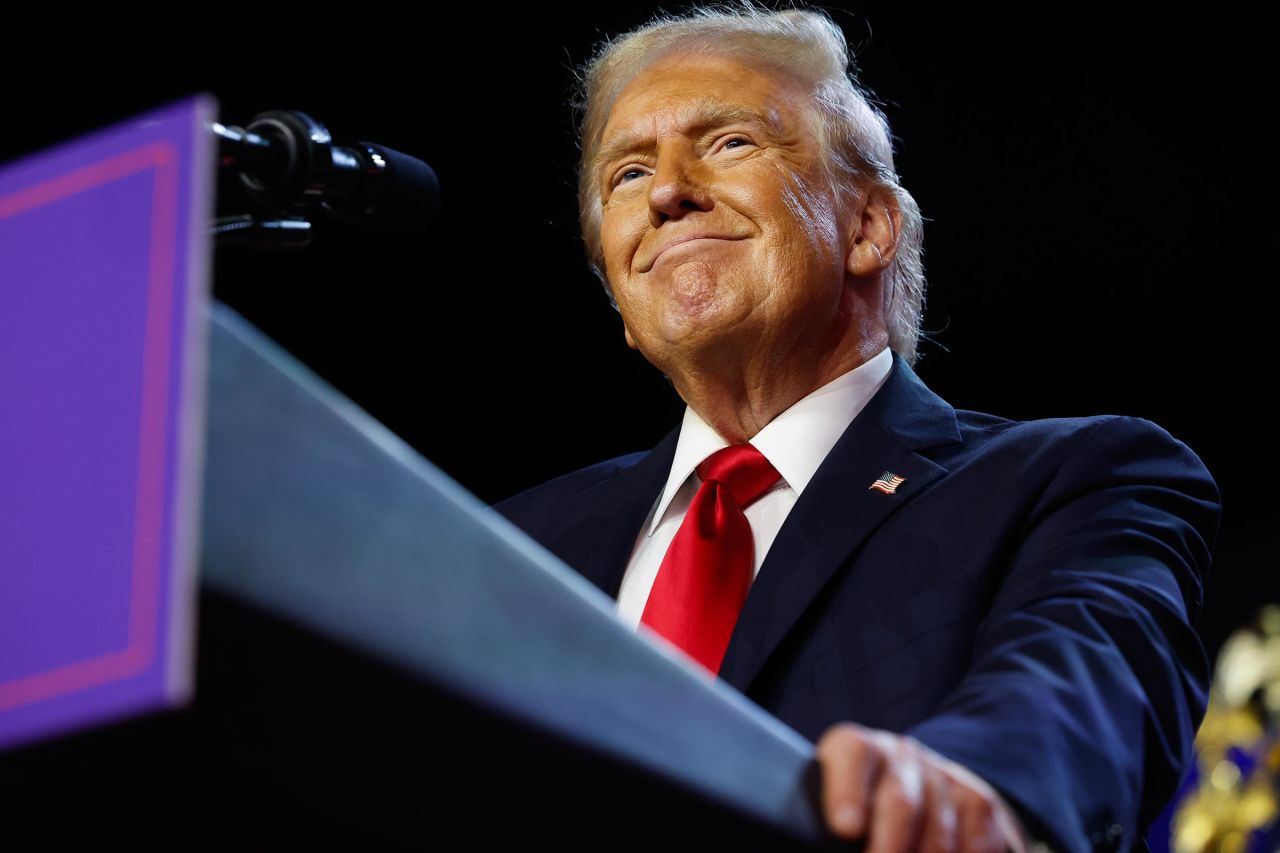
The United States will begin a partial suspension of visa issuance to Nigerians from January 1, 2026, following a new presidential proclamation aimed at strengthening border and national security.

The US Mission in Nigeria announced on Monday that the restriction will take effect at 12:01 a.m. Eastern Standard Time in accordance with Presidential Proclamation 10998, titled ‘Restricting and Limiting the Entry of Foreign Nationals to Protect the Security of the United States.’
According to the mission, Nigeria is one of 19 countries affected by the measure.
Others listed are Angola, Antigua and Barbuda, Benin, Burundi, Cote d’Ivoire, Cuba, Dominica, Gabon, The Gambia, Malawi, Mauritania, Senegal, Tanzania, Togo, Tonga, Venezuela, Zambia and Zimbabwe.
The proclamation provides for a partial suspension of visa issuance covering nonimmigrant B-1/B-2 visitor visas, as well as F, M and J student and exchange visitor visas.
It also applies to immigrant visas, though with limited exceptions.
The statement read in part, “Effective January 1, 2026, at 12:01 a.m. EST, in line with Presidential Proclamation 10998 on “Restricting and Limiting the Entry of Foreign Nationals to Protect the Security of the United States,” the Department of State is partially suspending visa issuance to nationals of 19 countries – Angola, Antigua and Barbuda, Benin, Burundi, Cote D’Ivoire, Cuba, Dominica, Gabon, The Gambia, Malawi, Mauritania, Nigeria, Senegal, Tanzania, Togo, Tonga, Venezuela, Zambia, and Zimbabwe – for nonimmigrant B-1/B-2 visitor visas and F, M, J student and exchange visitor visas, and all immigrant visas with limited exceptions.”
US officials clarified that the policy does not apply to all travellers. Exemptions include immigrant visas for ethnic and religious minorities facing persecution in Iran, dual nationals applying with passports from countries not affected by the suspension, and Special Immigrant Visas for eligible US government employees.
Other exempted categories include lawful permanent residents of the United States and participants in certain major international sporting events.
The US government emphasised that the proclamation applies only to foreign nationals who are outside the United States on the effective date and who do not hold a valid US visa as of January 1, 2026.
“Foreign nationals, even those outside the United States, who hold valid visas as of the effective date are not subject to Presidential Proclamation 10998. No visas issued before January 1, 2026, at 12:01 a.m. EST, have been or will be revoked pursuant to the Proclamation,” the statement added.
Visa applicants from affected countries may continue to submit applications and attend interviews. However, the US Mission noted that such applicants “may be ineligible for visa issuance or admission to the US” under the new rules.
The announcement comes amid a series of recent US policy decisions that have raised concerns among Nigerians seeking to travel, study or migrate to the country.
In October, the United States added Nigeria back to its list of countries accused of violating religious freedom, citing persistent insecurity and attacks on Christian communities. This was followed by Nigeria’s inclusion on a revised US travel ban list that imposed partial entry restrictions on Nigerians.
The US has also tightened immigration and visa policies affecting Nigerians. Earlier this year, the validity of most non-immigrant visas issued to Nigerians was reduced to single-entry visas with a three-month duration.

The pre-action notice was signed by Emmanuel Okpara, Esq., Litigation and Compliance Director, and Mus’ab Awwal Mu’az, Esq., secretary of the Association’s Steering Committee.
The dispute stemmed from a consent judgment delivered on November 3, 2025, by Justice J.K. Omotosho of the Federal High Court, Abuja, in Suit No: FHC/ABJ/CC/355/2025 between Meta Platforms, Inc. and the NDPC.
Following investigations conducted under the Nigeria Data Protection Act (NDPA), 2023, the NDPC had issued a Final Order against Meta Platforms, Inc., finding “widespread violations of the data protection and privacy rights of approximately 61 million Nigerians,” and imposing a remedial fine of USD 32,800,000.
The pre-action notice was signed by Emmanuel Okpara, Esq., Litigation and Compliance Director, and Mus’ab Awwal Mu’az, Esq., Secretary of the Association’s Steering Committee.
The dispute stemmed from a consent judgment delivered on November 3, 2025, by Justice J.K. Omotosho of the Federal High Court, Abuja, in Suit No: FHC/ABJ/CC/355/2025 between Meta Platforms, Inc. and the NDPC.
Following investigations conducted under the Nigeria Data Protection Act (NDPA), 2023, the NDPC had issued a Final Order against Meta Platforms, Inc., finding “widespread violations of the data protection and privacy rights of approximately 61 million Nigerians,” and imposing a remedial fine of USD 32,800,000.
The NDPC investigation stemmed from a petition filed at the commission on August 14, 2023, against Meta Platforms Inc. by the convener of Personal Data Protection Awareness Initiative, Ozoemena Nwogbo, regarding violation of the Nigeria Data Protection Act.
After its investigation, NDPC found Meta Platforms Inc. wanting and, on February 18, 2025, issued nine Final Orders against Meta Platforms Inc.
NDPC’s Order
The NDPC’s order nine reads, “Meta shall pay the naira equivalent of 32,800,000 USD (Thirty-two million, eight-hundred thousand United States Dollars) as a remedial fee. The naira equivalent shall be at the rate determined by the Central Bank of Nigeria.
“The details of the account for payment of the remedial fee are as follows: Account Name: Nigeria Data Protection Commission Fund Account. Account Number: 0020331265048 (300131267). Use RTGS for payment.”
The NDPC added, “Note that Meta has a right to seek a judicial review of this decision. The Commission will closely monitor Meta’s remediation process and its impact on data subjects for upwards of six months.”
However, the Final Order was subsequently set aside through Terms of Settlement, which were adopted by the court as a consent judgment on November 3, 2025, following a suit marked FHC/ABJ/CS/355/2025, filed by Meta Platforms Inc. against the NDPC.
Part of the Terms of Settlement entered between NDPC and Meta Platforms Inc. reads, “The applicant (Meta Platforms Inc.) and the respondent (NDPC) have come to a mutual settlement agreement that resolves the dispute underlying the applicant’s originating Summons.
“Pursuant to this agreement: (I) the applicant has agreed to provide specific remedial consideration to the respondent in support of protecting the rights of data subjects in Nigeria; and (II) the respondent has inter alia agreed to set aside and waive any rights to enforce or take steps to enforce the Final Orders against the applicant.”
The settlement terms specifically read, “In the light of the foregoing: The applicant wholly and completely terminates, abandons, withdraws, and discontinues the Originating Summons as well as any and all claims against the respondent connected to or arising from the matters or the subject matter thereof, except as the parties have otherwise agreed.
“The respondent: (I) sets aside the Final Orders against Meta; and (II) save and except as the parties have otherwise agreed, fully and firmly releases and discharges Meta from any and all claims, demands, actions, causes of action, contracts, obligations, suits, debts, costs, liabilities, which the respondent ever had, may now have, or May hereafter claim to have against Meta in respect of the matters.”
Association Alleges Illegality In Settlement
But the Data Privacy Lawyers Association contended that the consent judgment was entered into unlawfully, arguing that it was done without lawful statutory authority, in violation of the Nigeria Data Protection Act, 2023, and in derogation of the constitutional right to privacy guaranteed under Section 37 of the Constitution of the Federal Republic of Nigeria, 1999 (as amended).
The Association further said the action was taken “to the grave prejudice of millions of affected Nigerians and the public interest, as well as the Federal Government of Nigeria.”
In the notice, the Association warned that unless the issues raised are urgently addressed within the statutory notice period, it would approach the Federal High Court to seek multiple reliefs.
These include an order setting aside, vacating, and nullifying the consent judgment on grounds of fraud, collusion, material non-disclosure, lack of statutory authority, and violation of the NDPA, 2023.
It is also seeking a declaration that the consent judgment is “null, void, unconstitutional, and of no legal effect,” as well as a declaration that the NDPC lacks statutory authority to waive, compro
Other reliefs sought include an order restoring and reviving the Final Order against Meta Platforms, including the $32.8 million fine, and an order restraining any further reliance on or enforcement of the consent judgment.
The Association also asked the court for other orders the Court may deem fit in the interest of justice, public accountability, and the protection of constitutional rights.
In the interest of transparency and accountability, the Association urged the NDPC to provide a written explanation of the legal basis for entering into the Terms of Settlement, clarify the statutory authority relied upon to waive the remedial fine and set aside the Final Order, and take steps to remedy the issues raised.
The letter, the Association said, constitutes the requisite pre-action notice under applicable law.
It warned that unless the concerns are satisfactorily addressed within 30 days of receipt of the notice, it will proceed to institute legal proceedings without further recourse.
mise, or extinguish liabilities, sanctions, or remedial fines arising from established violations of the Act.

Nigeria’s Internet Usage Hits 1.24m Terabytes – NCC

World Bank Reveals Obstacles to Growth of Mobile Money Accounts in Sub-Saharan Africa

NCC Ranked Among Top 3 MDAs for Best Website Performance in 2025

FIRS Declares NIN, CAC Numbers as Tax IDs from 2026

Woherem Proposes Pragmatic Roadmap to End Terrorism and Banditry in Nigeria

Nigeria Records Highest Weekly Cyberattacks in Africa — Report

Cyber Tsunami Hits Nigeria as Breaches Surge 1,047%, esentry Q3 Report Reveals

Minister Claims Bandits Exploit Poor Network, Bounce Calls Off Multiple Towers

GenAI Adoption Among African workers Outpace Global Peers

Jumia’s Data Shows Nigerians Turning to Digital Retail to Navigate Inflation Pressures




 E-Financial3 days ago
FIRS says NIN, CAC Numbers to Serve as Tax IDs from 2026

 E-Financial3 days ago
AfDB Group Mobilises Global Private Capital to Close Africa’s Financing Gap

 Telecom3 days ago
Oyedele Dismisses Claims Bank Accounts Without TIN Will Be Frozen

 E-Financial3 days ago
Fidelity Bank Bolsters Ikoyi Fire Station with Hoses, Pumps for Safer Communities
 General News3 days ago
Woherem Proposes Pragmatic Roadmap to End Terrorism and Banditry in Nigeria
 News2 days ago
FIRS Declares NIN, CAC Numbers as Tax IDs from 2026
 E-Financial2 days ago
World Bank Reveals Obstacles to Growth of Mobile Money Accounts in Sub-Saharan Africa

 Telecom3 days ago
Amazon Blocks 1,800 North Koreans From Job Applications