

Telecom
FG Targets Increased income For Farmers As NASENI Kicks-off Irrigate Nigeria Project in Bauchi State

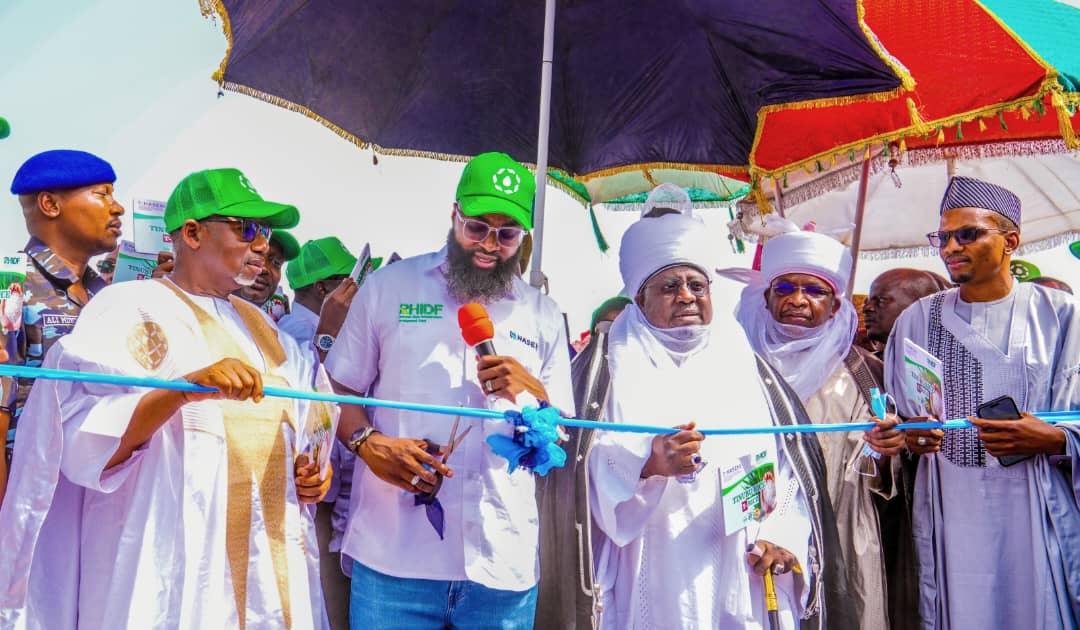
Mr. Khalil Suleiman Halilu, executive vice chairman/chief executive officer of the National Agency for Science and Engineering Infrastructure (NASENI) has disclosed that the Federal Government’s Irrigate Nigeria Project, amongst other things, targets increase in income of Nigeria’s farmers nationwide, even as the formal launch of the initiative took place at the weekend in Gamawa Local Government Area of Bauchi State.

L-R: The Governor of Bauchi State, Senator Bala Abdulkadir Muhammad; the Executive Vice Chairman/CEO NASENI, Mr. Khalil Suleiman Halilu; the Emir of Bauchi, Dr. Rilwanu Suleiman Adamu and the Deputy Chairman, House Committee on NASENI, Hon. Abdul Malik Zubairu Bungudu at the official launch of Irrigate Nigeria Project in Gamawa local government, Bauchi State, on Saturday, March 1, 2025.
Improved irrigation, according to NASENI EVC/CEO, “helps farmers to extend the number of farming rounds made possible in a year for each farming household. And this means a rise in income for farmers as farming activities increased all through the dry season”.
Speaking on Saturday 1st March 2025 in Gamawa, Bauchi State at the formal launch of the programme, the chief executive of NASENI said the goal of Irrigate Nigeria under the Renewed Hope Agenda of President Bola Tinubu administration essentially includes the transformation of entire Nigeria’s agriculture sector through provision of sustainable irrigation systems that empower farmers to achieve year-round farming, and by extension increased productivity and reduced food prices.
He said amongst other things, the programme is jointly being implemented by NASENI and the Renewed Hope Infrastructure Development Fund (RHIDF) and also has the participation of private sector at the core of its operations and it’s in line with President Tinubu’s commitment to fully empower and enable Nigeria’s private sector with farmers to develop the Nigeria’s agricultural sector.
Beginning with this pilot phase, Halilu explained that the irrigate Nigeria Project kicked-off on a 10-hectare land in Gamawa Local Government of Bauchi State under the Public-Private Partnership (PPP) built on a large scale farming basis for the purpose of sustainability and more production.
According to Halilu “this Federal Government initiative rests on four components for its sustainability which include: first the deployment of centralized NASENI irrigation systems to support farming clusters in the participating communities, Second is the provision of input-enhanced seeds and fertilizers including technical support to the participating farmers to complement the provision of irrigation equipment, third is the specialized nature of the commercial model, aimed at ensuring commercial viability and long-term sustainability, and lastly Irrigate Nigeria Project will be run on commercial basis, but with every care taken to ensure that this does not burden the participating farmers unnecessarily”
To this end according to NASENI’s chief executive “the repayments by farmers for the support being provided will be in the form of convenient portions of their harvests, like rice paddy. These repayments will be pooled into a strategic food reserve that will help to stabilize commodity prices and also made available for institutional sale for export, and finally it has the objective of ensuring that Nigeria’s farmers are able to farm throughout the year regardless of the availability of rains while increasing the quantity and quality of harvests”
The Governor of the host state for kick off of the nationwide programme, Bauchi State, Alhaji Bala Abdulkadir Mohammed expressed gratitude to the Federal Government for choosing Gamawa Local Government Area, as the first state to benefit from irrigate Nigeria initiative.
He said “What the Federal Government is doing today in Gamawa is the fulfillment of the essence of governance, that is to create an enabling environment, and it is a plus for President Tinubu or the Federal government. This project is more than just about farming; it is about food security, economic empowerment, and national stability. It aligns perfectly with Bauchi State Government’s broader goals of expanding irrigation farming, reducing dependence on rain-fed agriculture, and promoting sustainable agricultural infrastructure”
According to Bauchi state Governor, the irrigate Nigeria initiative is a new Model for agricultural excellence, capable of leading to sustainable growth and development of the agricultural sector. “The Irrigate Nigeria Project, if implemented as designed, will have a multiplier effect across the agricultural value chain, both vertically and horizontally. It will drive knowledge transfer, introduce advanced technologies, and distribute wealth equitably ensuring that even the most vulnerable members of our society benefit from this transformation. This is the kind of structured agricultural intervention which Nigeria needs, one that prioritizes inclusivity, accountability, and long-term economic impact”, the Governor said.
Dr Mohammed Dahiru who is the Chairman Presidential Committee on Technology Transfer (PICTT) said at the occasion that the Irrigate Nigeria Project was designed essentially on the Public Private Partnership (PPP) model in order to sustain the initiative beyond its take off, and to make it run on business principles and yet not leaving the farm households nationwide behind in the overall aim of developing the whole agriculture eco-system of the country.
He said unlike similar initiatives in the past which received funding 100 percent from government or development partners and yet failed, the Irrigate Nigeria project was conceived and funded at the outset extensively on PPP basis to drive sustainability.
According to Dahiru, “no private sector puts funds into any investment and allows it to fail or go to sleep. The private sector’s mindset primarily is that anything that is worth investing in must be nurtured to succeed, which is not always the case with fully government funded projects.”
The weekend’s take-off of the Irrigate Nigeria Project in Gamawa, Bauchi State is the first phase of the Launch. The exercise will be replicated in other parts of the country by NASENI under the auspices of the Renewed Hope Infrastructure Development Fund (RHIDF).


Nigerian Communications Commission (NCC) has said that Nigeria’s internet usage reached a record 1.24 million terabytes in November 2025.

According to the latest data from the NCC, the figure rose modestly from 1.235 million terabytes in October, reflecting steady growth in digital activity across the country.
Broadband penetration in Nigeria crossed the halfway mark in November 2025, reaching 50.58 per cent, up from 45.61 per cent in January, the telecoms regulator reported.
The figure, however, falls short of the 70 per cent coverage target outlined in the National Broadband Plan 2020–2025, which expires this month.
The country had roughly 109 million broadband subscriptions by November. Growth has been uneven, hindered by infrastructure and regulatory constraints, including frequent fibre-optic vandalism that triggers 30 to 43 network cuts daily, high right-of-way fees, and declining subscriber numbers earlier in the year.
Expansion of mobile networks, particularly 3G and 4G services, alongside limited 5G rollouts in urban centres, affordable smartphones, and competitive data plans, has driven uptake.
Investments in the National Communications Backbone and private-sector initiatives have also improved access, especially in underserved areas.
While Nigeria is gradually improving digital inclusion, achieving the original broadband plan remains challenging due to high infrastructure costs, coverage limitations, and deployment hurdles.
The NCC maintains that continued investment in mobile networks and broadband infrastructure will sustain gradual growth in the sector.
Commenting on the development, some Nigerian analysts attributed the surge to the broader mobile and broadband adoption and the growing appetite for streaming, online learning and other digital services.
According to the analysts, the figures suggest that internet connectivity is no longer a luxury but a necessity for both business and leisure, underscoring the slow but steady expansion of Nigeria’s digital economy.
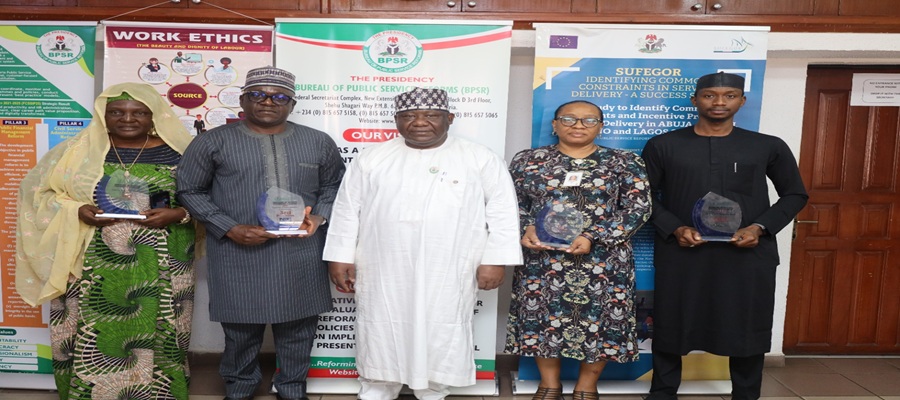
Bureau of Public Service Reforms (BPSR) has named the Nigerian Communications Commission (NCC) among the top three Ministries, Departments and Agencies (MDAs) of the Federal Government with the Best Ranking in Website Performance for 2025.

L-R: Head Special Projects, Nigerian Export Promotion Council (NEPC), Salamatu Andu; Executive Commissioner, Technical Services, Nigerian Communication Commission (NCC), Engr. Abaraham Oshadame; Director General Bureau of Public Service Reforms (BPSR), Head Customer Support Service, Galaxy Backbone, Rosemary Ehize; Secretary to the ES. Nigerian Content Development and Monitoring Board, Tahir Aminu at the BPSR award ceremony for top four MDAs in BPSR Website Performance and Ranking 2025 at the BPSR office on Tuesday, 23rd December, 2025.
This is coming barely three weeks after the telecom regulator was recognized as one of the top five best-performing Federal Government agencies for 2025 by the Presidential Enabling Business Environment Council (PEBEC) – a testament to the Commission’s consistency in investment in technology for ensuring efficient service delivery.
In the BPSR 2024/2025 scorecard ranking of agencies’ websites, the NCC came second in the ranking, trailing behind Galaxy Backbone Limited, which came first while the Nigeria Export Promotion Council (NEPC) clinched the third position, from a pool of 235 MDAs, whose website were evaluated.
BPSR deployed 14 evaluation criteria in include MDA’s website compliance with .gov.ng domain name, appearance and aesthetics (look and feel) of the website, content, relevance to MDAs mandate/government policy and the website’ structure.
Others include website’s responsiveness (device compatibility), security, load time, usability/ease of navigation, availability/uptime, functionality, interactivity, accessibility and capacity building.
The recognition was announced at the official release of Federal Government 2024/2025 Scorecard Ranking for MDAs’ Website held at the Federal Ministry of Finance Auditorium in Abuja on Monday (December 22, 2025) while the award presentation took place at BPSR’s Office on Tuesday (December 23, 2025).
The award, which is an important index metric of the National e-Government Masterplan for determining the Nigeria e-Government Status, was received by the Commission in recognition of its commitment to maintaining a world-class website that enhances service delivery to the citizens.
Receiving the award on behalf of the Executive Vice Chairman of the NCC, Dr. Aminu Maida, the NCC’s Executive Commissioner, Technical Services, Abraham Oshadami, appreciated the BPSR for the recognition, describing the award as “another encouragement for the Commission to be a better public service institution leveraging digital platforms such as our web presence to enhance public service delivery to our various stakeholders, thereby implementing the Federal Government’s Ease of Doing Business policy direction.”
While presenting the award to the NCC, alongside other two agencies, BPSR’s Director-General, Mr. Dasuki Arabi, commended the top three for their proactive decisions in maintaining world-class websites, which are compliant with the Federal Government’s policy direction in effective and efficient service delivery to the citizens.
According to the DG, the 2024/2025 MDA’s websites’ ranking represents a collective effort of federal public institutions in Nigeria to be transparent, accountable and open in governance, as well as a confirmation to align with global best practices in service delivery to the citizens.
Developed about six years ago, Arabi said as a result of the annual ranking, more public institutions have indicated readiness to embrace reforms, and align with the policy direction of the current administration’s Renewed Hope agenda on improve governance for effective service delivery, as introduced by His Excellency President Bola Ahmed Tinubu.
“The ideals of harnessing and deploying technological tools for service delivery has become imperative following the COVID pandemic, and distortions of socio-economic system of nations, culminating in the evolution of competitiveness, cost effectiveness, and agile governance.
“As engine room of governance, it behoves on us in the public service to perform our statutory duties and we must put in place technological innovations and standardized websites to operate services as well as deliver service needs to citizens,” he said.
The Scorecard exercise, he said, is part of the BPSR reform broader function of conducting research on reform implementation efforts and presenting ‘best practice’ models to the entire Public Service, and to among others, improve access to government information, facilitate seamless financial transaction, eliminate corruption and cyber theft, as well as facilitate access to government services.
Speaking on the rigorous nature of the exercise that produced the top three winners, the DG said “in the past few weeks members of the Scorecard Jury drawn from inter-Ministerial Agencies, had worked tirelessly to mill websites of selected MDAs through a rigorous process of enduring criteria for the ranking and the outcome had also passed through a quality assurance mechanism to validate the outcome.”

Taiwo Oyedele, Chairman of the Presidential Committee on Fiscal Policy and Tax Reforms, has dismissed reports that bank accounts not linked to a Tax Identification Number (TIN) will be frozen or automatically debited from January 1, 2026.

Taiwo Oyedele
Oyedele described the claims as false and misleading, warning Nigerians against panic over misinformation surrounding recent tax and financial reforms.
In a post on his X handle Tuesday morning, he wrote: “Don’t let anyone manipulate you. Your bank account is safe. Misinformation makes you panic and fear a reform that is designed to help you.
“When they tell you that your account will be frozen or automatically debited from January 2026, ask them for the evidence in the new law. Be wise.”
He stressed that no provision in the new tax laws authorises the freezing of bank accounts, adding that the rumours are part of widespread misrepresentation of the reforms.
The committee chairman reiterated that the reforms are intended to simplify Nigeria’s tax system and ease the burden on ordinary citizens, not to impose punitive measures on bank customers.

How Moniepoint’s Founders, Tosin Eniolorunda and Felix Ike are Redefining African Tech and Finance

Ecobank Guarantees Seamless Digital Banking Services Throughout the Christmas and Year-End Period

Banks quietly move to enforce new ₦50 transfer levy from Jan. 1

Nigeria’s Internet Usage Hits 1.24m Terabytes – NCC

World Bank Reveals Obstacles to Growth of Mobile Money Accounts in Sub-Saharan Africa

Nigeria Records Highest Weekly Cyberattacks in Africa — Report

Cyber Tsunami Hits Nigeria as Breaches Surge 1,047%, esentry Q3 Report Reveals

Minister Claims Bandits Exploit Poor Network, Bounce Calls Off Multiple Towers

Financial Sector Faced AI, Blockchain and Organised Crime Threats in 2025 – Report

GenAI Adoption Among African workers Outpace Global Peers



 E-Financial1 day ago
Banks quietly move to enforce new ₦50 transfer levy from Jan. 1
 Telecom2 days ago
Nigeria’s Internet Usage Hits 1.24m Terabytes – NCC
 General News1 day ago
Ecobank Guarantees Seamless Digital Banking Services Throughout the Christmas and Year-End Period
 News20 hours ago
How Moniepoint’s Founders, Tosin Eniolorunda and Felix Ike are Redefining African Tech and Finance