

News
219 Chibok Girls Confirmed Missing, Ezekwesili Vows to Fight on


Brig.-Gen. Ibrahim Sabo (rtd.), chairman, Presidential Fact-finding Committee on the Abduction of Chibok Schoolgirls, yesterday disclosed that 219 students of the Government Secondary School, Chibok, Borno State are still missing after the abduction on April 14th by the terrorist sect.
This is coming as Dr Oby Ezekwesili, former Education minister, explained why she is at the forefront of the #bringbackourgirls advocacy while dismissing suggestions that she is being used by the opposition to lead the campaign for the rescue of the schoolgirls.
But Sabo said that the 219 students were among the 276 girls said to have been snatched from the school during the midnight raid.
Sabo while presenting the committee’s report to President Goodluck Jonathan at the Presidential Villa, Abuja on Friday said that contrary to the opinion being held by some people that no student was abducted, his committee discovered that there was indeed a mass abduction at the school.
He said during the raid, 119 students managed to escape before their remaining colleagues were abducted.
Sabo added that among the 276 girls abducted, 57 girls managed to escape from their abductors while they were being moved through a zig-zag route.
He said, “As most Nigerians already know, there were some persons who doubted whether, in fact, any student was abducted from Government Secondary School, Chibok.
“On the other hand, for those who believed that there was abduction, there were lingering doubts as to how such a number of kidnap victims were conveyed, considering also that information was sparse as to how the raiding insurgents evacuated the victims.
“Mr. President, the Committee here wishes to lay to rest any residual doubt whether or not any student was abducted at Chibok. There was mass abduction on the night of 14th April, 2014.
“During the siege on the school, 119 students escaped from the school premises, before the insurgents took away their classmates. A total number of 276 students were, thus, abducted.
Elsewhere, Ezekwesili who has since then been at the forefront of the #bringbackourgirls advocacy wondered why Nigeria has turned to a society where people no longer bother about the welfare of fellow citizens, most importantly, the vulnerable.
She insisted that being a mother coupled with her love for humanity has been her motivation to campaign for the rescue of the Chibok girls.
According to her “Our common humanity has been traumatized so badly that people would dare question why anybody would raise a voice concerning the daughters of peasants in Chibok just because they are not part of the elite. And so, whatever happens to them, we should all just carry on with our normal life. The reason that I am part of this as a strong advocate for these girls is because I have a soul. I will be accountable to my maker if it would actually be said of me that I was in this country at a time that over 234 children are still missing and I simply couldn’t be bothered.”


News
How Moniepoint’s Founders, Tosin Eniolorunda and Felix Ike are Redefining African Tech and Finance


In an era where global tech giants dominate headlines, two Nigerian entrepreneurs are quietly revolutionizing financial services across Africa, proving that world-class innovation can emerge from homegrown talent and local institutions.

Tosin Eniolorunda and Felix Ike, co-founders of Moniepoint Inc, have built one of Africa’s fastest-growing fintech companies, not despite their exclusively Nigerian education, but in many ways, because of it.
Their journey from the lecture halls of Obafemi Awolowo University and the University of Lagos to the TIME100 Most Influential Companies list stands as a powerful testament to the caliber of talent nurtured within Nigerian universities and the transformative potential of locally-rooted vision.
Tosin Eniolorunda’s path exemplifies how Nigerian educational institutions can cultivate entrepreneurial excellence. After earning his degree in Mechanical Engineering from Obafemi Awolowo University, he didn’t follow the well-trodden path abroad but instead chose to build solutions for Nigerian challenges within Nigeria itself. This decision proved prescient.
Understanding the unique financial ecosystem and infrastructure gaps firsthand from the work at TeamApt Ltd where they were building from majority of the country’s banks, Tosin pioneered several industry firsts: introducing instant POS transfers to Nigeria, launching the country’s first virtual account services, and constructing a vertically integrated payments processing switch with full switching and processing licenses.
These feats and technological achievements must be viewed from the prism that these were deeply contextual innovations born from intimate knowledge of local needs, the kind of understanding that comes from being educated and embedded in the communities one serves.
Felix Ike’s contribution complements this vision with technical brilliance equally rooted in Nigerian educational excellence. Graduating with first-class honors in Computer Science from the University of Lagos, Felix brought to Moniepoint the kind of engineering rigor required to build mission-critical financial infrastructure.
As Chief Technology Officer, he has architected systems that are not just functional but scalable, resilient, and secure enough to serve over 10 million businesses and individuals across Nigeria and Africa. His work demonstrates that Nigerian universities are producing software engineering leaders capable of building world-class technology that can compete on the global stage with technology that processes millions of transactions daily and underpins the financial dreams of an entire continent.
Since its founding in 2015, Moniepoint has evolved into Africa’s largest distributor of financial services in Nigeria, with presence across all 774 local government areas. The company’s all-in-one financial ecosystem offering seamless payments, banking, credit, and business management solutions reflects a sophisticated understanding of what African businesses and individuals actually need to thrive.
The accolades have followed: recognition by TIME as one of the 100 Most Influential Companies in 2025, listing among CNBC’s top UK fintech firms, and ranking in the Financial Times’ Africa’s Fastest-Growing Companies for three consecutive years.
The Moniepoint story as an indigenously rooted but globally compliant player challenges prevailing narratives about where innovation must originate and what credentials are necessary for building transformative companies. Tosin and Felix’s success illustrates that Nigerian universities, when their graduates are empowered with vision, opportunity, and determination, can produce founders who don’t just participate in the global economy but reshape it.

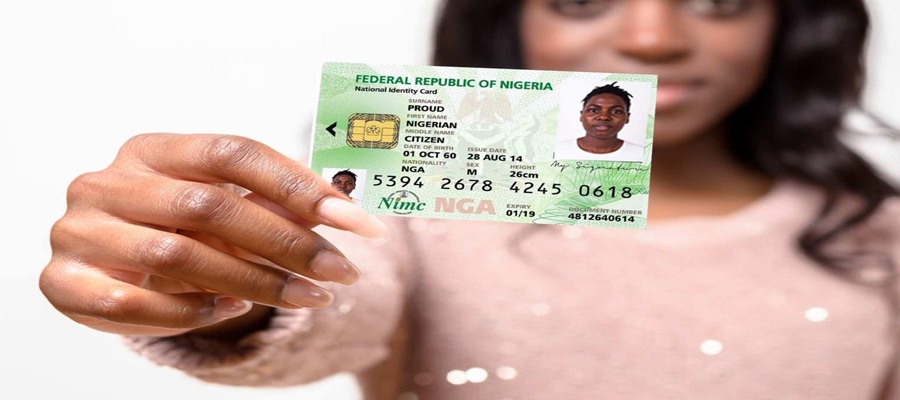
Federal Inland Revenue Service (FIRS) has announced that the National Identification Number (NIN) issued by the National Identity Management Commission (NIMC) will automatically serve as the Tax Identification Number (Tax ID) for all Nigerian citizens, while registered businesses will use their Corporate Affairs Commission (CAC) registration numbers.

FIRS
The disclosure was made during a public awareness campaign on the new tax laws posted on X (formerly Twitter) on Monday.
According to the Service, the Nigeria Tax Administration Act (NTAA), which comes into force in January 2026, mandates the use of Tax IDs for certain financial and commercial transactions, including bank account ownership.
FIRS explained that the measure is part of efforts to unify all previously issued Tax Identification Numbers (TINs) by both the federal and state revenue services into a single identifier.
“For individuals, your NIN automatically serves as your Tax ID, while for registered companies, your CAC RC number is used. You do not need a physical card; the Tax ID is a unique number linked directly to your identity,” the Service stated.
The agency noted that the requirement has been in place since the Finance Act of 2019 but has now been strengthened under the NTAA to ensure compliance and ease of administration.
Officials emphasized that the reform would simplify tax processes, reduce duplication, and improve transparency in Nigeria’s tax system.
The Service added that the integration of NIN and CAC numbers into the tax framework would also enhance data accuracy, curb tax evasion, and streamline the monitoring of taxable activities across the country.
Tax experts have described the development as a significant step toward modernizing Nigeria’s revenue administration, noting that it aligns with global best practices where national identity systems are linked to tax compliance.
The FIRS urged Nigerians to ensure that their NINs and CAC registration details are up-to-date, stressing that the identifiers would be required for transactions such as property purchases, contract awards, and access to certain financial services once the NTAA takes effect


The United States will begin a partial suspension of visa issuance to Nigerians from January 1, 2026, following a new presidential proclamation aimed at strengthening border and national security.

The US Mission in Nigeria announced on Monday that the restriction will take effect at 12:01 a.m. Eastern Standard Time in accordance with Presidential Proclamation 10998, titled ‘Restricting and Limiting the Entry of Foreign Nationals to Protect the Security of the United States.’
According to the mission, Nigeria is one of 19 countries affected by the measure.
Others listed are Angola, Antigua and Barbuda, Benin, Burundi, Cote d’Ivoire, Cuba, Dominica, Gabon, The Gambia, Malawi, Mauritania, Senegal, Tanzania, Togo, Tonga, Venezuela, Zambia and Zimbabwe.
The proclamation provides for a partial suspension of visa issuance covering nonimmigrant B-1/B-2 visitor visas, as well as F, M and J student and exchange visitor visas.
It also applies to immigrant visas, though with limited exceptions.
The statement read in part, “Effective January 1, 2026, at 12:01 a.m. EST, in line with Presidential Proclamation 10998 on “Restricting and Limiting the Entry of Foreign Nationals to Protect the Security of the United States,” the Department of State is partially suspending visa issuance to nationals of 19 countries – Angola, Antigua and Barbuda, Benin, Burundi, Cote D’Ivoire, Cuba, Dominica, Gabon, The Gambia, Malawi, Mauritania, Nigeria, Senegal, Tanzania, Togo, Tonga, Venezuela, Zambia, and Zimbabwe – for nonimmigrant B-1/B-2 visitor visas and F, M, J student and exchange visitor visas, and all immigrant visas with limited exceptions.”
US officials clarified that the policy does not apply to all travellers. Exemptions include immigrant visas for ethnic and religious minorities facing persecution in Iran, dual nationals applying with passports from countries not affected by the suspension, and Special Immigrant Visas for eligible US government employees.
Other exempted categories include lawful permanent residents of the United States and participants in certain major international sporting events.
The US government emphasised that the proclamation applies only to foreign nationals who are outside the United States on the effective date and who do not hold a valid US visa as of January 1, 2026.
“Foreign nationals, even those outside the United States, who hold valid visas as of the effective date are not subject to Presidential Proclamation 10998. No visas issued before January 1, 2026, at 12:01 a.m. EST, have been or will be revoked pursuant to the Proclamation,” the statement added.
Visa applicants from affected countries may continue to submit applications and attend interviews. However, the US Mission noted that such applicants “may be ineligible for visa issuance or admission to the US” under the new rules.
The announcement comes amid a series of recent US policy decisions that have raised concerns among Nigerians seeking to travel, study or migrate to the country.
In October, the United States added Nigeria back to its list of countries accused of violating religious freedom, citing persistent insecurity and attacks on Christian communities. This was followed by Nigeria’s inclusion on a revised US travel ban list that imposed partial entry restrictions on Nigerians.
The US has also tightened immigration and visa policies affecting Nigerians. Earlier this year, the validity of most non-immigrant visas issued to Nigerians was reduced to single-entry visas with a three-month duration.

How Moniepoint’s Founders, Tosin Eniolorunda and Felix Ike are Redefining African Tech and Finance

Ecobank Guarantees Seamless Digital Banking Services Throughout the Christmas and Year-End Period

Banks quietly move to enforce new ₦50 transfer levy from Jan. 1

Nigeria’s Internet Usage Hits 1.24m Terabytes – NCC

World Bank Reveals Obstacles to Growth of Mobile Money Accounts in Sub-Saharan Africa

Nigeria Records Highest Weekly Cyberattacks in Africa — Report

Cyber Tsunami Hits Nigeria as Breaches Surge 1,047%, esentry Q3 Report Reveals

Minister Claims Bandits Exploit Poor Network, Bounce Calls Off Multiple Towers

Financial Sector Faced AI, Blockchain and Organised Crime Threats in 2025 – Report

GenAI Adoption Among African workers Outpace Global Peers



 E-Financial2 days ago
Banks quietly move to enforce new ₦50 transfer levy from Jan. 1
 Telecom3 days ago
Nigeria’s Internet Usage Hits 1.24m Terabytes – NCC
 General News2 days ago
Ecobank Guarantees Seamless Digital Banking Services Throughout the Christmas and Year-End Period
 News24 hours ago
How Moniepoint’s Founders, Tosin Eniolorunda and Felix Ike are Redefining African Tech and Finance