

Telecom
Poor Engineering Contributory To Poor QoS- Adeyeye

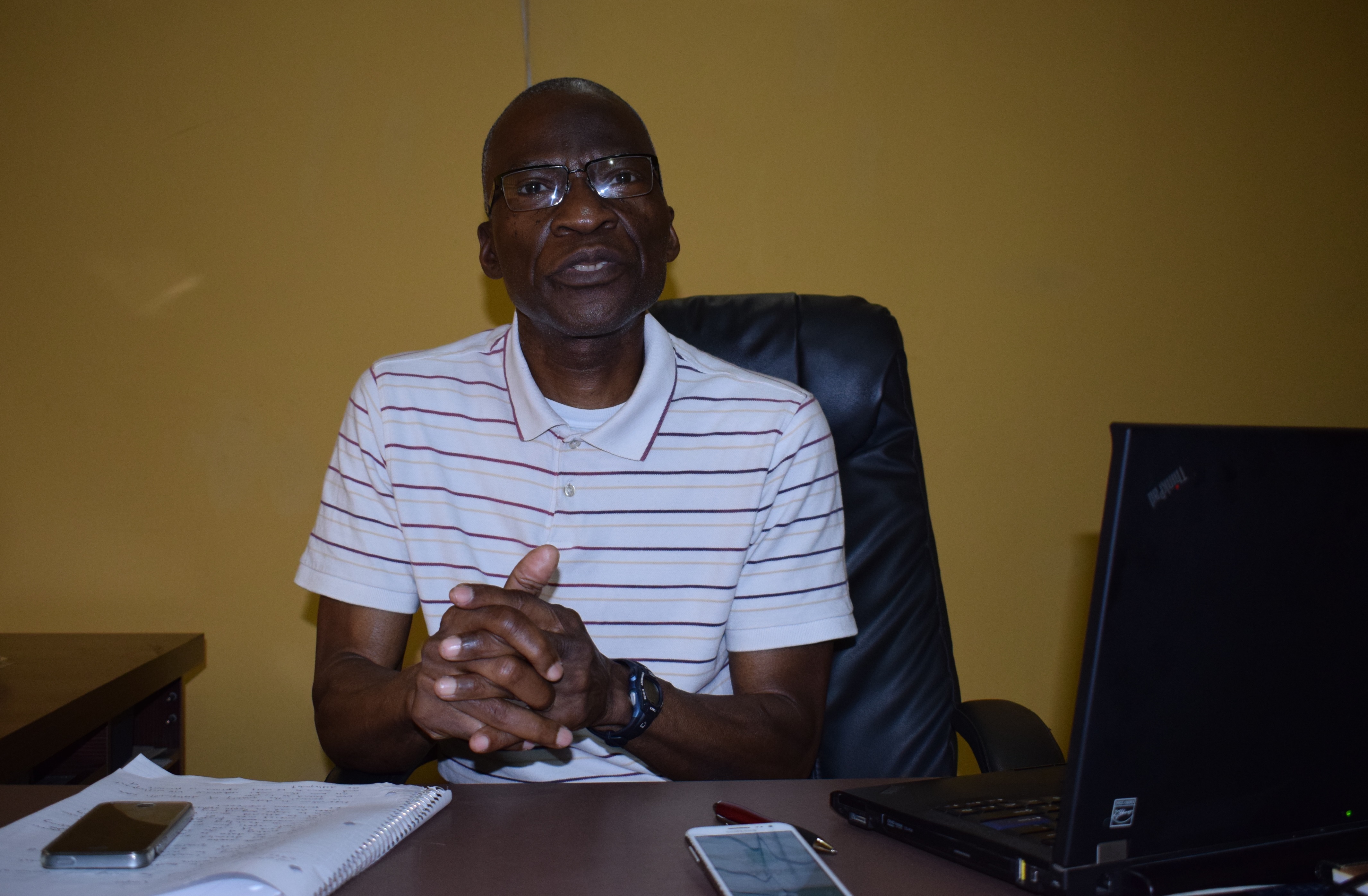
Aderemi Adeyeye is the president/chairman, Enext Wireless, Inc. Aderemi worked for Alcatel-Lucent for 20 years in various areas, starting with training service provider engineers in wireless network deployment. He has been engaged in LTE work since 2008. He participated in the first LTE trial by Alcatel-Lucent in North America.(2008 – 2010) and was the Lead RF Alcatel-Lucent RF engineer in support of the first LTE deployment by Verizon Wireless in the Washington-Baltimore market in the United States (2010) and Alcatel-Lucent Subject Matter Expert in support of AT&T LTE deployment in the New York City / New Jersey market, which is one of the most challenging markets for RF deployment.
He has over 40 years experience in telecommunications, including a design of financial data transmission network using the vertical blanking interval of the North American Television standard (NTSC) for which he shares a patent with two others. He also performed link layer telecommunication work in support of NASA contract at its Goddard Space Flight Center facilities in Greenbelt, Maryland, USA. Aderemi Adeyeye is presently the Chairman of Enextgen Wireless Ltd.
Mr Adeyeye has Bachelor of Science in Electrical Engineering and Bsc Math, from the College Park Campus of the University of Maryland. He spoke to peter oluka on ways to address telecoms quality of service (QoS) related issues in Nigeria and other sundry issues.
What is Enextgen Wireless’ Focus?
We have two primary focal points. First, to provide quality LTE network deployment to the public in Nigeria; to help the public receive value for their money, in terms of quality of (network) service. The second objective is to work with the service providers, on where we find issues on their networks; we collect data from their networks to form a report which we publish for public awareness on the quality of service provided to them. On the same data, we assist service providers identify issues on their RF (radio frequency) and provide technical assistance in resolving those issues.
The intention is actually for Nigerians to get value for what they are subscribing to, in terms of broadband connection, especially in the LTE which is the new deployment standard.
Why Poor Quality of Service Persists
There could be many reasons for drop calls or poor quality of service generally. But, the most important requirement to have consistent service is to make sure the radio frequency part is properly deployed; that is, ensuring the signals go in the direction they are designed for, smooth sign off from one cell to the other. FromEnextgen Wireless’ experience there are some levels of deficiency in the deployment of networks by some operators. It appears, deployment in Nigeria is made in such manner that as soon as the service providers finishes building the cell site, they turn it on- making network available to the public.
That is not normally done in other jurisdictions; before you deploy you are supposed to have cluster of sites, collect data using a third party or your network optimization devices, just to be sure that the radio frequency is performing as expected. But that isn’t the experience in Nigeria. Some service providers are better than others. However, it seems a routine for the site to get turned commercial almost as soon as the equipment is installed.
How Long Has Enextgen Wireless Been In The Market And Achievements So Far?
For almost two years, we have operated in this market. Our purpose has always been to help with the LTE deployment, which is the new broadband/communications standard. When we started, it was only Smile Communications that had LTE deployment and it operated with a small spectrum. Though, with a nationwide licence, they covered only a handful of key cities. Then, NTel acquired the resources of formal NITEL. While others typicallyhad the underlining networks- 2G and 3G on top of which they deployed LTE, NTel started out without an underlying network, even though they purchased the assets of the defunct NITEL. They couldn’t capitalise on Nitelassets which were left unattended for years. So, we have been there to assist these companies to avoid some of the pitfalls others have encountered.
How Can Issues Around Poor Quality of (Network) Service Be Addressed?
Basically, both the regulator and the operators need to pay attention to the level of engineering in the deployment of the services. It is like in haulage, you need a good road network before you can start troubling yourself about optimizing the quantity of goodstaken from one area to others.
Jammers and the poor quality of devices should not be that much a concern in LTE networks. The NCC can continue to use sanctions and insistence on using UEs that are certified as meeting 3GPP specifications. Any unauthorized booster issues can be addressed through network monitoring and sanctions.
If cells are built and turned on for commercial subscription without proper optimization, the network will have poor QoS. As such, regulations mandating a minimum level of performance optimization before commercial deployment might help.
Importance of R&D
Yes, research and development (R&D) is somewhat a complex situation because to have a reliable R&D the government has to pay attention to education. That will also spur individual enterprises to do much in that regard. There is also need to pay attention to the engineering studies in our academic institutions; giving the students access to measurement equipment, various network infrastructures and so on. For us as a Company engage in analyses on (network) performance quality. We can analyse as the low in level as the resource grade which is the output element that carries the data for each resource LTE.
We can analyse the spectrum miles: how they deviate from the standard of deployment or otherwise. So, we can do very deep analyses on over-the-air (OTA) signals that providers broadcast. But we are not service providers; all we have access is the over-the-air. We have the resources to work with service providers, especially the core networks, where they are interested in working with us to improve end-to-end performance of their network.
In addition to the OTA RF, we have the resources to help them look at the performance from the User Equipment (UE), all the way from calling to the terminating point. As far as the product is concerned, we use the standard UEs for mobile or smartphone; ones which have been utilised in network deployment in the developed markets. Most times we focus on Samsung products, because the chips allow you to deeper investigation. The advantage in our case is that we produce unquestionable reference to determine the quality of deployment.
Enextgen Wireless’ Observations With regards to QoS in Nigeria
Our observation is that the quality of deployment in Nigeria is very poor. How bad? It varies from a provider to the other. Nevertheless, there is a specific service provider that seems very aggressive in providing quality LTE deployment and akin to deploy services nationwide. Meanwhile, this service provider, in some areas, has some major issues such as connection failure and drops. Overall, their network is very good. If you move from there you quickly find some other smaller service provider whose deployment is so bad; no where in the world, except in this clime would a service provider be allowed to deploy that kind of network to the public. The quality is so bad.
Mitigating Rural-Urban Migration Through Quality 4G LTE Deployment
You are on point. However, the service providers should first show interest. Their permanent interest should go beyond economic. That is where the government comes in, probably, through the Universal Service Provision Fund (USPF). It is very important to provide additional help to the service providers to cover areas where the profitability might be marginal to non-existent.
On the other hand, the service providers need to partner with smaller companies with special talents to distribute networks beyond the big towers. Such sites are coming up in Kenya where smaller companies are deploying solar-powered solutions to provide coverage in rural areas.
No small company can provide network in huge human density areas without the big network operator providing the backbone. Government needs to encourage such partnerships and innovative service deployment through USPF subsidies.
InfraCo Model
Actually, it is going to help the system a lot. Those are the kinds of solution-provisioning that government should be paying close attention to. It is not just setting up the structure or management; you need to have people with the required skills, dedicated to this work. And you can’t really blame the NCC, but the situation where operators are ‘dumping’ bad networks here does not show the market in good light. NCC has received a lot of accolades for its regulatory exploits in the market, but service providers getting away with the deployment of poor LTE services should not be condoned in anyway; the operators should engage people with the required skills to deploy the right solutions.
How Quality Are The Equipment (Hardware) Used In Deploying The Networks?
I think in Nigeria, the service providers tend to use the same vendors. So, the quality can’t be the issue as such. Even in the United States, no service provider will depend on a vendor to provide the level of quality they need. They have sophisticated engineers and people who have vested interests in making sure they are getting from the vendors the quality they require. We should encourage such here (in Nigeria).
You can’t say because you have given the contract to Vendor X and because it develops good quality equipment in the United State, therefore, you will get such quality here. It doesn’t follow. Somebody has to monitor the activities of these people. Like any engineering, you do the design yourself, identity the equipment you want to use for deployment, then implement. You cannot just leave every part of the process to a vendor just because they flashed certain certifications before you.
Remember, the vendor is here to make money. Even though they parade high quality products, when they realise that the local people are not interested in challenging them to implement the right solutions, they are likely to pull wool over your eyes. So, as we assess the equipment, we have to make sure the resources (human) are handy to ensure the right processes are followed.
What Has Enextgen Wireless Been Doing Lately and Your Future Plans
Since we started, we have been working on a service we called National Independent Wireless Broadband Quality Reporting (NIWBQR). Based on the data we collated, we prepared the report and share, freely, to the service providers. The report gives them a sense of how their network is performing.
Also, we have a very detailed engineering log we can use to help them resolve the issues, if they are interested. Most of the time, they are not interested. But, we now have an exception and that is the same company I said is visibly trying to expand their network in a quality manner. Others would give excuses like ‘NCC monitors us’ ‘this is not from NCC’. In other words, they are saying there is no incentive on their part to serve the public other than meeting the requirement of somebody supervising them.
To me, any company that serves the public, typically, their interest lies on making sure the consumer is happy. In Nigeria, it is the contrary. So, even with the availability of the report they would find one excuse or the other. Honestly, most of the networks being deployed wouldnot be acceptable in many places; (I will say of an environment I am familiar with) in the United States.
A service provider would build the network and test same for months- collecting data to conduct performance analyses, before they ever launch for public consumption. In Nigeria, when you confront these operators they usually take it as ‘Nigerian thing’.
We have other plans of using small cells to provide broadband services to enterprises. We discovered, most time, you may have good coverage outside of your enterprise building, but indoors it’s a different case. So, using facilities of the service providers we can boost the in-house coverage.
On the other hand, most small companies can’t afford the cost of fibre optic connections, while others don’t really need such high speed that fibre provides which shows they will require to embrace the LTE if somebody will give them the services.
Key Observations of Enextgen’s NIWBQR
There are basic things the operators should do which, in my view, do not require so much innovations rather basic engineering. If you deploy a network, the cell sites have to talk each other. When someone wants to move or transfer data from one network to the other, your network has to be aware of such movement by allowing connection to the nearest cell site.
Beyond that, you start talking of innovations. If you have wireless (engineering) labs in our schools the academics can stimulate a lot of these changes required in the sector. It will enable the development of intuitive solutions and save the operators from paying in foreign currencies to obtain the solutions abroad.
We have some of the brightest people in the country, but they need to have access to the equipment- the means of measuring performance, doing designs, etc. That will be the biggest innovations, because nothing is so unique with places like the United State, except their approach to engineering is more practical. Even as a small company we have the tools such as spectrum analyser, vector network analyser; we have means or characterising the performance of the networks in terms of the RF signal quality.
We are working on the means of creating some sensors that could be used in the farm; simply call it Internet of Things (IoT). We are experimenting on that now. For the future, that is the area we would want to focus on.
Likewise, the buzz is on 5G, though it will not become commercial till 2020, but most service providers in the US are on 5G trial mood. The technology will enable a lot of things like Internet of Things (IoT)- communicating through packets of data. We are leveraging our small lab to investigate things along IoT. Our aim is to build solutions to assist the agricultural sector. That is our long term goal. Presently, our resources are geared toward helping the service providers ensure quality delivery.
NIWBQR Report
The latest version of the report covers some areas where LTE has been deployed like Victoria Island and the mainland covering Ikeja and parts of Yaba, all in Lagos State. Then, BeninCity- though Benin doesn’t have LTE coverage across the city, however, as we carry out the test, areas where LTE isn’t available, we try to collect data on the UMTS or 2G or whatever they have. While we have capacity to analyse 2G and 3G, our primary focus is usually 4G LTE. Next week we will be going to Abuja.
Getting Across To NCC
Actually, for almost two years, we have been sending copies of our reports to the NCC. Lately, they have started responding to our correspondences. We really look forward to working with them to achieve this singular objective- contributing something meaningful to the society based on our technical knowledge.
As the public gets value for their money, the service providers get even ahead of challenges of poor QoS. NCC has done well as a Commission, however, there is need to step up monitoring and evaluation of the networks, especially during deployments to ensure not only are standards followed, but the public are not short-changed. Enextgen Wireless will be very happy to work with them in this area.
I think it is cultural: Nigerians like to have organisations that function like the counterparts in the United State or any developed country, but we do shy away from key implementation strategies. It is not about the nomenclature, rather the strategy adopted and followed judiciously. It is disheartening to see that basic rules are not being adhered to by operators while deploying networks.
Spectrum, Broadband and Rural Connectivity, e.g. Smile Communications
In my view, a company like Smile Communications, by the nature of its structure, shouldn’t be expected to have a national focus at the present. Yes, they want to deploy services and make money in the process; I mean there is a very little money for them in the rural areas, so they focus on the cosmopolitan areas where they could make money. We started our work when only Smile had LTE for deployment in Nigeria.
You can see the quality of their network going down because the customer base has increased, but they are not investing in improving the quality. At the early stage Smile stood out in terms of Quality of Service (QoS). In Victoria Island, for instance, it stood out. Now, Glo, MTN and other service providers are now focused on LTE in VI, you can see the Smile’s quality nose-diving.
When you have limited spectrum and want to attract a lot of customers, you either have to improve on the engineering so that the spectrum could accommodate more customers or you have additional spectrum you could use to service a segment of the customer base. Smile only has 10 MHz bandwidth; even though it is a nationwide licence, the rural area will not provide them the kind of revenue they need to boost the network.
I think currently, they are focused on satisfying the current customers, because they seem not to be improving on the engineering of the 10MHz, because we could see it from our data. The way Smile could go to the rural areas is if government mandates them, which government probably wouldn’t dare it. Also, they could be given subsidy to achieve that purpose.
We also have Bitflux which has a bigger spectrum with 30 MHz bandwidth and its license is also nationwide, even though the frequency is high at 2.3 GHz. It is better Bitflux has not gone ahead to deploy in some key cities, because where they are presently they have done terribly with the network deployment. As a country, we wouldn’t want such things happening.


Nigerian Communications Commission (NCC) has said that Nigeria’s internet usage reached a record 1.24 million terabytes in November 2025.

According to the latest data from the NCC, the figure rose modestly from 1.235 million terabytes in October, reflecting steady growth in digital activity across the country.
Broadband penetration in Nigeria crossed the halfway mark in November 2025, reaching 50.58 per cent, up from 45.61 per cent in January, the telecoms regulator reported.
The figure, however, falls short of the 70 per cent coverage target outlined in the National Broadband Plan 2020–2025, which expires this month.
The country had roughly 109 million broadband subscriptions by November. Growth has been uneven, hindered by infrastructure and regulatory constraints, including frequent fibre-optic vandalism that triggers 30 to 43 network cuts daily, high right-of-way fees, and declining subscriber numbers earlier in the year.
Expansion of mobile networks, particularly 3G and 4G services, alongside limited 5G rollouts in urban centres, affordable smartphones, and competitive data plans, has driven uptake.
Investments in the National Communications Backbone and private-sector initiatives have also improved access, especially in underserved areas.
While Nigeria is gradually improving digital inclusion, achieving the original broadband plan remains challenging due to high infrastructure costs, coverage limitations, and deployment hurdles.
The NCC maintains that continued investment in mobile networks and broadband infrastructure will sustain gradual growth in the sector.
Commenting on the development, some Nigerian analysts attributed the surge to the broader mobile and broadband adoption and the growing appetite for streaming, online learning and other digital services.
According to the analysts, the figures suggest that internet connectivity is no longer a luxury but a necessity for both business and leisure, underscoring the slow but steady expansion of Nigeria’s digital economy.
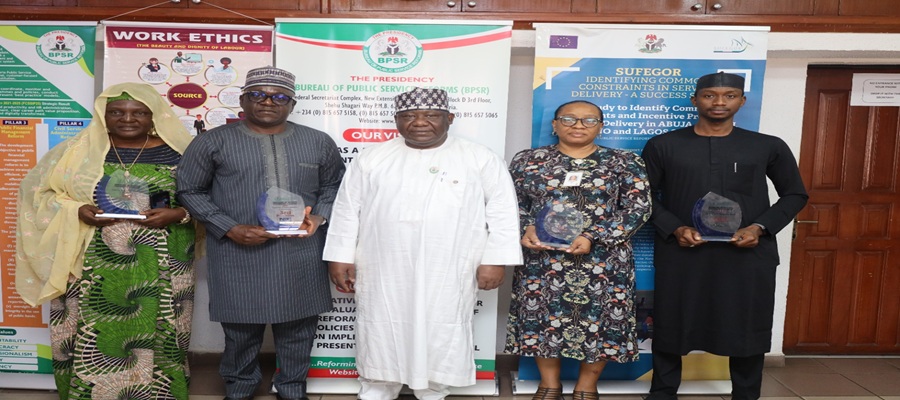
Bureau of Public Service Reforms (BPSR) has named the Nigerian Communications Commission (NCC) among the top three Ministries, Departments and Agencies (MDAs) of the Federal Government with the Best Ranking in Website Performance for 2025.

L-R: Head Special Projects, Nigerian Export Promotion Council (NEPC), Salamatu Andu; Executive Commissioner, Technical Services, Nigerian Communication Commission (NCC), Engr. Abaraham Oshadame; Director General Bureau of Public Service Reforms (BPSR), Head Customer Support Service, Galaxy Backbone, Rosemary Ehize; Secretary to the ES. Nigerian Content Development and Monitoring Board, Tahir Aminu at the BPSR award ceremony for top four MDAs in BPSR Website Performance and Ranking 2025 at the BPSR office on Tuesday, 23rd December, 2025.
This is coming barely three weeks after the telecom regulator was recognized as one of the top five best-performing Federal Government agencies for 2025 by the Presidential Enabling Business Environment Council (PEBEC) – a testament to the Commission’s consistency in investment in technology for ensuring efficient service delivery.
In the BPSR 2024/2025 scorecard ranking of agencies’ websites, the NCC came second in the ranking, trailing behind Galaxy Backbone Limited, which came first while the Nigeria Export Promotion Council (NEPC) clinched the third position, from a pool of 235 MDAs, whose website were evaluated.
BPSR deployed 14 evaluation criteria in include MDA’s website compliance with .gov.ng domain name, appearance and aesthetics (look and feel) of the website, content, relevance to MDAs mandate/government policy and the website’ structure.
Others include website’s responsiveness (device compatibility), security, load time, usability/ease of navigation, availability/uptime, functionality, interactivity, accessibility and capacity building.
The recognition was announced at the official release of Federal Government 2024/2025 Scorecard Ranking for MDAs’ Website held at the Federal Ministry of Finance Auditorium in Abuja on Monday (December 22, 2025) while the award presentation took place at BPSR’s Office on Tuesday (December 23, 2025).
The award, which is an important index metric of the National e-Government Masterplan for determining the Nigeria e-Government Status, was received by the Commission in recognition of its commitment to maintaining a world-class website that enhances service delivery to the citizens.
Receiving the award on behalf of the Executive Vice Chairman of the NCC, Dr. Aminu Maida, the NCC’s Executive Commissioner, Technical Services, Abraham Oshadami, appreciated the BPSR for the recognition, describing the award as “another encouragement for the Commission to be a better public service institution leveraging digital platforms such as our web presence to enhance public service delivery to our various stakeholders, thereby implementing the Federal Government’s Ease of Doing Business policy direction.”
While presenting the award to the NCC, alongside other two agencies, BPSR’s Director-General, Mr. Dasuki Arabi, commended the top three for their proactive decisions in maintaining world-class websites, which are compliant with the Federal Government’s policy direction in effective and efficient service delivery to the citizens.
According to the DG, the 2024/2025 MDA’s websites’ ranking represents a collective effort of federal public institutions in Nigeria to be transparent, accountable and open in governance, as well as a confirmation to align with global best practices in service delivery to the citizens.
Developed about six years ago, Arabi said as a result of the annual ranking, more public institutions have indicated readiness to embrace reforms, and align with the policy direction of the current administration’s Renewed Hope agenda on improve governance for effective service delivery, as introduced by His Excellency President Bola Ahmed Tinubu.
“The ideals of harnessing and deploying technological tools for service delivery has become imperative following the COVID pandemic, and distortions of socio-economic system of nations, culminating in the evolution of competitiveness, cost effectiveness, and agile governance.
“As engine room of governance, it behoves on us in the public service to perform our statutory duties and we must put in place technological innovations and standardized websites to operate services as well as deliver service needs to citizens,” he said.
The Scorecard exercise, he said, is part of the BPSR reform broader function of conducting research on reform implementation efforts and presenting ‘best practice’ models to the entire Public Service, and to among others, improve access to government information, facilitate seamless financial transaction, eliminate corruption and cyber theft, as well as facilitate access to government services.
Speaking on the rigorous nature of the exercise that produced the top three winners, the DG said “in the past few weeks members of the Scorecard Jury drawn from inter-Ministerial Agencies, had worked tirelessly to mill websites of selected MDAs through a rigorous process of enduring criteria for the ranking and the outcome had also passed through a quality assurance mechanism to validate the outcome.”

Taiwo Oyedele, Chairman of the Presidential Committee on Fiscal Policy and Tax Reforms, has dismissed reports that bank accounts not linked to a Tax Identification Number (TIN) will be frozen or automatically debited from January 1, 2026.

Taiwo Oyedele
Oyedele described the claims as false and misleading, warning Nigerians against panic over misinformation surrounding recent tax and financial reforms.
In a post on his X handle Tuesday morning, he wrote: “Don’t let anyone manipulate you. Your bank account is safe. Misinformation makes you panic and fear a reform that is designed to help you.
“When they tell you that your account will be frozen or automatically debited from January 2026, ask them for the evidence in the new law. Be wise.”
He stressed that no provision in the new tax laws authorises the freezing of bank accounts, adding that the rumours are part of widespread misrepresentation of the reforms.
The committee chairman reiterated that the reforms are intended to simplify Nigeria’s tax system and ease the burden on ordinary citizens, not to impose punitive measures on bank customers.

How Moniepoint’s Founders, Tosin Eniolorunda and Felix Ike are Redefining African Tech and Finance

Ecobank Guarantees Seamless Digital Banking Services Throughout the Christmas and Year-End Period

Banks quietly move to enforce new ₦50 transfer levy from Jan. 1

Nigeria’s Internet Usage Hits 1.24m Terabytes – NCC

World Bank Reveals Obstacles to Growth of Mobile Money Accounts in Sub-Saharan Africa

Nigeria Records Highest Weekly Cyberattacks in Africa — Report

Cyber Tsunami Hits Nigeria as Breaches Surge 1,047%, esentry Q3 Report Reveals

Minister Claims Bandits Exploit Poor Network, Bounce Calls Off Multiple Towers

Financial Sector Faced AI, Blockchain and Organised Crime Threats in 2025 – Report

GenAI Adoption Among African workers Outpace Global Peers



 E-Financial2 days ago
Banks quietly move to enforce new ₦50 transfer levy from Jan. 1
 Telecom3 days ago
Nigeria’s Internet Usage Hits 1.24m Terabytes – NCC
 General News2 days ago
Ecobank Guarantees Seamless Digital Banking Services Throughout the Christmas and Year-End Period
 News1 day ago
How Moniepoint’s Founders, Tosin Eniolorunda and Felix Ike are Redefining African Tech and Finance