

E-Business
Nigeria Risks Exclusion from 4IR Over Low IPv6 Adoption

As Nigeria is aiming to remain competitive in the emerging fourth industrial revolution, experts have identified slow adoption of internet protocol version six (IPv6) by mobile operators as a hindrance to achieving this objective, Nigeria communicationsweek was told.
The fourth Industrial Revolution, also known as Globalisation 4.0 is the current and developing environment in which disruptive technologies and trends such as Blockchain, Artificial Intelligence and Augmented Reality and others would dictate the pace of development among nations.
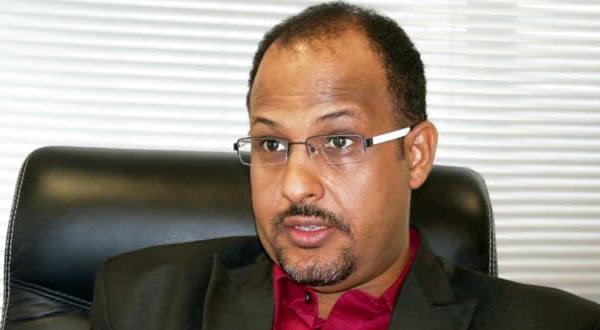
Affirming the correlation between IPv6 adoption and the country’s participation in the fourth industrial revolution (4IR), Mohammed Rudman, chairman, Nigeria IPv6 Council, said that IPv6 was invented because of advent of internet of things, Artificial intelligence, smart city solutions among other technologies that are going to drive fourth industrial revolution, as the number of devices on the internet will increase astronomically and IPv4 cannot accommodate them.
“We really need more mobile operators to adopt IPv6 in the country if we are to play in the fourth industrial revolution as more devices are getting identified on the internet and you cannot use Network Address Translation (NAT) for IoT, Artificial intelligence, 5G and other smart city technologies.
“There is need for these devices to be identified on the internet and not on private IP addresses. The earlier we adopt IPv6 the better for the country in terms of learning through building technical capacity in gradual manner than adopting late that comes with a stiff learning curve,” he noted.
According to Google’s IPv6 adoption report, Nigeria is at 0.01% substantially behind South Africa at 0.4%, Zimbabwe at 6.01% and Gabon at 14.38%, Kenya at 5.67%, Togo 5.81% all well below the global average of 29.44%,
Rudman added that IPv4 and IPv6 will coexist for the next 10 years even after IPv4 has been exhausted by the regional internet registries.
NAT is a methodology of remapping one IP address space into another by modifying network address information in Internet Protocol (IP) datagram packet headers while they are in transit across a traffic routing device.
Chris Uwaje, director general, Director General, Delta State Innovation Hub (DS-IHUB), said Africa may not be globally competitive if the governments fail to adopt IPv6 on time, noting that IPv6 will one day become the absolute default Prefixes for the Internet.
“Globally, the next battlefield for sustainable development and wealth creation resides in IPv6 and IoT strategic knowledge configuration. Africa stands at the dawn of technology opportunity and will benefit immensely, if government and industry lead the advocacy to passionately promote innovation through IPv6 adoption and IoT transmission as combined accelerator to create something and change everything,” he stated.
Stakeholders have Identified challenges fuelling lack of IPv6 adoption in Nigeria to include but not limited to absence of the requisite technical skills; core, metro and edge equipment compatibility issues; nonexistence of IPv6 upstream service providers; and lack of business case for most Internet service providers.



Galaxy Backbone (GBB) aligns with and celebrates the successful announcement by the Office of the Head of the Civil Service of the Federation on the achievement of a Paperless Civil Service, a significant milestone in Nigeria’s public sector reform and digital transformation agenda.

The milestone was formally highlighted at a press briefing led by the Head of the Civil Service of the Federation, Mrs. Didi Esther Walson-Jack, who commended Galaxy Backbone for its sustained support and contribution throughout the implementation of the programme.
GBB has played a critical role in enabling this transition by providing secure, scalable, and shared digital infrastructure that supports the digitisation of government processes across Ministries, Departments and Agencies (MDAs). Through the 1Government Cloud, MDAs have been empowered to migrate from paper-based workflows to digital platforms, improving efficiency, collaboration, data security, and service delivery across the Federal Civil Service.
In addition, GovMail, GBB’s secure government email platform, has strengthened official communication, enhanced records management, and reinforced cybersecurity standards—key pillars in sustaining a paperless operating environment.
Galaxy Backbone acknowledges the collective efforts of the Office of the Head of the Civil Service of the Federation, Permanent Secretaries, Directors of ICT, consultants, partners, and dedicated public servants whose commitment and collaboration ensured the smooth delivery of this initiative.
The Managing Director/Chief Executive Officer of Galaxy Backbone, Prof. Ibrahim Adeyanju, was represented at the press briefing by Akintayo Bamisaye, Acting Group Head, Research, Digital Innovation and Skills Department (RDIS).
GBB describes the achievement as a strong close to 2025 and reaffirms its commitment to supporting the Federal Government in building a modern, efficient, and digitally enabled public service.
At the close of 2025, Temidayo Ojo, the CEO of Jumia Nigeria, reflected on a year-end shopping season that points to the growing maturity of the country’s e-commerce market. “Black Friday is no longer a single, short-lived spike in activity,” he said.

“It has become a familiar, anticipated moment in the retail calendar, where consumers shop deliberately and with confidence.”
Preliminary KPIs for the two months ended November 30, 2025, show strong year-on-year growth in both orders and Gross Merchandise Value (GMV), with GMV growth outpacing order growth. This indicates that customers are placing fuller, more considered baskets rather than shopping in fragmented transactions. Nigeria ranked among Jumia Group’s better-performing markets, with engagement remaining steady throughout the Black Friday period rather than spiking briefly and tapering off.
A key factor behind this performance is the growing familiarity of consumers with online shopping. Customers are increasingly leveraging platform features such as saved carts, brand stores, and price comparison tools to plan purchases in advance. This trend suggests that digital commerce is becoming embedded in everyday habits rather than being viewed as a one-off event.
Ojo also highlighted the role of Jumia’s JForce network in connecting digital commerce to local communities. “Our agents are critical to ensuring that customers across Nigeria, including secondary cities and smaller communities, have access to variety, consistent pricing, and reliable delivery,” he said. “During peak periods like Black Friday, JForce agents can respond faster, serve more customers efficiently, and build stronger local relationships. This isn’t just a distribution channel—it’s a pathway to sustainable income and inclusion.”
Reflecting on the overall performance, the CEO concluded: “What we’re seeing this year-end is steady engagement across categories, stronger consumer confidence, and partners like our JForce agents benefiting from increased activity.
“It confirms that Nigeria’s e-commerce ecosystem is maturing, growing in a more structured and resilient way. As the December Holiday Sale continues, we expect these patterns of familiarity, trust, and participation to sustain momentum and drive both commerce and community impact across the country.”

Galaxy Backbone Limited (GBB) has been ranked first overall in the 2025 Federal Government Website Performance Scorecard.

This is a landmark achievement for Nigeria’s digital economy.
The ranking, conducted by the Bureau of Public Service Reforms (BPSR), is the definitive benchmark for digital excellence and transparency across all Ministries, Departments, and Agencies (MDAs).
Professor Ibrahim Adepoju Adeyanju, managing director and CEO of Galaxy Backbone, received the award during a ceremony in Abuja.
He described the feat as a validation of the agency’s“Nigeria First”data sovereignty strategy and its relentless pursuit of service excellence.
This recognition comes as the Federal Government intensifies its push to achieve a fully paperless civil service by December 31, 2025.
GBB has been the primary architect of this transition through its 1Gov Enterprise Content Management (ECM) platform, which now hosts the operations of almost all federal MDAs.
The award adds to a growing list of accolades for Galaxy Backbone in 2025, following its recent win of the “International Standard Excellence Award for Best IT Service Provider.”
As the central hub for government shared services, GBB’s performance serves as a blueprint for other agencies currently undergoing digital transformation.
With its expanded fiber-optic backbone now covering over 13 states and its secure cloud solutions, Galaxy Backbone remains the cornerstone of Nigeria’s vision to become a leading digital nation by the end of the decade.

FIRS Rebrands as Nigeria Revenue Service, as New Tax Laws Take Effect

Galaxy Backbone Celebrates the Federal Government’s Paperless Civil Service Milestone

Banks to Impose N50 Stamp Duty on Transfers of N10,000 and Above from January 1

How to Use the Correlation of Gold with Other Trading Assets in the Forex Market

How Nigeria’s New Tax Law Could Redefine Risk in the Banking Sector

Nigeria Records Highest Weekly Cyberattacks in Africa — Report

Financial Sector Faced AI, Blockchain and Organised Crime Threats in 2025 – Report

Cyber Tsunami Hits Nigeria as Breaches Surge 1,047%, esentry Q3 Report Reveals
Banks quietly move to enforce new ₦50 transfer levy from Jan. 1

Report Reveals Half of 2025’s Compromised Passwords were Already Leaked




 Telecom3 days ago
Nnaemeka Ani – The Architect of ‘Code and Courage’

 E-Financial3 days ago
Nigeria’s N58.18trn Budget and Rising Cost of Deficit Governance

 Telecom3 days ago
MTN Nigeria Appreciates Partners, Customers at Lagos Prestige Experience

 Telecom2 days ago
T2 Faces NCC Probe in Benue Over Major Service Outage in 9 LGAs

 Telecom2 days ago
MTN Nigeria Crowns Ayo Benzi Winner of Next Afrobeats Star

 E-Business2 days ago
Jumia CEO says Black Friday Signals Nigeria’s E-Commerce Maturity

 Telecom2 days ago
NCC Grants 45 Days for Telecoms Firms to Fix Unapproved Shareholding Changes

 Telecom2 days ago
NCC Unveils Draft 5-Year Spectrum Roadmap, 60 GHz License-Exempt Guidelines to Boost Broadband, Innovation