

E-Financial
Caution Kicks In as Corporate Earnings Loom


By Lukman Otunuga, Senior Research Analyst at FXTM
Caution and unease are set to engulf financial markets ahead of one of the most uncertain earnings seasons for years, as it is expected to offer a bitter appetiser of the painful blow the coronavirus outbreak has dealt to US corporations.
Nevertheless, investors remain somewhat hopeful that the pandemic may be peaking, and this sentiment was reflected across Asian markets on Tuesday morning. The flicker of optimism from Asia could lend support to European shares before earnings kick off later in the day with JPMorgan Chase, Wells Fargo and Johnson & Johnson reporting their numbers. Over the past few weeks, the negative impact of the coronavirus on the global economy has fueled speculation around first-quarter earnings disappointing forecasts. If expectations become reality, risk aversion will most likely make an unwelcome return, ultimately exposing global stocks to downside shocks.
Nigeria extends lockdown for two weeks
Investors who were banking on Oil prices to rebound after the world’s top energy producers pulled off a historic deal to cut global petroleum output by nearly 10% have been left empty handed.
WTI Crude and Brent remain at severely depressed levels, both down over 50% despite OPEC and its allies cutting production by a whopping 9.7 million barrels a day starting in May. While this move by OPEC may create a floor for Oil, it is certainly not enough to push the commodity higher. For as long as global recession fears stimulate concerns around falling demand, oil weakness is poised to remain a dominant theme which is bad news for emerging market energy producers like Nigeria.
Africa’s largest has also extended its lockdown by two weeks in Lagos, Abuja and Ogun. While the social distancing and lockdowns may reduce the spread of the novel coronavirus, it will come at the cost of economic growth. With the lockdown hitting consumption which is roughly 70% of GDP, it will be difficult for Nigeria to mirror the economic growth witnessed in 2019.
Is the Dollar’s crown under threat?
The Dollar weakened against a basket of major currencies on Tuesday as investors braced for a challenging earnings season.
Buying sentiment towards the Greenback will be tested this quarter as investors evaluate corporate earnings and economic data from the United States, which has been hit hard by the virus. Where the Greenback closes this week will most likely be influenced not only by earnings, but also the latest retail sales and unemployment claims data.
If the coronavirus outbreak has left prolonged cracks in the largest economy in the world, the Dollar’s throne could be under threat with market players seeking safety in the Japanese Yen or Swiss Franc. With regard to the technical picture, the Dollar Index is under pressure on the daily charts with prices heading towards 99.00. A breakdown below this level may open the doors towards 98.90 and 98.30.
Commodity spotlight – Gold
Gold has scaled levels above $1724 not seen in more than seven years, thanks to Dollar weakness and global recession fears.
The precious metal remains in fashion, appreciating almost 13% since the start of 2020. Further gains may be on the cards this week if corporate earnings paint a gloomy picture and the Dollar weakens on disappointing data. Looking at the technical picture, prices could jump higher towards $1730 if a solid weekly close above $1700 is achieved. Alternatively, sustained weakness below may pave open the doors back towards $1675.


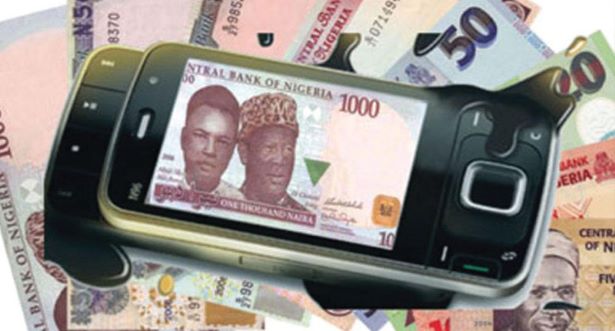
Despite being the global epicentre of mobile money innovation, Sub-Saharan Africa remains home to tens of millions of adults who do not own a mobile money account. A new World Bank report disclosed.

According to the Global Findex Database 2025, Sub-Saharan Africa is widely celebrated as the birthplace of mobile money, a technology that has transformed how people send, receive, save, and borrow money using basic mobile phones.
“Yet, the region still accounts for one of the world’s largest concentrations of adults without mobile money accounts,” it said.
The report shows that while about 40 percent of adults in Sub-Saharan Africa had a mobile money account in 2024, up sharply from 27 percent in 2021, roughly 60 percent still do not.
The reasons, the report argues, are less about lack of awareness and more about deep structural barriers that continue to exclude large segments of the population.
According to the report, a lack of money is the single most common barrier to mobile money account ownership in the region.
For many low-income households, irregular earnings, subsistence livelihoods, and dependence on cash-based transactions reduce the perceived value of maintaining an account, even when services are widely available.
This challenge is compounded by affordability issues. Transaction fees, charges for cashing out, and the cost of maintaining an active SIM card can deter the poorest adults, reinforcing the perception that mobile money is not designed for very small or infrequent transactions.
In Nigeria, the World Bank Group has announced an estimate that 139 million in 2025 will be living in poverty despite the reforms of the federal government.
Mobile phone ownership gaps persist
Mobile money cannot function without a mobile phone, yet phone ownership itself remains uneven. The report finds that 40 percent of adults now own a mobile money account, up from 27 percent in 2021.
And those who do not have a financial account also do not own a mobile phone of any kind.
This creates a double barrier: adults who are financially excluded are often also digitally excluded.
Among those without phones, the cost of the device is cited as the primary obstacle. While basic phones are more affordable than smartphones, the report notes that even these can be out of reach for the poorest households, especially in rural areas. Without addressing device affordability, efforts to expand mobile money risk leaving behind the very groups they aim to serve.
The report disclosed that even when phones and accounts are available, digital capability remains a challenge. The report finds that only about half of mobile money account owners in Sub-Saharan Africa protect their phones with passwords, compared with much higher shares in other regions.
Limited digital literacy raises concerns about fraud, mistaken transfers, and scams, which in turn undermines trust in mobile financial services.
Trust issues are further reinforced by negative user experiences. Only about half of the adults in the region who sent money to the wrong person using mobile money reported getting it back, according to the report. Such experiences can discourage first-time users and lead dormant users to abandon their accounts.
A large untapped opportunity
Despite these challenges, the report points to a significant opportunity. In Sub-Saharan Africa, about a quarter of adults without accounts already own a mobile phone, have official ID, and have a SIM card registered in their own name, meaning they have all the prerequisites for mobile money adoption.
“Closing the gap will require coordinated action: reducing the cost of devices, expanding ID coverage, strengthening consumer protection, and designing low-cost products that reflect the financial realities of poor and rural households,” the World Bank argues.
ation for Africa, turning ambition into scalable capital and risk mitigation solutions.
Building on the successful conclusion of the 17th replenishment of the African Development Fund (ADF-17), which mobilised $11 billion for Africa’s most vulnerable countries, the African Development Bank Group and the Government of the United Kingdom convened global investors and private sector leaders in London to accelerate a new phase of private capital mobilisation for Africa’s development.

The inaugural Africa Private Capital Mobilisation Day, held on 17 December at Lancaster House, brought together more than 150 senior decision-makers from private equity firms, sovereign wealth funds, pension funds, insurers, philanthropies, and development finance institutions and export credit agencies—marking a decisive shift from dialogue to execution.
The high-level event was hosted by the African Development Bank Group in partnership with UK government institutions, the Foreign Commonwealth and Development Office, UK Export Finance and British International Investment, reflecting a shared ambition to scale private capital flows into African economies.
Speaking at the opening, African Development Bank Group President Dr Sidi Ould Tah described the event as a natural continuation of the ADF-17 replenishment process and a decisive step toward addressing Africa’s estimated $402 billion annual development financing gap.
“We will build on recent engagements with development finance institutions, export credit agencies, pension funds, sovereign wealth funds, insurers, and philanthropic partners to advance concrete initiatives under our vision for a New African Financial Architecture,” said Dr Ould Tah.
The Africa Private Capital Mobilisation Day aligns with President Ould Tah’s Four Cardinal Points vision, which focuses on unlocking Africa’s capital potential, strengthening financial sovereignty, transforming demographic growth into a dividend, and delivering resilient infrastructure and value chains.
UK Minister for Development, Jenny Chapman said, “We are delighted that President Ould Tah decided to hold the first Private Capital Mobilisation Day here in London, recognising the critical role of the City of London in mobilising investment for Africa. The UK’s shifting role—from donor to investor—will support countries who want to grow their economies and ultimately ultimately exit the need for aid.”
The programme featured focused discussions on reshaping perceptions of risk in Africa, designing innovative financial platforms, and mobilising capital in fragile and frontier markets.
New analysis on the Global Emerging Markets Risk Database delivered by the Center for Global Development presented new evidence showing that long-term lending to African borrowers has historically been significantly less risky than commonly perceived.
Sector-focused discussions underscored the strategic role of healthcare and aviation in strengthening Africa’s economic resilience, productivity and integration. Participants were introduced to two flagship initiatives championed by the Bank Group and its partners:
– The Africa Medicines and Equipment Facility, developed in partnership with the Gates Foundation, will provide African countries with predictable, timely, and affordable financing to secure essential medicines and medical equipment.
– The Integrated Aviation Transformation Programme for Africa—supported by a dedicated blended-finance facility—aims to modernise and expand Africa’s aviation ecosystem—from airports and airlines to enabling services critical to trade, tourism, and regional integration.
In parallel, President Ould Tah convened a closed-door roundtable with senior executives from approximately 30 leading institutional investors to explore the launch of an Africa-focused Private Sector Innovation Lab. The proposed platform would serve as a dedicated space to co-create new financing instruments, partnership models, and risk-sharing solutions tailored to African markets.
The outcomes of the Africa Private Capital Mobilisation Day are captured in the London Communiqué, setting out clear commitments by the African Development Bank Group and its partners to scale private capital mobilisation for Africa.
Further work will go into setting out priority actions and implementation pathways to scale private capital mobilisation for Africa, turning ambition into scalable capital and risk mitigation solutions.

The Federal Inland Revenue Service (FIRS) has announced that the National Identification Number (NIN) will automatically serve as the Tax Identification Number (TIN) for individual Nigerians beginning in 2026.

The clarification was issued on Monday through a public awareness campaign on the new tax laws shared by the Service on X.
According to the FIRS, registered businesses will also no longer need a separate Tax Identification Number, as their Corporate Affairs Commission (CAC) registration numbers will now function as their official tax identifiers under the revised tax framework.
The announcement follows public concerns over aspects of the new tax laws that require a Tax ID for certain transactions, including the operation and ownership of bank accounts.
Providing further explanation, the FIRS said the Nigeria Tax Administration Act (NTAA), scheduled to take effect in January 2026, mandates the use of a Tax ID for specified transactions. It, however, noted that the requirement is not entirely new, stressing that it has been in existence since the Finance Act of 2019 but has now been strengthened.
“The Tax ID unifies all Tax Identification Numbers previously issued by the FIRS and State Internal Revenue Services into a single identifier,” the Service said.
“For individuals, your NIN automatically serves as your Tax ID, while for registered companies, your CAC RC number is used. You do not need a physical card, as the Tax ID is a unique number linked directly to your identity.”
The FIRS explained that the new system is intended to simplify identification processes, eliminate duplication, close gaps that enable tax evasion, and promote fairness by ensuring that all individuals earning taxable income contribute accordingly.
The agency also urged Nigerians to ignore misinformation surrounding the reform, assuring the public that the new tax framework is designed to improve efficiency and transparency in tax administration.
Meanwhile, the Chairman of the Presidential Committee on Fiscal Policy and Tax Reforms, Taiwo Oyedele, disclosed that banks will be required to request a TIN from all taxable Nigerians as part of the federal government’s new tax administration framework, which will take effect on January 1, 2026.

Nigeria’s Internet Usage Hits 1.24m Terabytes – NCC

World Bank Reveals Obstacles to Growth of Mobile Money Accounts in Sub-Saharan Africa

NCC Ranked Among Top 3 MDAs for Best Website Performance in 2025

FIRS Declares NIN, CAC Numbers as Tax IDs from 2026

Woherem Proposes Pragmatic Roadmap to End Terrorism and Banditry in Nigeria

Nigeria Records Highest Weekly Cyberattacks in Africa — Report

Cyber Tsunami Hits Nigeria as Breaches Surge 1,047%, esentry Q3 Report Reveals

Minister Claims Bandits Exploit Poor Network, Bounce Calls Off Multiple Towers

GenAI Adoption Among African workers Outpace Global Peers

Jumia’s Data Shows Nigerians Turning to Digital Retail to Navigate Inflation Pressures




 E-Financial3 days ago
FIRS says NIN, CAC Numbers to Serve as Tax IDs from 2026

 E-Financial3 days ago
AfDB Group Mobilises Global Private Capital to Close Africa’s Financing Gap

 Telecom3 days ago
Oyedele Dismisses Claims Bank Accounts Without TIN Will Be Frozen

 E-Financial3 days ago
Fidelity Bank Bolsters Ikoyi Fire Station with Hoses, Pumps for Safer Communities
 General News2 days ago
Woherem Proposes Pragmatic Roadmap to End Terrorism and Banditry in Nigeria
 News2 days ago
FIRS Declares NIN, CAC Numbers as Tax IDs from 2026

 Telecom3 days ago
Amazon Blocks 1,800 North Koreans From Job Applications
 E-Financial2 days ago
World Bank Reveals Obstacles to Growth of Mobile Money Accounts in Sub-Saharan Africa