

E-Financial
Luno Continues Rapid Growth, Hits 8M Milestone at a Rate of 1.2m New Customers

Luno, the leading global cryptocurrency company on a mission to upgrade the world to a better financial system, today announces it has hit 8mn customers (wallets), with 1mn added in just 12 weeks.

This follows an earlier announcement in April after it reached seven million customers, with 1mn added in 7 weeks”.
With a major surge in customers from 4mn in December 2020 to 5.1mn in May 2021, Africa accounts for Luno’s largest user base and the platform’s recent figures reinforce the huge appetite for cryptocurrencies across the continent.
Last month, the platform announced it recorded trading volumes of $7bn in Africa alone and installs of the Luno app have soared by 271% on the continent since January 2020.
Speaking on Luno’s thriving traction in Africa, Marius Reitz, Luno’s General Manager for Africa, commented: “Across Africa, we’re witnessing a huge wave of retail investors step into the crypto market for the first time and that’s potentially due to easier access or the lower minimums required to purchase crypto.
However, this isn’t just a trend that’s been taking off in Africa, it’s something that’s being replicated across all of our emerging markets but what sets the continent apart is a rapidly growing awareness of how crypto could be the ideal solution for Africa’s unique challenges.”
“Our research last year found 54% of Africans are ready to adopt a global digital currency compared to 41% in Asia and 35% in Europe. This growing demand stems from an understanding that crypto can effectively solve major problems in Africa such as volatile currencies, costly payments and high inflation.
At Luno, we believe the core utility of cryptocurrencies to address these issues not only has the potential to completely upgrade Africa’s financial system, but will be a key driver in transforming cryptocurrencies from a niche technology to an essential feature of everyday life for all Africans.”
Luno’s global business has also grown rapidly due to the simplicity of its online and mobile platforms, offering education, bank-grade security and self-regulation. It is actively working with regulators and banks to safely increase access to cryptocurrencies.
In recent months, the platform has launched a host of new products and features for its global user base. Earlier this year, Luno announced the launch of USDC – arguably the most secure stablecoin on the crypto market known as the “digital dollar”.
Pegged to the US dollar, it marks a major breakthrough specifically for African users through not only enabling them to hedge against the volatility of local currencies, but also delivering an upgrade on the functionality of the US dollar by being faster and easier to move across the world.
In March this year, Luno also launched USDC on its Savings Wallet alongside Ethereum, delivering a fresh opportunity for its users to earn up to 7.6% and 4% interest respectively on both coins.
With Luno users already afforded the opportunity to earn up to 4% on their Bitcoin savings, the launch marked the latest drive from the company to deliver alternatives for customers looking to make meaningful savings on their money.


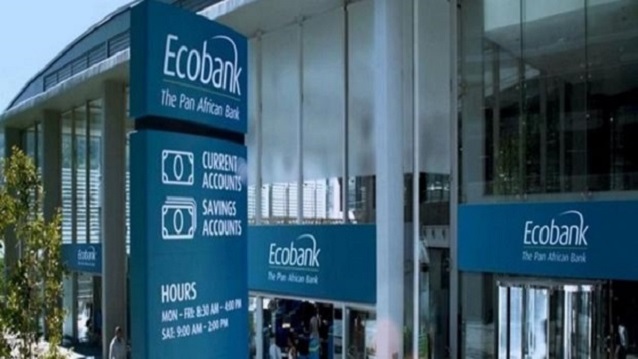
Ecobank Transnational Incorporated (ETI) has joined the trillion-naira exclusive club of firms, marking its first entry in its two decades of being listed on the Nigerian Exchange.

The Pan-African lender saw its valuation surge more than the N1 trillion mark on Monday, January 5, 2026. As of the close of trade on Monday, January 12, the stock had gained 7.4 percent, with its share price hitting N45. ETI has accrued 23 percent over the past four-week period alone, making it the 40th best on NGX.
“Ecobank Transnational Inc. is currently the 23rd most valuable stock on the NGX with a market capitalisation of N 1.07 trillion, which makes up about 1.02 percent of the Nigerian Stock Exchange equity market,” according to African Stock Exchange data, a market analytics platform.
This historic feat follows the early repayment of $245 million of Ecobank’s $300 million Eurobond issuance to bondholders who validly tendered their notes ahead of the February 2026 maturity date.
This must have led to an improved confidence in the bank’s operation, which gained 61 percent a year ago despite the sell-off that rattled the bank’s stock in 2025.
More Nigerian lenders are seeing their market capitalisation cross the N1 trillion mark, suggesting renewed investor confidence in the sector that’s undergoing a recapitalisation exercise.
GTCO remains the most capitalised, with its valuation reaching N3.62 trillion as of January 12, followed by Zenith Bank, First Bank of Nigeria, United Bank for Africa, Access Bank, and Stanbic IBTC with N2.75 trillion, N2.16 trillion, N1.94 trillion, N1.23 trillion, and N1.7 trillion, respectively. By crossing N1 trillion, Ecobank now sits among the country’s biggest lenders within the trillion-naira club.
Fidelity Bank, on April 4, 2025, saw its market value shoot above N1 trillion, making it the first tier-2 bank to cross the threshold. However, it slipped below the mark on May 20 following a Supreme Court ruling that pressured its share price. The bank’s valuation currently stands at N957 billion.
The membership of the exclusive club of listed companies with at least N1 trillion valuation has increased to 24, compared to 17 a year earlier, according to data from the Nigerian Exchange Limited.
The top five members include BUA Foods with a market cap of N14.38 trillion, MTN Nigerian Communications with N12.70 trillion, Dangote Cement with N10.71 trillion, Airtel Africa with N8.53 trillion, and BUA Cement with N6.2 trillion.
Wema Bank Plc has launched the upgraded version of its flagship digital banking platform, ALAT by Wema. Designed as the next phase in digital banking, the upgraded version of ALAT delivers a smarter, faster, and more intuitive experience, reinforcing Wema Bank’s leadership in technology-driven financial services.

Tagged ALAT: The Evolution, the upgraded version represents a significant advancement in how customers interact with their bank.
It enables seamless banking through intelligent features such as voice banking (called SAW), which allows customers to carry out banking activities using natural voice commands, reducing friction and improving accessibility.
It also introduces Tap and Pay for quick, secure, and convenient contactless transactions, alongside uptime prediction that enhances transparency, reliability, and confidence around service availability.
Together, these innovations are designed to simplify everyday banking while anticipating customer needs in real time, reinforcing Wema Bank’s commitment to trust, efficiency, and customer-centric digital experiences.
While announcing the upgraded version of the ALAT Banking app, Moruf Oseni, Managing Director and Chief Executive Officer of Wema Bank, said, “ALAT: The Evolution is more than an upgrade. It is a clear demonstration of our commitment to redefining digital banking in Africa.
“By understanding the future of banking and listening closely to our customers, we have upgraded ALAT by Wema to a digital banking platform that is smart, intelligent and dependable. This evolution reinforces our promise to deliver innovation that genuinely enhances how people live, work, and transact everyday.”
He added that migrating to the upgraded app is seamless. “Existing customers can simply visit the Google Play Store or Apple App Store to update their existing ALAT app and sign-in with their existing login details (All their account information and transaction history remain intact on their profile and they will also gain access to new features that make banking faster, more intuitive, and more reliable).
For new customers, all they have to do is visit the Google Play Store or Apple App Store to download ALAT by Wema app and click the Get Started icon to onboard seamlessly.
Speaking on the technology in the upgraded ALAT by Wema, Olusegun Adeniyi, Chief Digital Officer at Wema Bank, explained, “With ALAT: The Evolution, we set out to enhance not just functionality but the overall banking experience.
“By integrating voice banking, contactless payments, and predictive reliability, we are delivering a platform that is built on powerful technology and responds intelligently to customer needs. This upgrade reflects our long-term digital vision to create a digital bank that is adaptive, intuitive, and consistently available.”
Built on speed, intelligence, and user-centric design, ALAT: The Evolution redefines everyday banking through intuitive features such as voice-enabled transactions, contactless payments, and predictive service reliability. Designed to anticipate customer needs in real time, the platform delivers a smarter, more seamless, and dependable digital banking experience that reflects Wema Bank’s vision for the future of finance.
With the upgraded version of ALAT, Wema Bank continues to strengthen its position as a digital-first institution, delivering innovative solutions that empower individuals and businesses to bank with confidence in an increasingly digital economy.


Nigeria Deposit Insurance Corporation (NDIC) has declared a second liquidation dividend of ₦24.3 billion for depositors of Heritage Bank Limited (in liquidation) whose account balances exceeded the statutory insured limit of ₦5 million at the time of the bank’s closure.

Heritage Bank’s operating licence was revoked by the Central Bank of Nigeria (CBN) on June 3, 2024, after which the NDIC was appointed liquidator in line with the Banks and Other Financial Institutions Act (BOFIA) 2020 and the NDIC Act 2023.
In a statement signed by Hawwau Gambo, head of the Communication and Public Affairs Department, the Corporation said “the second liquidation dividend would be paid at a rate of 5.2 kobo per ₦1.00 on outstanding uninsured balances. This brings the total liquidation dividend paid so far to 14.4 kobo per ₦1.00.
“The NDIC has now declared a second liquidation dividend of ₦24.3 billion. This amount, derived from debt recovery, sale of physical assets, and realisation of investments, will be applied to the payment of uninsured balances for depositors with funds exceeding the ₦5 million insured limit. The second liquidation dividend is payable at a rate of 5.2 kobo per ₦1.00 on outstanding balances, in accordance with Section 72 of the NDIC Act 2023. This brings the cumulative liquidation dividend declared to date to 14.4 kobo per ₦1.00”.
The NDIC recalled that it had earlier paid a first liquidation dividend of ₦46.6 billion in April 2025, representing 9.2 kobo per ₦1.00, following the reimbursement of insured deposits of up to ₦5 million per depositor from its Deposit Insurance Fund.
According to the Corporation, the second tranche was made possible through sustained recovery of debts and continued asset disposal.
“This payment is in furtherance of our statutory responsibility to ensure that depositors of closed banks are reimbursed promptly as assets are realised,” the NDIC said.
The Corporation explained that payments would be made automatically to eligible depositors using existing records. Depositors who have already received their insured deposits and the first liquidation dividend will have their alternative bank accounts credited automatically through their Bank Verification Numbers (BVN).
However, depositors without alternative bank accounts or BVNs, as well as those who have not claimed their insured deposits or the first liquidation dividend, were advised to visit the nearest NDIC office nationwide or complete the e-claim form on the Corporation’s website for verification and processing.
The NDIC noted that liquidation dividends are paid only to depositors with balances above the insured limit and are sourced from asset sales and recoveries. Other creditors and shareholders will be considered only after all depositors have been fully reimbursed and subject to the availability of funds.
The Corporation assured the public that the ₦24.3 billion payment represents only the second liquidation dividend, adding that further payments would be made as additional assets are realised and outstanding debts recovered.
Depositors were advised to contact the NDIC Claims Resolution Department at any of its offices nationwide or through the Corporation’s official email addresses and helplines for further enquiries.

Ecobank Joins Trillion-naira Club for the First Time in 20 Years

PalmPay, Premier Cool to Reward 10,000 Nigerians with ₦100m in “10k for 10k Campaign”

Nigerian Terra Industries Secures $11.8m for Expansion

Kaspersky Warns Telecom Threats from 2025 will Carry into 2026 as New Technology Adds New Risk

SHELT Named in Prestigious 2025 MSSP 250 List for Cybersecurity Excellence

Banks quietly move to enforce new ₦50 transfer levy from Jan. 1

FIRS says NIN, CAC Numbers to Serve as Tax IDs from 2026

Nigeria Takes the Lead in the Global WSIS+20 Digital Agenda

Nigeria Police Arrest Okitipi, Nigerian Allegedly Linked to Microsoft 365 Hack

PalmPay Launches N400 Million World Travel Carnival, Rewarding Users with Free Global Trips




 General News3 days ago
Ministry of Finance Leads FG-Backed Deal to Deliver Quality Homes and Boost Agriculture in Niger State

 News3 days ago
SERAP Sues INEC Over Alleged ₦55.9Bn Election Funds Diversion

 E-Financial3 days ago
NDIC Declares Second Liquidation Dividend for Heritage Bank Depositors

 Telecom3 days ago
FG Plans to Invest $460m World Bank Loan in Fibre Infrastructure

 News3 days ago
AI Founders and Developers to Converge in Lagos for AI in Action 2026 conference

 News3 days ago
FG Inaugurates N40Bn CCTV Control Centre for Third Mainland Bridge

 E-Financial2 days ago
Wema Bank Upgrades ALAT Banking App

 Telecom2 days ago
X Suspends Twitter Account for Rules Violation