

News
Ajaokuta Steel: Mittal, Indian Businessman Gets $500m Bailout in Nigeria

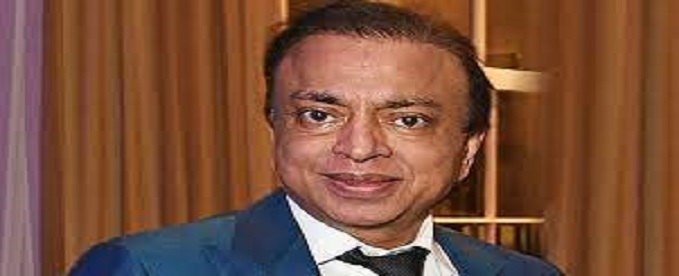
A company owned by Pramod Mittal, an Indian businessman who was the chairman of Ispat Industries Limited (now JSW Ispat Steel) is reportedly getting almost $500 million after the federal government of Nigeria agreed to pay his company the sum to settle a contract dispute over a deal that a previous administration said was tarnished by fraud.

Source: Bloomberg
Bloomberg reported that Mittal’s firm won a settlement tied to a Soviet-era steel plant that has sucked up more than $7 billion in Nigerian public investment without producing any metal.
Mittal, whose career in the steel industry has been less glittering than Lakshmi Mittal, his better-known sibling — the tycoon behind the €20 billion ($21.2 billion) ArcelorMittal SA conglomerate —, has a string of abandoned factories and a trail of unpaid debts to his name.
Five years ago, his Isle of Man-registered Global Steel Holdings Ltd., or GSH, was put into liquidation over $167 million owed to Moorgate Industries Ltd., a company spun off from one of the world’s biggest steel traders.
As a UK court weighed Moorgate’s request to declare Pramod personally bankrupt three years ago, the London-based Indian national held out the prospect of a payout from the Nigerian state to clear his debt.
The judge was unconvinced at the time, but the settlement subsequently reached with Nigeria last year now looks like the 67-year-old’s best route out of insolvency.
Still, while payments from the Nigerian government have reached GSH’s liquidators, as of Oct. 4, Moorgate had yet to see any of those funds despite having asked for them, court documents show.
With Pramod’s bankruptcy winding its way through English court rooms, a new Nigerian president has taken office, and last month his steel minister said one of the administration’s top priorities is to finally fire up the furnaces of the massive plant at the heart of the younger Mittal’s $496 million compensation.
The government has justified the agreement with a former unit of Pramod’s GSH, which was announced in September 2022, saying it frees the state to pursue its ambitions for the sprawling 24,000-hectare (92 square mile) site.
The settlement — representing about 1.5% of Nigeria’s foreign reserves — is just the latest twist in the saga of the vast Soviet-built factory complex begun 44 years ago.
The project has sucked up more than $7 billion in public investment and has yet to produce any metal.
The story of the Ajaokuta steel mill on the banks of the Niger River 190 kilometers south of the capital, Abuja, is often cited as emblematic of the corruption, poor governance and incompetence that bedevils the West African nation.
The country’s most notorious white elephant still sparks passionate debate over whether it should be written off or revived.
“Ajaokuta has been a black hole that has gobbled up billions of dollars, enriching multiple generations of politicians and foreign enablers,” said Matthew Page, a former Nigeria expert for US intelligence agencies and now an associate fellow at London-based Chatham House.
“This last failed reboot — and the giant price tag that came with it — is a preview of the next failed re-concessioning attempt. At this point, Ajaokuta’s dilapidated machinery is capable of doing only one thing: making public funds disappear.”
Bloomberg claimed that neither Pramod’s representatives nor the spokespeople for the newly elected President Bola Tinubu and Steel Minister Shuaibu Audu responded to requests for comment.
Abubakar Malami, Nigeria’s attorney general from 2015 to earlier this year, on whose watch the settlement was reached, said last year that the administration of former President Muhammadu Buhari “rescued the steel industry from interminable and complex disputes as well as saving the taxpayer from humongous damages.”
Pramod’s Involvement
Pramod entered into the Ajaokuta picture in 2004, when then President Olusegun Obasanjo awarded GSH a series of contracts, including an arrangement first to manage and later to buy the steel mill.
Shortly after GSH took over the plant, Solgas Energy Ltd., a small US company, sued it in Texas. Solgas claimed that GSH discussed becoming Solgas’ subcontractor on Ajaokuta before breaching a confidentiality accord and bribing Nigerian officials, including one of Obasanjo’s sons, to “steal the concession.”
While the case was thrown out on jurisdictional grounds, in December 2008 a separate arbitration tribunal ordered Nigeria to pay Solgas $15.2 million in damages for the wrongful termination of the contract — while noting the US firm hadn’t provided evidence to support the corruption allegations.
By then, Umaru Yar’Adua had taken over as Nigeria’s president, and he canceled GSH’s contracts after a panel that his steel development minister set up said the concessions were rife with irregularities. GSH’s claim it had invested $200 million was “a ruse,” the inspectors said.
Rather, the company had used its Nigerian assets to borrow more than $192 million from local banks — funds they “strongly” suspected had been dispatched abroad, they said.
The panel’s full report — never made public but seen by Bloomberg — said rescuing Ajaokuta was beyond the “financial, technical and experiential capabilities” of GSH, which instead had been “systematically cannibalizing, vandalizing and moving valuable equipment” out of the factory.
GSH and its Nigerian unit initiated arbitration proceedings against the government and later entered mediation, which produced last year’s settlement.
Pramod had signed two earlier agreements with the Nigerian government – in 2014 and 2016 – that would have seen his firm retain the right to manage an idled state-owned iron ore mining company but receive no payout.
“I threatened them with criminal proceedings for tax evasion, in addition to other criminal infractions that they had clearly committed,” Mohammed Adoke, a former attorney general who had reached the first of these accords, wrote in his memoir titled “Burden of Service.” “To amicably resolve the issue, I insisted that Global Steel should relinquish (Ajaokuta) for free without any form of compensation.”
Adoke’s successor, Malami, who was the attorney general when the half-a-billion-dollar settlement was struck, modified the terms of the deal to take back the mining firm and award a payment. Malami didn’t respond to a request for comment.
Moorgate’s Case
Even before finalizing the Ajaokuta windfall, Pramod had suggested using the money to pay down the Moorgate debt. In June 2020, as Moorgate sought his bankruptcy, he told Judge Catherine Burton that GSH’s liquidators had failed to account for the “very real prospects of a payment” from Nigeria. He said his Abuja-registered subsidiary would settle the obligation to Moorgate “out of whatever money it receives from the mediation,” according to the decision issued by Burton, who — unpersuaded — ruled in favor of the creditor.
Pramod also tried another way to skirt bankruptcy — using an individual voluntary arrangement, or IVA. He proposed repaying less than £5 million out of £2.5 billion ($3.1 billion) — or 0.2% of what a handful of companies and individuals said they were owed by the businessman.
Moorgate countered that “friendly creditors” who approved this meager offer were either associated with Pramod or relying on loan agreements that were “not true or contemporaneous documents.” A UK judge revoked the IVA last November, expressing “serious doubts” about the authenticity of the paperwork. In the IVA, Pramod said he was worth £117,000, claiming he didn’t control GSH. The family’s London mansion is held through an offshore company whose directors were senior managers at GSH.
Contrary to Pramod’s argument, the court determined he controlled the British Virgin Islands-registered company that owned GSH through his influence over a family trust, with an Isle of Man judge similarly describing him as that firm’s “driving force.”
Pramod made other apparent attempts to distance himself from the group and its subsidiaries. Since April 2021, GSH’s Nigerian unit — the settlement’s beneficiary — has been owned by a Mauritian entity named Luminous Star Ltd., classified as defunct for a decade and with a director who was formerly a GSH employee. While Pramod ceased to be a director of the Nigerian firm in late 2020, his son sits on the board.
In January, Nigeria’s then Information Minister Lai Mohammed said the government had paid $446 million to GSH’s local unit in multiple instalments under the settlement. The law firm hired by the Nigerian subsidiary for the mediation made six transfers from these funds to GSH’s account, totaling £219 million ($272 million) between October 2022 and February 2023, according to reports filed by the company’s liquidators. The law firm, King & Spalding LLP, declined to comment on the rest of the money.
In December and again in March, Moorgate asked to be paid out of funds recovered by GSH’s liquidators, according to a court decision issued last month in the Isle of Man. The liquidators, who estimate that only £40 million is available for creditors once GSH’s potential tax liability and additional costs are taken into consideration, are yet to comply with the request, the judge said on Oct. 4, ruling that Moorgate is entitled to receive part-satisfaction of the debt. Moorgate and GSH’s liquidators declined to comment.
Emulating Lakshmi
Like his brother Lakshmi, who built the world’s second-largest steel producer after splitting from the family business in the mid-1990s and embarking on a legendary deal-making spree, Pramod’s efforts also hinged on international acquisitions. As Lakshmi, the UK’s sixth-richest person, entered the wealth stratosphere, his brother sought to emulate him.
In 2004, Lakshmi’s daughter got married in a lavish ceremony at Versailles, France. Nine years later, the younger Mittal spent £50 million on his daughter’s wedding in Barcelona, according to Moneylife, an Indian media outlet, and Spanish news site Vanitatis. Pramod’s spokespeople didn’t comment on the figure. Just this year, Pramod’s son got married to his long-term partner in a “multi-million pound ceremony” at a five-star UK hotel, the Daily Mail reported.
Pramod’s steel ambitions took him not only to Nigeria, but also to Bosnia, Bulgaria, Libya, Zimbabwe and the Philippines where his companies ran up nearly a billion dollars in debts. During the mid-2000s expansion, GSH agreed to take a loan of up to $35 million from an offshore company owned by his brother Lakshmi, board meeting minutes show. Neither Lakshmi nor the group he heads “have any business connection to the investments” of Pramod, a spokesperson for ArcelorMittal said by email.
In the Philippines, GSH bought a shuttered steel plant in 2004. Within five years, activity at the facility stopped amid a legal battle, with lenders claiming Pramod’s firm had defaulted and the company accusing the banks and liquidator of reneging on an obligation to clear tax arrears. In Bulgaria, where GSH failed to turn around a communist-era steelmaker, a Sofia court put the company owning the mill into bankruptcy in 2008 after it defaulted on a Є325 million bond.
Authorities in Bosnia-Herzegovina arrested Pramod in July 2019 and charged him in January this year with “heading an organized crime group.” Prosecutors alleged that GSH “illegally appropriated” about $11.5 million from a manufacturer of iron-ore smelting coke that the firm took control of in 2003. In a statement following his detention, GSH said the “complaints are categorically false,” according to Mumbai-based news outlet Global Prime News. Pramod was released on bail shortly after being questioned and has not returned to Bosnia. He and his family have initiated arbitration proceedings against the Bosnian state.
Meanwhile, in Nigeria, the attachment of the country’s leaders to the Ajaokuta plant shows no sign of abating, even though critics including the World Bank have called the facility obsolete. President Tinubu pledged during his election campaign to get the steel mill up and running. His predecessor’s government, which left office in May, congratulated itself not only for liberating Ajaokuta from Pramod’s legal claim but also securing it for a settlement significantly smaller than the $5.3 billion that GSH had apparently demanded.
Just last month, touting the potential of the complex to one day create half a million jobs, Vice President Kashim Shettima said the “Ajaokuta plant can be a game changer for the Nigerian nation.”
Source: Bloomberg L.P except headlines and add ons


Quickteller successfully hosted the maiden edition of InsomniaQ recently in Lagos, delivering a 12-hour non-stop celebration of African music, culture, and creativity.

A statement from the firm on Sunday stated that the event attracted a diverse audience of music lovers, culture enthusiasts, and festive diaspora returnees, marking a strong debut for what organisers described as a potential signature December event.
InsomniaQ featured a dynamic mix of live performances and DJ sets, showcasing Africa’s rich musical diversity and creative depth. From soulful sounds to high-energy performances, the festival offered a thoughtfully curated journey designed to follow the natural rhythm of its audience’s circadian cycle, sustaining energy, connection, and excitement throughout the night.
Beyond the performances, InsomniaQ emerged as a platform for shared cultural expression, creating space for celebration, discovery, and community. The experience reinforced Lagos’ position as the heartbeat of Africa’s December entertainment season and highlighted the growing appetite for premium, culturally grounded experiences.
Commenting on the success of the event, the Executive Vice President, Group Marketing and Communications, Interswitch Group, Cherry Eromosele, described InsomniaQ as an organic extension of Quickteller’s place in everyday moments of connection, culture, and celebration.
“InsomniaQ was created as a space to celebrate African creativity in its full expression, the music, the energy, and the people who make our culture so powerful.
“Seeing that vision come to life, with thousands of people connecting through sound, movement, and shared experience, has been truly rewarding. This debut edition reinforces our belief in creating platforms that bring people together and spotlights the richness of African talent in meaningful ways,” Eromosele said.
The success of InsomniaQ, according to the organisers, reflects a broader commitment within the Interswitch ecosystem to support experiences that extend beyond transactions into everyday life. By championing platforms that blend culture, innovation, and community, Interswitch continues to shape how people connect, celebrate, and experience Africa’s evolving creative economy.
With its strong debut, InsomniaQ has set the tone for future editions and established itself as a new fixture in Africa’s December calendar, celebrating culture, driving connection, and creating memorable experiences.
News
How Moniepoint’s Founders, Tosin Eniolorunda and Felix Ike are Redefining African Tech and Finance


In an era where global tech giants dominate headlines, two Nigerian entrepreneurs are quietly revolutionizing financial services across Africa, proving that world-class innovation can emerge from homegrown talent and local institutions.

Tosin Eniolorunda and Felix Ike, co-founders of Moniepoint Inc, have built one of Africa’s fastest-growing fintech companies, not despite their exclusively Nigerian education, but in many ways, because of it.
Their journey from the lecture halls of Obafemi Awolowo University and the University of Lagos to the TIME100 Most Influential Companies list stands as a powerful testament to the caliber of talent nurtured within Nigerian universities and the transformative potential of locally-rooted vision.
Tosin Eniolorunda’s path exemplifies how Nigerian educational institutions can cultivate entrepreneurial excellence. After earning his degree in Mechanical Engineering from Obafemi Awolowo University, he didn’t follow the well-trodden path abroad but instead chose to build solutions for Nigerian challenges within Nigeria itself. This decision proved prescient.
Understanding the unique financial ecosystem and infrastructure gaps firsthand from the work at TeamApt Ltd where they were building from majority of the country’s banks, Tosin pioneered several industry firsts: introducing instant POS transfers to Nigeria, launching the country’s first virtual account services, and constructing a vertically integrated payments processing switch with full switching and processing licenses.
These feats and technological achievements must be viewed from the prism that these were deeply contextual innovations born from intimate knowledge of local needs, the kind of understanding that comes from being educated and embedded in the communities one serves.
Felix Ike’s contribution complements this vision with technical brilliance equally rooted in Nigerian educational excellence. Graduating with first-class honors in Computer Science from the University of Lagos, Felix brought to Moniepoint the kind of engineering rigor required to build mission-critical financial infrastructure.
As Chief Technology Officer, he has architected systems that are not just functional but scalable, resilient, and secure enough to serve over 10 million businesses and individuals across Nigeria and Africa. His work demonstrates that Nigerian universities are producing software engineering leaders capable of building world-class technology that can compete on the global stage with technology that processes millions of transactions daily and underpins the financial dreams of an entire continent.
Since its founding in 2015, Moniepoint has evolved into Africa’s largest distributor of financial services in Nigeria, with presence across all 774 local government areas. The company’s all-in-one financial ecosystem offering seamless payments, banking, credit, and business management solutions reflects a sophisticated understanding of what African businesses and individuals actually need to thrive.
The accolades have followed: recognition by TIME as one of the 100 Most Influential Companies in 2025, listing among CNBC’s top UK fintech firms, and ranking in the Financial Times’ Africa’s Fastest-Growing Companies for three consecutive years.
The Moniepoint story as an indigenously rooted but globally compliant player challenges prevailing narratives about where innovation must originate and what credentials are necessary for building transformative companies. Tosin and Felix’s success illustrates that Nigerian universities, when their graduates are empowered with vision, opportunity, and determination, can produce founders who don’t just participate in the global economy but reshape it.


Federal Inland Revenue Service (FIRS) has announced that the National Identification Number (NIN) issued by the National Identity Management Commission (NIMC) will automatically serve as the Tax Identification Number (Tax ID) for all Nigerian citizens, while registered businesses will use their Corporate Affairs Commission (CAC) registration numbers.

FIRS
The disclosure was made during a public awareness campaign on the new tax laws posted on X (formerly Twitter) on Monday.
According to the Service, the Nigeria Tax Administration Act (NTAA), which comes into force in January 2026, mandates the use of Tax IDs for certain financial and commercial transactions, including bank account ownership.
FIRS explained that the measure is part of efforts to unify all previously issued Tax Identification Numbers (TINs) by both the federal and state revenue services into a single identifier.
“For individuals, your NIN automatically serves as your Tax ID, while for registered companies, your CAC RC number is used. You do not need a physical card; the Tax ID is a unique number linked directly to your identity,” the Service stated.
The agency noted that the requirement has been in place since the Finance Act of 2019 but has now been strengthened under the NTAA to ensure compliance and ease of administration.
Officials emphasized that the reform would simplify tax processes, reduce duplication, and improve transparency in Nigeria’s tax system.
The Service added that the integration of NIN and CAC numbers into the tax framework would also enhance data accuracy, curb tax evasion, and streamline the monitoring of taxable activities across the country.
Tax experts have described the development as a significant step toward modernizing Nigeria’s revenue administration, noting that it aligns with global best practices where national identity systems are linked to tax compliance.
The FIRS urged Nigerians to ensure that their NINs and CAC registration details are up-to-date, stressing that the identifiers would be required for transactions such as property purchases, contract awards, and access to certain financial services once the NTAA takes effect

InsomniaQ Spotlights African Creativity in Lagos

T2 Backs Youth Excellence as NCBC Wins Bosun Tijani Foundation Basketball Tournament

Google Finally Allows Users to Change Gmail Address, Keeps Data and Services Intact

How Moniepoint’s Founders, Tosin Eniolorunda and Felix Ike are Redefining African Tech and Finance

Ecobank Guarantees Seamless Digital Banking Services Throughout the Christmas and Year-End Period

Nigeria Records Highest Weekly Cyberattacks in Africa — Report

Cyber Tsunami Hits Nigeria as Breaches Surge 1,047%, esentry Q3 Report Reveals

Minister Claims Bandits Exploit Poor Network, Bounce Calls Off Multiple Towers

Financial Sector Faced AI, Blockchain and Organised Crime Threats in 2025 – Report

GenAI Adoption Among African workers Outpace Global Peers




 E-Financial3 days ago
Banks quietly move to enforce new ₦50 transfer levy from Jan. 1
 General News3 days ago
Ecobank Guarantees Seamless Digital Banking Services Throughout the Christmas and Year-End Period
 News2 days ago
How Moniepoint’s Founders, Tosin Eniolorunda and Felix Ike are Redefining African Tech and Finance
 Telecom12 hours ago
Google Finally Allows Users to Change Gmail Address, Keeps Data and Services Intact
 General News12 hours ago
T2 Backs Youth Excellence as NCBC Wins Bosun Tijani Foundation Basketball Tournament
 News11 hours ago
InsomniaQ Spotlights African Creativity in Lagos