One of the sectors that Broadband has impacted is the banking sector as the sector can now boast of 23% bank account penetration, said Olusola Teniola, president, Association of Telecommunication Companies of Nigeria (ATCON).
Speaking during Businessday Media Broadband Summit 2017 held in Lagos, Teniola who spoke on the topic, ‘The Impact of Broadband on Nigeria Economy: Citing Best Practices’, said that through 107% telephone and 55% internet penetration, the banking sector has been hugely impacted by increased broadband penetration in the country.
He said, globally, including Africa, telecommunications infrastructure is at the heart of any global business in the modern age.
From data security and data resilience requirements, through cloud connectivity issues, to low latency and time-based stamping in trading transactions, robust, reliable and resilient networks are critical.
“Today, telecommunications operators are increasingly seeking to expand customer-specific and value-added services (such as combining connectivity with application services) to retain relevancy and protect against margin erosion”, he said.
Teniola quoting DLA piper, said, at the same time, the growth of OTT (Over-the-Top) applications raises novel regulatory questions because service providers, many of whom have no infrastructure and often no physical presence at all in a country, can nevertheless use licensed operators' infrastructure in that country to provide services
“Two of the largest ICT markets in Africa – Nigeria and South Africa - adopted broadband policies and plans in 2013, to much international acclaim.
“Implementation in these two countries has however stalled; both identified open access as an instrument to drive broadband penetration.
“While the acclaimed broadband plans of the two countries envisaged open access as a key instrument in delivering affordable, high speed broadband services to fulfil their economic and developmental potentials, in neither of the countries has the mandatory open access broadband strategy been successfully implemented within the four years since the plans were passed. Furthermore, the failure to establish functional open access or public ownership models, or to continue to enable or encourage commercial operators to expand and upgrade their networks and services, has resulted in neither country meeting their ambitious broadband targets to date”.
He lamented that the recent launch of 4G technologies by new/late entrants and the eco-system created is now threatened by several factors such as inflation, multiple taxation, Multiple FOREX windows creates uncertainty, among others.
He, however, said that the industry has confident other sectors like agriculture, insurance, health, food and beverages, etc can be turned around if all they adopt digitalization, the same way the banking sector got transformed through the infusion of ICT in their service delivery process.
“Broadband will create employment in various sectors, the one important part of this is the employment of our Youth and the support of Local Content within the ICT industry. NCC’s active support of ONC going forward is sought as a platform for the contribution of our burgeoning youth”, he said.
ATCON Says Increased Broadband Helps Banking Grow Customers by 23%
Comms Week5 Jun 20170 Comments

One of the sectors that Broadband has impacted is the banking sector as the sector can now boast of 23% bank account penetration, said Olusola Teniola, president, Association of Telecommunication…
C
Published by
Comms Week
Trained and practicing journalist passionate about telecommunications, fintech, cybersecurity, and digital economy reporting.
You May Like

NCC’s Anti-Scam Platform Goes Live Next Month

FG Targets 200 New Telecom Sites before December
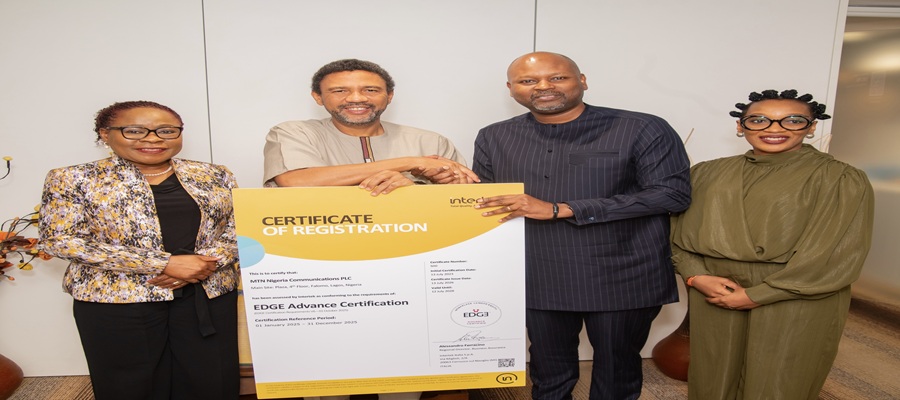
MTN Nigeria Receives EDGE Advanced Certification from IFC for Advancing Gender Equality

ALTON Backs Zero-rated Access to Educational Platforms Programme
NITDA Boss Outlines Vision for Data Centre Investment