The dynamic nature of the modern job market is fuelling the need for deeper workforce insight across all levels of a business so that managers can make proactive personnel choices that will positively impact their operations.
Today, the foundation for informed decision making lies in the vast amounts of employee data that businesses collect each day.
By linking the data collected from employee behaviour and analysing it in light of their business strategy as a whole, companies can promote long term success in an increasingly competitive environment.
As the proliferation of internet and social media usage in the office continues to accelerate, the volume and unstructured nature of employee data that businesses are collecting makes it increasingly difficult to treat with pre-defined models or analyse in a constructive context.
In order to make all this information actionable, HR managers must extract information from these diverse sources and correlate it back to their structured company metrics data, thus enabling the development of meaningful insight.
An application that extends a business’s analytic capabilities by allowing it to unite both unstructured and structured data in this way can greatly enrich its long term HR vision.
The struggle to balance short-term cost obligations while keeping abreast of long term personnel issues is one of the major challenges facing today’s HR strategists.
The more informed executives are about the future, the better equipped they are to handle delicate situations in the present, and this is where data analysis can serve another meaningful, high-level purpose. For example, unstructured data on employee sentiment gathered from yearly performance reviews can be enriched, codified and mapped out against broader company data to highlight big-picture trends in employee performance and engagement.
This information can then be factored into the development of effective personnel strategies.
With the capacity to apply useful structure to a large volume of loose information, HR executives can ask themselves important new questions concerning the current and future state of their business.
Perhaps just as importantly, they can intuitively know where to find the answers to these queries quickly and efficiently.
The level of introspection that this ability affords them promotes a more organic HR management process, as more insightful workforce analyses give rise to more frequent and more self-aware strategic planning.
This deeper insight into employee performance promotes the development of forward-looking HR strategies that will help businesses meet both present and long term challenges with confidence.
adebayo sanni is the country director, Oracle (Nigeria).
Big Data for Enhanced Personnel Insight
Comms Week3 Feb 20140 Comments

The dynamic nature of the modern job market is fuelling the need for deeper workforce insight across all levels of a business so that managers can make proactive personnel choices that will…
C
Published by
Comms Week
Trained and practicing journalist passionate about telecommunications, fintech, cybersecurity, and digital economy reporting.
You May Like
FG inaugurates National Digital Cloud Policy, Targets $750m in Private Investment
NDPC @ Governors’ Forum, Urges States to Strengthen Data Protection Implementation

Kaspersky Detects 4.7 million Attacks Disguised as Workplace Tools Ahead of Business Season

NITDA Warns Zoom Users of Critical Vulnerability that could Hijack Accounts
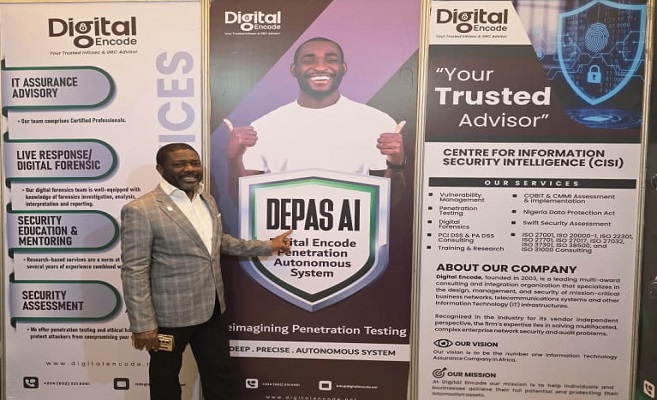
Digital Encode Launches Nigeria’s First Autonomous Penetration Testing Platform DEPAS AI to Counter AI-Driven Cybercrime