It is lamentable that in the almost seven years of the cabotage law in Nigeria, the nation and indigenous ship owners are still deprived of the needed revenue from haulage of petroleum products which ordinarily should help drive the country’s economy forward.
The cabotage Act was passed into law on April 30, 2003 with the release of guidelines for the implementation of the provisions on June 7, 2004. However, the inability of Federal Government to implement the Act gives foreigners the leeway to invade the country’s waterways to carry out all sorts of illegal shipping activities, which have in turn impoverished Nigerian ship owners.
Vessels owned by indigenous ship operators are considered substandard with poorly trained crew. This provides the ready-made excuse for the oil majors to ignore indigenous operators. In the past when the cargo allocation and reservation principle worked well, a lot of indigenous operators could charter vessels to carry petroleum cargo, but now, most of them simply serve as agents or representatives to foreign shipping companies in Nigeria.
The foreign shipping lines carry petroleum products while the indigenous shippers beg to be given the crumbs. Indigenous operators account for less than 10 percent of the total domestic crude cargo moved through the nation’s coastline of more than 2,000 km, dotted with eight ports.
The discrimination has placed the indigenous shippers at a massive disadvantage to every other flag in the world. Although the indigenous shippers are being over-taken by the better capitalized foreign shipping companies, the contention is that the cabotage laws reserve the haulage of crude oil within the nation’s territorial waterways to indigenous operators.
According to the Act, foreign vessels are not allowed to partake in any domestic coastal trade as obtainable in other developed countries of the world, while it will at the same time, promote the development of indigenous tonnage and establish a Cabotage Vessel Financing Fund (CVFF) and for related matters.
However the Temisan Omatseye led management, which assumed office in July 10,2009, after one year recorded a significant increase of the CVFF from less than seven million dollars in July 2009 to over 55 million dollars in June 2010, representing an increase of 685.7 per cent.
The Nigerian Maritime Administration and Safety Agency (Nimasa) management led by Omatseye as director general and chief executive officer, in one year recorded increase of 685.7 per cent increase in the CVFF.
The law stipulates that Nigerians should carry goods, passengers by vessel, or any other mode of transport, from one place to the other, either directly or via a place outside the country. It further stipulates that only vessels wholly owned, manned, built and registered by Nigerian citizens, shall be engaged in the domestic coastal carriage of cargo and passengers within the coastal territorial inland waters or any point within the waters of the exclusive economic zone of Nigeria; except a foreign vessel is given waiver by the Minister of Transport to carry out such job.
But seven years after the law was enacted, none of the provisions of the Law has been fully implemented by the supervising agency. Rather, waivers have been granted to foreign shipping companies to do jobs which Nigerians could do.
This has resulted in the influx of foreign vessels into the country, which needs to be stopped. In order to stop the influx of foreign vessels into the country, The Indigenous Ship Owners Association of Nigeria (ISAN) embarked on appeals and negotiation.
Since the prospect of achieving result through appeals and negotiations failed, the association resorted to using the power granted it under the Cabotage Laws to fight its cause. Consequently, the association and an indigenous company, Pokat Nigeria, not long ago sued a foreign tanker vessel MT Makhambe, from St Vincent and The Grenades, over illegal coastal trading within the Nigerian territorial waters.
The vessels with International Maritime Organisation (IMO) number 9334612, with 7224 registered gross tonnage was impounded while delivering 10,000 metric tons of petroleum products at Ibafon Jetty 1 in Apapa.
Meanwhile, the case was struck out by the Federal High Court sitting in Lagos in favour of the shipping company.
A lot of maritime experts however insisted that in order to rescue the indigenous shippers, there is the need for the Cabotage Enforcement Unit of Nimasa to wake up to their responsibilities because there is an influx of foreign vessels into the country and this should be stopped.
From available statistics, foreign vessels are scattered everywhere in the country doing illegal businesses because their activities are not effectively monitored and regulated. It is therefore advisable that thorough overhaul of the country’s flag administration should be carried out, and that the Cabotage Act should be revisited and simplified for proper interpretation by the court of law.
The Nimasa management is advised on the need to begin to also take critical look at shipping development to see how they could increase Nigerian fleet because without owning ships, the existence of the organization is meaningless.
Furthermore, the CVFF as provided by the law is the only support from the government that would give intending investors the needed leverage in the sector, otherwise Nigerians would continue to play the second fiddle as far as shipping business is concerned.
As a result of high cost of vessels, some banks find it difficult to sponsor shipping acquisition, a situation which is hampering the development of the expansion of fleets in the country.
According to ship owners, cabotage regime was already failing because interested Nigerians do not have the fund to acquire vessels.
For as long as foreign vessels are doing jobs meant for Nigerians ships, most Nigerians that have ships would certainly no longer be able to maintain them, implying that they would rather have to abandon them so that they would be sold as scraps instead of paying their crew members because they have become redundant, observed a maritime source.
He added that,it is lamentable that the Nigerian National Petroleum Corporation (NNPC) is paying huge amounts as demurrage to the foreign vessels everyday because most of the indigenous ships are not in good shape due to their inability to obtain loan or any support from the financial institutions and maritime regulatory body, regretting that the Very Large Crude Carriers which bring in petroleum products into the country do not allow Nigerian ships to come near their vessels.
The Very Large Crude Carriers according to information available to Nigeria CommunicationsWeek bring the refined products and also use their smaller vessels to distribute the petroleum products to the tanks and to the Nigerian National Petroleum Corporation facilities, which is supposed to be done by indigenous vessels operating under the Cabotage regime.
We regret that because Nigerians do not have good vessels, these foreign ships would stay for two to three months, while Nigeria pays as much as $30,000 to $40,000 daily until they finish discharging their contents.
This would have ended long ago if the Cabotage law was working. Most of the time, the regulatory agencies come up with so many excuses, such as; Nigerian vessels do not have Protection and Indemnity (P&I) insurance, observes another maritime inside source who stressed that it costs about $10 million to get such certificate, which most indigenous shipping companies in Nigeria could not afford.
However, Omatseye, has promised to do everything humanly possible to ensure vessel expansion in the country is given proper attention, by making the process of CVFF simpler to enable indigenous operators secure loans from the apex maritime body as well as increase local participation in coastal shipping.
According to him, the Agency would make Nigeria’s maritime industry the safest and most secure in Africa, further stressing that the management would equally make Cabotage a reality.
Even as operators and stakeholders continue to applaud the words of Omatseye, they however confess to being skeptical whether it will be another sweet talk as usual, like one of those often rehashed comments of newly appointed chief executives and political office holders as is the tradition in the country. They moreover call on the Federal Government to give the present chief executive officer of NIMASA the freedom to implement his good ideas, which should help move the maritime industry to another level.
Cabotage Law: Which Way Forward
Comms Week26 Jul 20100 Comments
It is lamentable that in the almost seven years of the cabotage law in Nigeria, the nation and indigenous ship owners are still deprived of the needed revenue from haulage of petroleum products which…
C
Published by
Comms Week
Trained and practicing journalist passionate about telecommunications, fintech, cybersecurity, and digital economy reporting.
You May Like

Cyberattack Sends IMO Crashing Back to Earth

NCC’s Anti-Scam Platform Goes Live Next Month

Nigeria's $1 Trillion Dream and the Great Corporate Exodus
FG Targets 200 New Telecom Sites before December
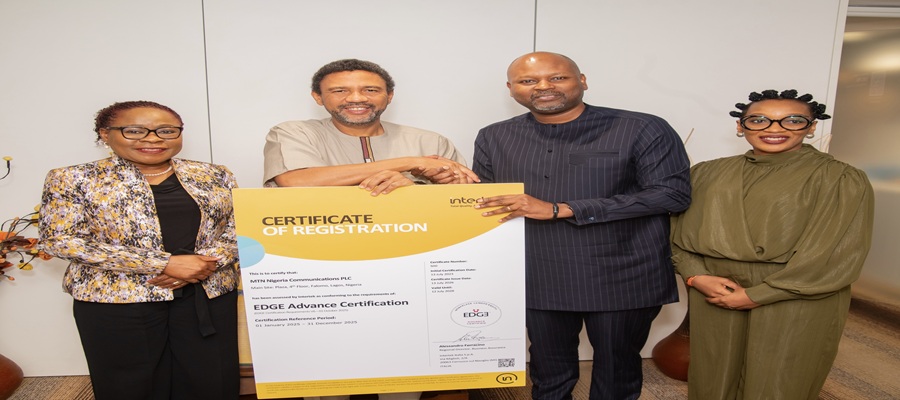
MTN Nigeria Receives EDGE Advanced Certification from IFC for Advancing Gender Equality