Connect with us

General News

CBO Prioritises SMEs Funding For Nigeria’s IT Growth- Nwawudu

Published

on

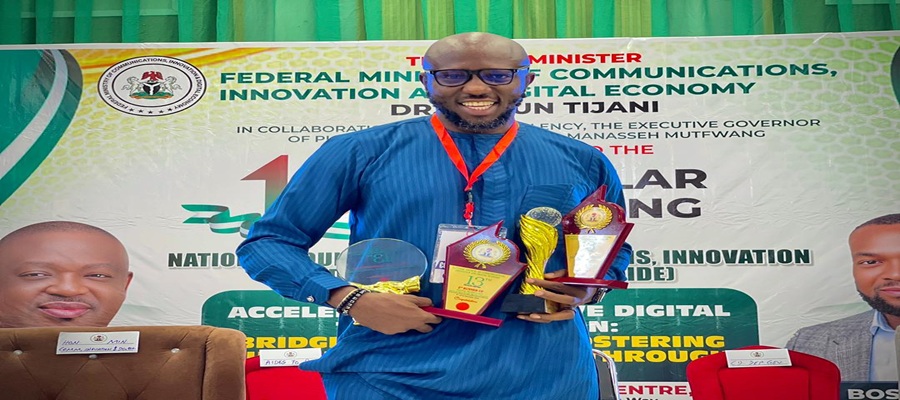
Bex Nwawudu, managing partner and co-founder, CBO investment management,
Kindly share this post

Bex Nwawudu, managing partner and co-founder, CBO investment management, has nearly two decades of experience in private equity, investment banking, proprietary trading, and principal investing with a focus on mezzanine products.
Nwawudu possesses over fifteen years experience in Investment Banking and Trading working for ING Barings, and BGC as a senior principal. As debt and mezzanine finance specialist, he previously headed the Fixed Income Division at First City Monument Bank where he oversaw the development of the FGN Bond trading business, and raised over $500 million of debt and equity for Nigerian Companies.
Nwawudu holds an MA in Economics from St John’s College, Cambridge University, and an MBA from London Business School.
He spoke to peter ugwu on the need to funds to support SMEs growth in the sector.

CBO’s Concerns about Investments in the Nigerian IT SMEs Level
Information communications technology sector is one of the drives of any economy. The technology is one of the most important things you can participate in.
Everything we use around us involves technology. Technology has changed the landscape of so many things in the economy.
That is why we deemed it as an area for the development of Nigeria and where we should invest.
It is an area we are highly confident and truly believe that Nigerians can have real impact; we have a sort of mindset that enable us think differently, be creative, but sometimes have not been under-utilized or misapplied.
However, technology is an avenue for those creative thinkers to apply their thoughts and do so in a productive manner.

Assisting the Unstructured SMEs
The Small and Medium Enterprises (SMEs) provide the uplift for a greater impact on the economy. For instance, WasApp that was bought for $19 billion, but it had about 35 employees, are we to regard that as an SME? To us, there are some that will never be structured, while others gain structure.
Meanwhile, if we take the Nigerian commercial banks as another example, some are structured more than others. And those that are structure that will do well, grow, employ and provide impact for growth.
Such are entrepreneurs we are looking for; they will stand, but currently requiring avenues to get structured, partnership and growth.

CBO’s Investment Models to Avoid Mismanagement of Funds by SMEs
Investment models depend more on your opportunities. In some cases, we like to control the funds. There are cases we might want to occupy a position in the corporate governance such as being in the Board, be the financial director or any other strategic role in the organization.
The essence is to help them decide on best ways to manage the funds. We spend a lot of times developing opportunities, traveling globally to find partners or opportunities for these companies in other emerging markets and the developed markets.
So, they join the platform they are exposed to trends in US, Europe, Middle East, Asia and the rest of Africa.

Assessment of Government’s Policies on Funds for SMEs
We regard the Federal Ministry of Communication Technology initiative to an office on the local content development as instructive and a new dawn.
 It means we are focusing on local content in the sector. We have seen the success of local content development in the oil & gas sector. It is great to see in the ICT that government has started thinking along that path. It may take some time, but we will get to the destination where the sector will make more impact on the economy. In terms of funding, government has set up a number of funds.
Nevertheless, every government has its priorities. For instance, agriculture has over N100billion intervention fund, CBN mapped out N300 billion intervention fund for the aviation sector, the entertainment (Nollywood) industry also received some interventions, likewise the energy sector.
SURE-P is doing some interventions in several sectors; the call today is that, maybe, the government should add ICT to that list and set aside a fund to be managed by professional fund managers or create multiple sub-funds that will be managed by sub-managers to create competition and growth in that sector.
So, government can set aside N50 billion fund which could be broken down into smaller bits. Thus, each fund manager will raise its fund and manages it; investing it in the sector to develop people.

Investing on ICT Education Space
Education is the  key to whatever we are doing. The investments on start-ups, SMEs or interventions should not neglect the importance of the education sector to galvanizing the process.
I have visited few universities in Nigeria, meeting students, deans and other key administrators.
Our universities are generating young people who are excited about life, energetic and intelligent, but they need direction and opportunities so they can understand how their ‘energy’ should be spent during adult life.
You need to work in a firm to understand what work is; you can code or develop software, but if you do not know that somebody can pay you on that ‘little’ code that does a magic, how will you know that you should be working on that code. That is what we are crying to do.
We also want to see that the Office for National Content Development (ONC) brings the Nigerian education-universities, polytechnics and colleges, to now become accredited members, pass through internship that the private sector can give to the candidates. It is important to tie everything together.

CBO’s Assessment of Software Development Community in Nigeria
We are very excited by the commitment, enthusiasms and high-spirited interests shown by these developers. The young coders are building brilliant stuffs. It is a reflection of happening in the Silicon Valley except they do not have the money.
That is what we are driving at. We have seen young graduates who need to pursue their ideas; they need access to the market, mentoring, and those that will show them how it should be done.
Personally, I see it as a commitment that CBO is making; we are not here just to make money. In as much as we want to make profits and make returns to our investors, same time, we want to make major impacts domestically. By creating jobs you are giving peace opportunity to reign.
We cannot have idle Nigerians, watching at others developing their countries. It is high time we created a balance, fair and developed society, intellectually and otherwise.

Other CBO’s Targets in the Market
At the moment, we are assisting in the establishment of infrastructure. We want to support that market. Should investors register, what do they get?
How do we train the students? It means the education establishments have to register before the students can get international grants to get exposed to certain modern trends. Actually, the opportunities are endless, because IT permeates every sector.
What sector does not use technology? In the health, agriculture, manufacturing, aviation, etc., technology does it all. Talking about education, In Brazil today, the internet is used to teach thousands of students.
How about roads and infrastructure? Maybe we still construct roads for the sake of have accessible roads, but modern roads are pathways to several aspects of economic development.
For instance, new roads go with fiber cable dots. Thus, we need to develop our understanding of construction in that way to maximize the roads.

How Young Graduates Can Raise Capitals for Business Development
First of all, the young Nigerian graduates should see themselves bankrolled without applicable ideas. When you are a young person, you need guidance.
Those who have gotten the experiences should be your first chase. Actually, it is a challenge to the society. As time goes on, there should be funds for that class of citizens.
Example, in the UK, there is a Petty Trust. It is a trust you can raise $20,000 to set-up a business. But the key thing for us is, such young person, first goes into the market place, finds a kind of work or labour that enables them to learn.
The truth is that many entrepreneurs first work under successful entrepreneurs to get the out-side school skills. I envisage a time when most of the people working with us would come up with great individual ideas and can raise funds through us to kick-off a business. The whole concept is that the young shall grow.

Plans for Companies in R&D
Research and development (R&D) is very important in Nigeria. It hangs on intellectual property. I know the Office for National Content Development (ONC) is looking at developing a register of national IT property.
For instance, if you look at Facebook, it does not own buildings, it thrives on intellectual property and network. It is protected because of that.
Most of the links between IT companies are patents; they are not even physical. Nigerian banks cannot lend to you on that.
They do not know how to interpret the patent. So, they will be an evolution in the market where we will understand the patents and companies will know where they belong.
The lawyers will have to stand in the law court to protect people. Then, the companies will have room for growth: gain capital in a typical ways through equity and strengthen the case base of the companies.
It will come and this is the first step to it: you need an industry that understands it characteristics. 


Kindly share this post

Nigeria CommunicationsWeek believes that technology makes life more exciting and helps improve the lives of people around Nigeria and indeed the world. So since 2007, we have devoted our energy to independent reportage of technology and how they affect lives.

General News

FirstCap Acts as Joint Issuing House on Veritasi Homes & Properties Plc’s ₦30 Billion Bond Programme

Published

on

Kindly share this post

FirstCap Limited, a premier investment banking business and a wholly owned subsidiary of FirstHoldCo Plc, acted as Joint Issuing House and Placing Agent on the Veritasi Homes & Properties Plc’s Series 1 Bond of ₦10 billion under its ₦30 billion Bond Programme duly registered with the Securities and Exchange Commission (SEC).

The Bond Programme is designed to support the development of Project Oyster Towers, located within Eko Atlantic City. Proceeds from the Series 1 Bond issuance are expected to be applied towards the construction of 30 luxury residential units, forming part of an 82-unit residential development comprising one-bedroom, two-bedroom, and three-bedroom apartments.

Veritasi Homes & Properties Plc is an indigenous real estate development company with operations across Lagos State and the Federal Capital Territory, Abuja, and a growing track record in the delivery of residential real estate projects in Nigeria.

Commenting on the transaction, Ukandu E. Ukandu, Managing Director/Chief Executive Officer of FirstCap Limited, stated:

“We are proud to partner with Veritasi Homes & Properties Plc on this important transaction. The establishment of the ₦30 billion Bond Programme reflects our commitment to mobilising capital for the real estate sector, which remains a key driver of Nigeria’s economic growth. Project Oyster Towers exemplifies the future of luxury and sustainable living in Nigeria, and this transaction reinforces FirstCap’s role as a trusted advisor in major corporate finance initiatives.”

FirstCap’s involvement in the Bond Programme further reinforces our dedication to supporting the growth of the Nigeria’s real estate sector. The successful execution of this transaction highlights the depth of expertise within our capital markets team and our role in supporting issuers in accessing long-term funding solutions aligned with their strategic objectives.

By continuing to connect capital providers with high-impact infrastructure projects such as Project Oyster Towers, we remain committed to driving economic development and delivering long-term value for all stakeholders, Ukandu added.


Kindly share this post
Continue Reading

General News

NITDA DG Calls for Innovation-Led Economic Rebirth @ Kano Startup Weekend

Published

on

Kindly share this post

Kashifu Inuwa, the Director General of the National Information Technology Development Agency (NITDA), has called for a fundamental shift in Kano State’s economic strategy, urging stakeholders to embrace innovation, technology and collaboration as the drivers of growth in the 21st century.

Speaking at the Kano Startup Weekend, Inuwa acknowledge Kano’s long-standing reputation as the commercial nerve centre of Northern Nigeria and the wider Sahelian region, noting that its history of trade, enterprise and human capital provides a solid foundation for future growth.

He emphasised that while these strengths powered Kano’s success for centuries, the modern economy now offers even greater opportunities through innovation and technology.

He described innovation as the process of transforming ideas into impactful solutions through commercialization, stressing that when ideas are effectively deployed, they create value, solve societal challenges and generate sustainable economic growth. He noted that Kano’s large market, strategic location and vibrant entrepreneurial culture place it in a strong position to take advantage of innovation-driven opportunities.

According to him, “Innovation is the process of taking an idea from inception to impact. Invention on its own is a cost centre, but when you commercialise an idea, when you turn it into a product or service that solves a real problem and creates value, that is when you begin to drive economic growth and inclusion.”

He noted that the state hosts numerous degree-awarding institutions across federal, state and private ownership, providing a strong base for human capital development. However, he expressed concern that these institutions often operate in isolation from industry, with research outputs rarely translating into commercial or industrial applications.

He explained that innovation does not happen in silos and stressed the need for a strong, interconnected ecosystem that brings together academia, industry, startups, entrepreneurs and government.

According to him, universities should conduct research informed by industry needs, industries should leverage research to improve productivity and competitiveness, and startups should serve as the bridge that converts ideas into market-ready solutions.

He further encouraged entrepreneurs to leverage technology to build businesses that can grow beyond local markets, explaining that innovation-driven enterprises have the power to scale rapidly, create jobs and position Kano competitively at both national and global levels. According to him, digital platforms and emerging technologies now make it easier for startups to reach wider markets and develop solutions that were previously unimaginable.

“You can start your business here in Kano, but your thinking must be global from day one. Technology has removed barriers. With the right skills and platforms, a startup in Kano can build solutions that serve not just Nigeria, but the world,” he noted.

Highlighting NITDA’s ongoing interventions, the Director General outlined the Agency’s commitment to building national innovation capacity through targeted human capital development programmes. He cited the Digital Literacy for All (DL4ALL) initiative, which aims to equip Nigerians across all segments of society with essential digital skills, and the 3 Million Technical Talents (3MTT) programme, designed to produce a pipeline of globally competitive technical professionals in areas such as software development, data analysis and emerging technologies.

He said, “Through DL4ALL, we are ensuring that Nigerians at all levels have the basic digital skills needed to participate in the digital economy, while 3MTT is deliberately building a pipeline of globally competitive technical talents who can drive innovation, create jobs and attract investment.”

He explained that these programmes are key pillars of President Bola Ahmed Tinubu’s Renewed Hope Agenda, which prioritises skills development, innovation, job creation and inclusive economic growth as pathways to national prosperity. According to him, empowering Nigerians with digital and technical skills is essential for building a resilient economy capable of competing in the global digital landscape.

“President Tinubu’s Renewed Hope Agenda is about investing in people, empowering them with relevant skills and creating opportunities for inclusive growth. At NITDA, we are using digital skills and innovation as tools to translate that vision into real economic impact for Nigerians,” he said.

Inuwa urged all stakeholders in Kano to work together to build a functional innovation ecosystem that can unlock the state’s vast potential. He expressed confidence that with the right mindset, strong collaboration and sustained investment in digital skills and innovation, Kano can reclaim its historic leadership role and emerge as a major innovation and entrepreneurship hub in Nigeria and beyond.


Kindly share this post
Continue Reading

General News

Sterling Bank Renewable Energy Colloquium Urges Stakeholders to Unlock Nigeria’s Clean Energy Potential

Published

on

Kindly share this post

Sterling Bank Limited on Monday convened stakeholders in the renewable energy industry to explore strategies for accelerating Nigeria’s transition to clean energy and boosting economic growth.

Sterling Bank Renewable Energy Colloquium Urges Stakeholders to Unlock Nigeria’s Clean Energy Potential

L-R: Mr. Ayo Ademilua, President, Renewable Energy Association of Nigeria; Dr. Jekwu Ozoemene, Group Executive, The Alternative Bank; Mr. Biodun Ogunleye, The Honourable Commissioner, Lagos State Ministry of Energy and Mineral Resources; Mr. Dele Faseemo, Group Executive, Coprporate and Investment Banking, Sterling Bank; Engr. Bem Samuel Anyangeuor, Representative, Honorable Minister of Power and Mr. Oluwaseyi Okunnuga, Group Head, Renewable Energy & Sustainability Finance, Sterling Bank at the just concluded Renewable Energy Colloquium held in Lagos recently.

The colloquium, themed “Beyond the Grid: Unlocking New Frontiers in Renewable Energy”, was held in Lagos and brought together policymakers, financiers, and industry leaders to deliberate on priority areas for action.

In his opening address, Managing Director and Chief Executive Officer of Sterling Bank, Mr. Abubakar Suleiman, represented by Mr. Dele Faseemo, Group Executive, Corporate and Investment Banking, said the bank would focus on regulation and financing to expand access to energy.

He noted that energy access remained critical to supporting economic growth and achieving Nigeria’s ambition of building a one trillion-dollar economy.

Delivering a keynote address titled “Scaling Electrification in Nigeria: The REA Impact”, Managing Director of the Rural Electrification Agency (REA), Dr. Abba Aliyu, represented by Mr. Abba Hayatudden, said Nigeria required about 26 billion dollars to bridge its energy deficit.

Aliyu explained that the energy transition strategy integrates grid, mini-grid and off-grid technologies to achieve universal, reliable and sustainable energy access while aligning with national development and climate goals.

Minister of Power, Mr. Adebayo Adelabu, represented by Engineer Samuel Ayangeaor, commended Sterling Bank for convening the dialogue.

He said renewable energy and rural electrification were central to the Federal Government’s Renewed Hope Agenda.

“The Ministry of Power has continued to expand electricity access to underserved communities to drive economic growth, foster industrial activity and create jobs across the nation,” Adelabu said.

Lagos State Commissioner for Energy and Mineral Resources, Mr. Biodun Ogunleye, highlighted the state’s efforts in renewable energy, including the ongoing two-gigawatt grid-scale solar project.

He described it as the most ambitious energy transformation ever undertaken by the state.

Chief Executive Officer of Sterling One Foundation, Mrs. Olapeju Ibekwe, urged participants to move beyond communiqués and act with intention to deliver meaningful impact.

The colloquium featured panel sessions on financing and scaling green energy solutions in Africa, among other discussions.


Kindly share this post
Continue Reading

Trending