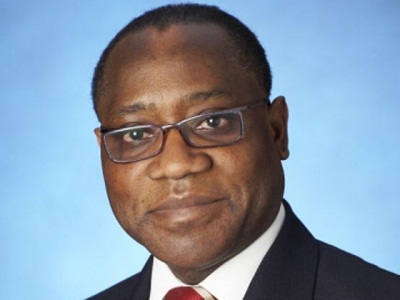
Tony Nwosu, Managing Director and Chief Executive Officer, Global Access Technologies (GAT) Limited, is a multi-skilled and charismatic personality. He holds B.Sc., in Electrical Engineering, University of Nigeria Nsukka, (UNN) M.Sc., Electrical Engineering, University of Lagos, (UNILAG) M.Sc., Business Administration, Lagos Business School, (Pan African University, Lekki). He had worked in NTA before proceeding to TelNet Nigeria, where he resigned as the General Manager after 11 years. His interest in making Nigeria an ICT haven led to his joining Enterprise Systems as General Manager; and finally setting up Global Access Technologies (GAT) as a leading ICT solution provider.He spoke to Peter Ugwu. Excerpt.
What’s Global Access Technologies (GAT)?
Global Access Technologies is an indigenous company incorporated in 2003 with the objectives of proving leading edge ICT solutions both within and outside the Nigerian environment.
We provide both enterprise networking solutions and operator carrier-class solutions, and actively involve in building telecoms and ICT infrastructure for both GSM and CDMA operators.
We provide ICT solutions for banks and other organisations. We have been pursuing our mission to provide world class ICT solutions that deliver maximum value to the customer in terms of quality, cost and robust designs.
We aim to be a leading ICT solution provider in Nigeria and in Africa, continually using the best of technologies and human resources to launch Nigeria and Africa into global ICT relevance.
In GAT, we consider ourselves stakeholders in the customer's business and a critical component in the value chain of the customer.
We therefore strive to excite the customer by meeting all commitments in a very professional and cost-effective manner.
We have added value to the sector in so many ways. Firstly, as a service organization, since 2003 we have been contributing in building of telecomm infrastructure in Nigeria.
There is hardly any operator in Nigeria you will mention that we have not been a part in building their network infrastructure; including alternate power supply for the Telecom operators
Assessment of ICT Draft Policy
I think it was a good development for the Minister to have first of all set up the committee and had organized such a forum for stakeholders to share their views on the document.
In terms of the work of the committee, I think a lot in certain areas need closer attention as evidenced in the reactions by majority of participants at the forum.
The draft policy is a kind of innovative document with an attempt to converge the industry.
Meanwhile, a critically examination of the document shows that the committee went through existing reports, Laws and Acts of Parliament like the Nigeria Communications Act 2003, the Broadcasting Policy, Postal Act, among others, to arrive at the present document. Actually, they need to harmonize the policies to come up with better legislation to solidify the Convergence Regulator.
A lot of people are still divided on the Convergence Regulator; that is bringing all the industrial players under one regulator. This is an area that perhaps demands more attention.
NCC and NBC under a Converge Regulator
To a large extent Nigeria will benefit from convergence in the ICT sector. There was a budged attempt do converge NCC and NBC under President Olusegun Obasanjo, even up to the period late President Umaru Yar’Adua, assumed office.
I believe the then government must have taken into cognizance the issue of converging the Ministries of Information and Communications Technology.
However, a school of thought believes they should stay separated, yet another group thinks it was better to merge.
I would want a situation we seat down and streamline their functions and remove the areas of overlap.
As far as I am concerned, broadcasting, which Nigerian Broadcasting Commission represents, is different form Information Technology, the paramount base of NCC. Broadcasting has to do more with mass communication, information content and dissemination.
Talking about Information Technology (IT), it concerns NCC more. In fact, if we take lexicon of IT, we should be focusing on IT structures, regulations, quality of service and performance.
NCC’s Fate
The bone of contention is: should NCC bow to the authorities of the Converged Regulator, how will it perform optimally?
By the time we have this supposed Regulator taking care of a vast ICT sector, the efficiency might not be attained.
So, I subscribe to the school of thought that believes NCC should remain unchanged.
That is, let the policy empower NCC more by widening its scope of monitoring and regulation instead of muzzling everything together.
For instance, if NCC when standing as a full fledge commission has been battling with telecomm operators to guarantee subscribers receive quality of service, how would they achieve such feat when it becomes just a department under the converged regulator?
The bureaucracy will not allow efficiency and even accountability will decline. Because I foresee a situation the executive vice chairman (EVC) will lack the autonomy to give order, sanction or oppose fines or even withdraw licenses of defaulting telecom operators.
Even the workload will be quite enormous, because they will be expected to perform oversight functions to monitor courier companies, broadcasting stations, trying to mediate between them and customers; of course they will lose focus and would not be able to serve the public effectively.
Local Content in ICT sector
I think the draft as it was presented has identified the imports of local content or local participation, capacity enhancement and other aspects of human engagement.
Any policy that does not encourage local participation is not desirable.
And such provision in the ICT is expected to engender manufacturing and ICT penetration.
I align with those who have expressed concern that ICT industry is yet to embrace the national development policy like it is in the oil and gas sector.
Masts Review
The issue is not something that should be politicized or handled with levity. For instance, during the storm that ravaged parts of Lagos earlier in the year, generated a lot of interests.
However, it will not do the country any good to continue pointing accusing finger at persons or corporations, rather there should be standards for building masts.
Telecom operators have different equipment, just as there are differences between towers and masts.
Towers are the structures that carry most of the equipment, while masts are the smaller ones that dot everywhere carrying antenna.
At the level of masts, most banks have the infrastructure in their vicinities.
At that point, I don’t think there is any regulation.
They just approach companies to construct for them.
I can say it is very rare to see an operator’s tower collapse.
There are standards for building towers, whereas the entry point to constructing masts is very low, if not porous.
That is one of the reasons NCC should be allowed to look more into IT affairs as they affect the country.
Broadband
Broadband is part of global ICT strategy. It is not surprising looking at where we are with regards to broadband penetration, the emphasis was more on telephoning.
NITEL then monopolized the market with less than 400,000 lines at the time of deregulation in 2001.
But the reform in telecom sector has freed the market to not only accommodate multiple operators, but in just one decade we have achieve over 100 million active customers.
Having achieved such magnificent feat, operators have been providing the subscribers with internet services, though not at broadband speed.
Access to internet is growing; unfortunately, very few of them are hooked to the broadband space, and that is the challenge.
Meanwhile, there are some programmes on-going and others in the offing. I am aware that NCC has a programme called State Accelerated Broadband Initiative (SABI), geared towards the penetration of broadband in rural areas.
There is also USAID fund managed by NCC as well with an aim to assist the rural or under-serviced areas and provide service for them.
And NCC is working on a national broadband policy that will have a holistic assessment of broadband penetration.
Community Broadcasting
If the broadband initiative receives a boost, it will ensure that communities are covered with adequate high speed internet backbone.
It will not only promote community broadcasting, but also serve as a wealth-enabler. People will have access to it at short distance.
Even hospitals in the rural areas will get connected to teaching hospitals and carry out emergence operations.
NITEL/M-TEL Failure
The problem with NITEL and M-Tel is synonymous with other aspects of the public sector: slow-paced development.
Neither NEPA nor PHCN has fared well. In the oil and gas sector, the NNPC is beset by corruption.
For NITEL, the government has tried every possible means to get it on the right path, but to no avail.
They have gone through the route of commercialization and several rounds of privatization, the whole thing failed. I don’t think there was neither transparency nor accountability in the whole process.
Now, NITEL and M-Tel are going through liquidation, all points to the fact that government has no reason being in business.
Anything government delves into, particularly in this regards, will never achieve the target. Ghana equivalent of our PHCN is doing well.
Insecurity
This has become multi-faceted in Nigeria.
ICT has a big role to play in curbing civil insurgencies. It remains the reserved duty of the security agencies to track criminals.
If ICT has not contributed much, it cannot be for lack of ideas; instead government should be bold enough, approach the industry to galvanize certain gadgets to tackle the problem.
The issue of kidnapping has reduced drastically following the GSM tracking apparatus; the gesture can be replicate in other areas of security application.
Civil Service Ineptitude Kills Innovation - Nwosu
cwadmin16 Apr 20120 Comments
Tony Nwosu, Managing Director and Chief Executive Officer, Global Access Technologies (GAT) Limited, is a multi-skilled and charismatic personality. He holds B.Sc., in Electrical Engineering,…
c
Published by
cwadmin
Trained and practicing journalist passionate about telecommunications, fintech, cybersecurity, and digital economy reporting.
You May Like

NLNG, NCDMB Boost Engineering Research with Innovation Centre

NITDA Seals Strategic Deals with Goose FL and Fireflies AI to Power $1 Trillion Digital Economy Vision
Anambra Seeks Digital Inclusion in Rural Communities
Nigeria Not Making Progress in Fiscal Transparency –US

World Bank Investing $25 million in Equity in Jumia Technologies