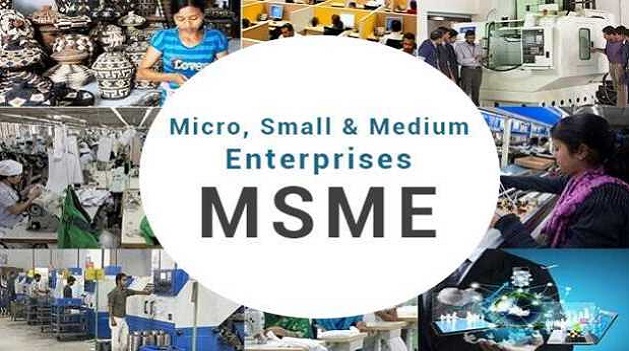
Deloitte Akintola Williams “Deloitte” has supported Nigerian Association of Small and Medium Enterprises (NASME) advocacy for Micro, Small & Medium Enterprises (MSMEs) in the country to be granted tax amnesty to rejig their records and recuperate from the present harsh business climate.
NASME leadership had made the call during a public presentation of Tax Advocacy Paper aimed cataloguing issues that limit MSMEs growth in Nigeria; a work executed by Deloitte Nigeria on behalf of NASME, through the support of Enhancing Nigerian Advocacy for a Better Business Environment (ENABLE), where it supported five-year tax amnesty to the small businesses by the Government.
According to Mr. Fatai Folarin, chief executive officer of Deloitte Nigeria, in spite government’s efforts and the clout garnered by MSMEs, small businesses suffer multifaceted limitations and have not played expected vibrant role in the economic growth and development of Nigeria.
Folarin said the report findings show an existing or perceived disconnect between policy intent and the realities of MSMEs.
“The need to bridge the gap between policy intent and MSME reality has necessitated this position paper. The drivers for this position paper are: Encouraging interaction and adoption of a concerted approach to issue of strategic importance to the development of MSMEs in Nigeria; Establishing a frame work that ensures effective realization of government objectives and targets for MSMEs; and Creating an active platform for policy advocacy on issues affecting MSMEs in Nigeria”.
The Tax Advocacy paper focuses on key objectives as the challenges faced by MSMEs in Nigeria; bridging tax and regulatory gaps in relation to MSMEs – Our Recommendations and benefits to the government.
Also speaking, Oluseye Arowolo, partner, Tax & Regulatory at Deloitte Nigeria, said that the executive summary of the paper, it has clearer, “apart from where the policy defined MSMEs, the policy does not specifically address nor differentiate the needs of each segment, which is principally the disconnect that needs to be addressed”.
He said, “Each category of MSME has its own peculiar characteristics and problems which require targeted policies to address them. If you look overview of MSMEs in Nigeria, the country’s economy is largely driven by MSMEs with 96% of Nigerian businesses falling under this category; The MSME sector accounted for 84.02% of the total labour force in Nigeria in 2013; MSMEs contribution to the Nation’s Gross Domestic Product in nominal terms stood at 48.47% in 2013; MSMEs contribution to export stood at 7.27% in 2013 and MSMEs, the world over are said to generate about 90% of employment in the private sector. So, we started work on this position paper about two years ago. Since then so many things have changed, however, there are current events in the country that show the releasing of this position paper is apt and should be adopted by the Government to cater for this segment of the economy,” Arowolo said.
The document jointly presented by NASME, Deloitte and ENABLE identifies that currently, only about 27.7% of registered businesses in Nigeria pay taxes out of the recorded number of 450,000; MSMEs account for a significant portion of the remaining 72.3%, hence “an improved tax and regulatory framework will result into widened tax net to accommodate these MSMEs as a result of the VDP and simplified tax registration process”.
“If the Total tax revenue generated by the revenue authorities in 2015 was N3.7bn; The target tax collection in 2015 was N4.6bn, government granting MSME requests will encourage the level of compliance and consequently, more revenue generation. For instance, unemployment rate and GDP in the 1st quarter of 2016 are recorded at 12.1% and -13.7% respectively. Enactment of preferential tax rules and other tax incentives requested will boost investment and encourage more players in the sector. Consequently, increased employment, more goods being produced for export and increased GDP,” he said.
The Partner, Tax & Regulatory at Deloitte Nigeria added that the paper recommends for the Government to have special MSME tax regime “where MSMEs will not be assessed under the provision of either PITA or CITA, but on a new tax and regulatory framework dedicated to MSME in clear and definite terms”.
According to NASME, statistics shows that Nigeria has currently has over 35 million small business, who account for 90% of job creation, contributing about 50% of the economic growth, regrettably, the sector are heavily taxed and allowed to grapple with multifaceted challenges.
The informal economy or grey economy which is usually regarded as part of the economy that is neither taxed, nor monitored by any form of government, the experts said, deserves to be treated fairly and included into the activities of the formal sector economy.
To this end, Prince ‘Degun Agboade, president/chairman of Council of NASME thanked Deloitte for executing the work seamlessly, adding that the findings are critical to the members.
According to Agboade, MSMEs in Nigeria today are faced with challenges ranging from “Government’s perceived lack of sensitivity; Rigid and stringent requirements for start-up business; Over-regulation; Insufficient access to funds/finance and lack of awareness; Inefficiency in the administration of government's incentives; Multiple and high taxes, among others.
He said, “In a situation you present you bankers with collateral worth N200million and they say you can only borrow N12million, whereas N50million was approved for you, does it augur well for such manufacturers? Manufacturers are going through turbulent times especially in sourcing for funds, and tax system is not harmonised. We want the Government to look into this. So, the call for tax amnesty is justified, because it is going to inject life into the MSMEs and help the government to increase tax earnings”.
Deloitte Backs NASME’s ‘Tax Amnesty for MSMEs’ Proposal
Comms Week25 Aug 20160 Comments

Deloitte Akintola Williams “Deloitte” has supported Nigerian Association of Small and Medium Enterprises (NASME) advocacy for Micro, Small & Medium Enterprises (MSMEs) in the country to be…
C
Published by
Comms Week
Trained and practicing journalist passionate about telecommunications, fintech, cybersecurity, and digital economy reporting.
You May Like

Releasing President Tinubu’s Records Can Endanger Lives – FBI

Tinubu Orders Arrest of Nwabueze, Head of Another Fake Agency, Suspension of 3 Perm Secs
How AI, Poor Governance Aid Transnational Scams —UNODC

Access to Equipment, Specialists Key to Survival of Preterm Babies — Haven Pediatric CMD

Shell Reinforces Safety Commitment @ CEO Contractors Forum