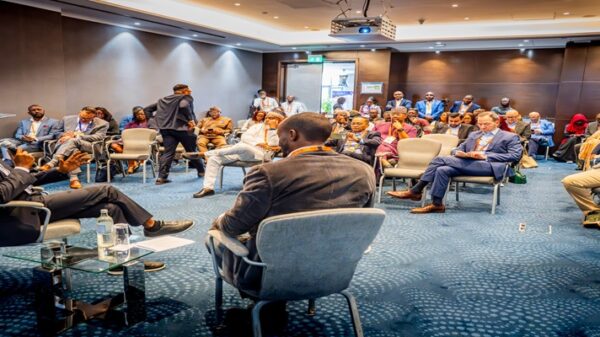
23 companies and organizations from across the world: 6Harmonics, Adaptrum, BSkyB, Carlson, Council for Scientific and Industrial Research - South Africa, Computer and Communication Research Center - Taiwan, Indigo Telecom, InterDigital, Microsoft, MediaTek, Network Startup Resource Center (University of Oregon), Neul, National Institute of Information and Communications Technology - Japan (NICT), RealTek, Ruckus Wireless, Singapore Institute for Infocomm Research (I2R), StarHub, Strathclyde Centre For White Space Communications, Tanzania Commission for Science and Technology (COSTECH), Taiwan Institute for Information Industry, UhuruOne, WaveTek and White Space Technologies Africa joined forces to announce formation of the Dynamic Spectrum Alliance (DSA).
The Dynamic Spectrum Alliance will promote regulatory policies that will pave the way for innovative new wireless technologies that address growing wireless data and digital divide challenges. So-called "Dynamic Spectrum Access" technologies can opportunistically exploit otherwise unused and inefficiently used radio frequencies ("white spaces" spectrum) to create various forms of wireless connectivity. One near term opportunity to globally leverage such technologies is in the unused TV band frequencies. The Dynamic Spectrum Alliance will also focus on promoting laws and regulations to ensure that spectrum technology can extend rural broadband, support the development of "smart cities", and help ensure that consumers and their devices have wireless bandwidth when and where they need it.
"Whether you look at how TV White Spaces are being put to use to serve underserved communities in Africa, or how the technology is creatively used in one of the biggest ports to lower costs, it is clear that it can have an immediate effect on people's lives today", said Pete Henderson, Chairman, Indigo Telecom. "A large role for the Dynamic Spectrum Alliance will be educating regulators on consumer benefits that can be derived from enabling this technology."
Over the last few years, it has become clear that the strain on artificially limited spectrum resources will continue to grow, particularly as the use of both wireless devices and machine to machine communication increases.
Gaps in coverage and network overload in busy areas are already resulting in poor service for end-users.
The Dynamic Spectrum Alliance believes that these problems can be alleviated through spectrum sharing.
The technology is beginning to be commercialized, as evidenced by technical trials, demonstrations and commercial pilots around the world. From Cape Town to Cambridge, Helsinki, Isle of Bute, Kenya, Singapore, and many other demonstrations and pilots, the future of dynamic spectrum is rapidly approaching.
While some leading edge regulators have begun enabling these technologies, policymakers have an opportunity to enable a variety of exclusive-use and non-
DSA to Help Govts Spur Wireless Data Growth, Close Digital Divide
cwadmin18 Jun 20130 Comments
23 companies and organizations from across the world: 6Harmonics, Adaptrum, BSkyB, Carlson, Council for Scientific and Industrial Research - South Africa, Computer and Communication Research Center -…
c
Published by
cwadmin
Trained and practicing journalist passionate about telecommunications, fintech, cybersecurity, and digital economy reporting.
You May Like

MTN Nigeria Endorses eWorldForum and Book Launch as GSM Revolution Turns 25

MTN Nigeria's ₦1.62 trillion network Investment builds 100 million subscribers using more data than ever

FG Plans Regulation of Internet Access for Nigerians below 16 Years

The Leadership Reset Powering West Africa’s Customer Experience Revolution

Digital Parks, Master Power Plan New Data Centre Facility in Lagos