Connect with us

E-Financial

EFInA @ Financial Services Workshop Decries MM Low Awareness

Published

on

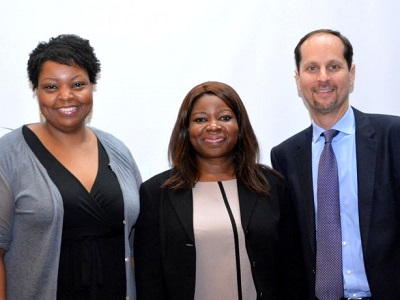
(L-r): Ms. Salah Goss, programme officer, Bill & Melinda Gates Foundation, Ms. Modupe Ladipo, chief executive officer, EFInA, Peter Goldstein, vice president, InterMedia, during a recent workshop organized by EFInA with the theme: ‘Maximising the uptake of digital financial services through understanding consumers’ needs.’
Kindly share this post

Enhancing Financial Innovation & Access (EFInA) hosted a workshop with the theme of ‘Maximising the uptake of digital financial services through understanding consumers’ needs,’ but not without a decry on low awareness on mobile money in Nigeria.
 
The workshop featured findings from two new studies conducted by EFInA and InterMedia about mobile money and other digital financial services. 
 
Both studies found that awareness and usage of mobile money remains low in Nigeria. 
 
According to the InterMedia Financial Inclusion Insights study, as of November 2013, only 12% of Nigerians aged 15 and older were aware of mobile money, and less than 1% of them used mobile money.
 
Mobile money awareness and usage was slightly higher in “Cash-less Phase II” states (Abia, Anambra, Kano, Ogun and Rivers states, and the FCT) where the Central Bank of Nigeria’s Cash-less Policy was introduced. 
 
EFInA research found that as at October 2013, only 4% of adults in the Cash-less Phase II states used mobile money. 
 
The EFInA study also revealed that in these states, cards (debit, credit cards and pre-paid cards) were the most widely known and used electronic payment instrument among respondents; and that men were more likely than women to use electronic payments.
 
Findings from EFInA and InterMedia research indicated that the barriers to the uptake of mobile money in Nigeria include low customer awareness, lack of trust in mobile money, and unreliable GSM networks. 
 
However, respondents in both studies also shared positive impressions of mobile money, saying that they perceived mobile money to be fast, convenient, and safer than carrying cash. 
 
Modupe Ladipo, chief executive officer of EFInA, said, “The financial services industry can drive uptake of mobile money by educating customers, providing reasonably priced products that meet customer needs, and creating the right incentives for both customers and mobile money agents.”
 
Peter Goldstein, vice president at InterMedia, said that Nigeria has a higher percentage of bank account holders, but a lower percentage of mobile money users compared with other countries studied, including Uganda and Kenya. 
 
Mr. Goldstein emphasised the need to educate potential customers about mobile money services, particularly regarding security measures that have been implemented to protect against theft and fraud. 
 
He also encouraged participants at the workshop to visit the interactive data centre at www.finclusion.org to access more data on digital financial services in Nigeria.
 
The workshop also featured a presentation by Salah Goss, programme officer at the Bill & Melinda Gates Foundation. 
 
Ms. Goss spoke about the Bill & Melinda Gates Foundation’s innovative approach to managing data on digital financial services, including the deployment of www.fspmaps.com, an interactive map that shows financial access points in Nigeria. 
 
Ms. Goss challenged financial services providers to fully realise the power of data, saying that, “Research is one of the tools most under-utilised by financial services providers.”
 
As Nigeria goes cash-less, the landscape for digital financial services, including mobile money, card payments, electronic funds transfers, is changing rapidly. 
 
EFInA hosted the workshop to help the financial services industry better understand consumers’ needs, in order to drive uptake and usage of digital financial services. 
 
The workshop was attended by a broad range of stakeholders, including mobile money operators, deposit money banks, microfinance banks, payment service providers, mobile network operators, insurance companies, and regulators.


Kindly share this post

Nigeria CommunicationsWeek believes that technology makes life more exciting and helps improve the lives of people around Nigeria and indeed the world. So since 2007, we have devoted our energy to independent reportage of technology and how they affect lives.

E-Financial

Customs Slam 3 Percent Surcharge on Banks over Delayed Revenue Remittance

Published

on

Kindly share this post

Nigeria Customs Service (NCS) has imposed a three per cent surcharge on Deposit Money Banks (DMBs) over delays in the remittance of Customs revenue by designated banks.

Customs Slam 3 Percent Surcharge on Banks over Delayed Revenue Remittance

The development was disclosed by Abdullahi Maiwada, national public relations officer of the Service,  in a statement titled “Nigeria Customs Service Commences Enforcement of Penalties Against Designated Banks for Delayed Remittance of Customs Revenue.”

The agency stated that delays in remitting collected Customs revenue constitute a breach of remittance obligations and negatively impact the efficiency, transparency and integrity of government revenue administration.

Maiwada explained that any Designated Bank that fails to remit collected Customs revenue within the prescribed period will be liable to penalty interest, adding that affected banks will receive formal notifications detailing the delayed amount, applicable penalty and the timeline for settlement.

“The NCS has noted instances of delayed remittance of Customs revenue by some Designated Banks following reconciliation of collections processed through the B’Odogwu platform. Such delays constitute a breach of remittance obligations and negatively impact the efficiency, transparency and integrity of government revenue administration.

“In line with the provisions of the Service Level Agreement (SLA) executed between the Nigeria Customs Service and Designated Banks, the Service hereby notifies stakeholders of the commencement of enforcement actions against banks found to be in default of agreed remittance timelines.

“Accordingly, any Designated Bank that fails to remit collected Customs revenue within the prescribed period shall be liable to penalty interest calculated at three per cent above the prevailing Nigerian Interbank Offered Rate for the duration of the delay. Affected banks will receive formal notifications indicating the delayed amount, applicable penalty and the timeline for settlement.”

Maiwada further advised Designated Banks to strengthen their internal controls, ensure strict adherence to remittance timelines and comply fully with the provisions of the SLA.

He reiterated that the Service remains committed to enforcing accountability, safeguarding government revenue and promoting a transparent and predictable financial system in support of national economic development.

“The Service further notes that persistent or repeated non-compliance with the terms of the SLA may attract additional sanctions, including regulatory and administrative measures, as provided under the Agreement and relevant laws guiding Customs revenue collection.

“The NCS reiterates that prompt, accurate and complete remittance of Customs revenue is a fundamental obligation of Designated Banks. Any payment of collected revenue into unauthorised accounts, whether deliberate or erroneous, will be treated as a serious violation and addressed in accordance with the SLA and applicable legal frameworks.

“Designated Banks are therefore advised to strengthen internal controls, ensure strict adherence to remittance timelines and comply fully with the provisions of the SLA. The Service remains committed to enforcing accountability, safeguarding government revenue and promoting a transparent and predictable financial system in support of national economic development,” he added.


Kindly share this post
Continue Reading

E-Financial

World Bank to Approve $500m Loan for Nigeria Today

Published

on

Kindly share this post

The World Bank is set to approve a $500m loan to Nigeria on Friday (today) as part of efforts to expand access to finance for micro, small and medium enterprises across the country, according to Punch.

World Bank to Approve $500m Loan for Nigeria Today

The proposed facility, titled the Fostering Inclusive Finance for MSMEs in Nigeria (FINCLUDE) Project, aims to mobilise private capital and promote innovative financial products for small businesses, according to information obtained from the World Bank.

Negotiations on the loan are ongoing, and approval by the World Bank Group’s board is expected on Friday.

The approval, expected on December 19, 2025, will see the World Bank commit $500m to the project out of an estimated total cost of $2.39bn.

Of the World Bank financing, $400m will be provided by the International Bank for Reconstruction and Development, while $100m will come from the International Development Association.

The Federal Government will be the borrower under the arrangement, with the Development Bank of Nigeria serving as the implementing agency with overall responsibility for managing the funds.

The remaining $1.89bn required for the project is expected to be provided by commercial lenders as unguaranteed financing.

According to the World Bank, the FINCLUDE project will leverage the platforms of the Development Bank of Nigeria and its subsidiary, Impact Credit Guarantee Limited, to deepen credit access for MSMEs.

“The proposed FINCLUDE Project leverages the platforms of the Development Bank of Nigeria and its subsidiary, the Impact Credit Guarantee Limited, to drive inclusive MSME finance,” a document from the World Bank read.

“Through these catalytic institutions, the project will deploy a package of complementary, inclusive, and innovative instruments tailored to the diverse needs of MSMEs in Nigeria.”

The World Bank described DBN as “a partner well known to the World Bank with high implementation capacity and a proven track record in designing and executing complex, innovative projects,” noting that its role would be central to the success of the intervention.

The project is structured around three main components. These include the provision of inclusive and innovative MSME finance products, the de-risking and mobilisation of private capital through partial credit guarantees, and technical assistance aimed at modernising and digitising Nigeria’s MSME finance ecosystem.

Under the first component, the World Bank said the project would provide Tier 2 subordinated capital to eligible financial institutions and support the establishment of an MSME investment fund to deliver equity and long-term debt financing to small businesses.

The bank said this approach would help “crowd-in private capital, test market innovations and promote financial sustainability” within the MSME segment.

Also, the project will offer targeted technical assistance to strengthen the capacity of financial institutions, improve regulatory oversight and modernise the MSME finance value chain linking DBN, lenders and entrepreneurs.

In its appraisal report, the World Bank highlighted Nigeria’s ongoing economic reforms, describing the country as being “in a critical transition.”

It noted that the removal of fuel and foreign exchange subsidies, alongside the unification of exchange rates, had begun to stabilise the economy and restore investor confidence.

“These reforms have improved fiscal space, enhanced FX liquidity, and eased inflation to 18 per cent as of September 2025,” the report stated, adding that growth prospects were strengthening, with the International Monetary Fund projecting 3.9 per cent real GDP growth in 2025.

Despite these improvements, the World Bank warned that access to finance remained uneven, particularly for MSMEs, women and the agriculture sector.

It noted that agriculture accounted for just over five per cent of total bank credit in 2024, while high interest rates and shallow credit penetration continued to constrain lending to smaller enterprises.


Kindly share this post
Continue Reading

E-Financial

Fidelity Bank Boosts Maternal, Child Healthcare @ESUTH

Published

on

L-R: Public Relations Officer, Enugu State University Teaching Hospital (ESUTH), Amarachi Amusi; Team Member, Optimizers Inductees Class of 2025, Precious Uchechi-Uneke; Class Governor, Optimizers Inductees Class of 2025, Chinedu Hilary-Elijah (both of Fidelity Bank Plc); Matron, Children's Ward ESUTH, Esther Nnaji; and Team Lead, Corporate Social Responsibility (CSR), Fidelity Bank Plc, Victoria Abuka; during the Fidelity Helping Hands Program (FHHP) outreach to ESUTH recently.
Kindly share this post

Fidelity Bank Plc has brought relief to indigent patients at the Enugu State University Teaching Hospital (ESUTH) Parklane, by offsetting medical bills and providing financial support to children battling chronic health conditions alongside donations of ante-natal kits to pregnant women.

Fidelity Bank Boosts Maternal, Child Healthcare @ESUTH

L-R: Public Relations Officer, Enugu State University Teaching Hospital (ESUTH), Amarachi Amusi; Team Member, Optimizers Inductees Class of 2025, Precious Uchechi-Uneke; Class Governor, Optimizers Inductees Class of 2025, Chinedu Hilary-Elijah (both of Fidelity Bank Plc); Matron, Children’s Ward ESUTH, Esther Nnaji; and Team Lead, Corporate Social Responsibility (CSR), Fidelity Bank Plc, Victoria Abuka; during the Fidelity Helping Hands Program (FHHP) outreach to ESUTH recently.

The intervention, which was carried out under the bank’s Corporate Social Responsibility (CSR) initiative known as Fidelity Helping Hands Programme (FHHP), was funded and executed by newly inducted employees of the bank, the Optimizers Inductees Class, as their community impact project, with matching financial support from the bank.

Commenting on the outreach, Divisional Head, Brand and Communications Division, Fidelity Bank Plc, Dr Meksley Nwagboh, highlighted that the initiative underscores the bank’s commitment to improving lives through targeted social interventions across its four CSR pillars.

“This project reflects the spirit of who we are as a bank. Beyond providing financial services, we are committed to touching lives within the communities where we operate. Today, we are donating ante-natal kits to pregnant women and also supporting indigent patients who have remained in the hospital due to unpaid bills. Some of the children also require long-term medical care, so we have given additional financial support to aid their continued treatment,” Dr Nwagboh said.

Whilst wishing the beneficiaries quick recovery and good health, Nwagboh described the intervention as both significant and timely, enabling many families to reunite and celebrate the festive season without the burden of outstanding hospital debts.

Receiving the donation, the Chief Matron of the Children’s Ward, Esther Nnaji, commended Fidelity Bank for the timely intervention, describing it as a lifeline for families grappling with rising healthcare costs.

“There are so many families here in desperate need. Some of the children are battling cancer, sickle cell disease and other chronic conditions. Fidelity Bank’s support will go a long way in relieving their pain. Because of what you have done, some of these children will now be able to see their siblings again,” she said.

Several beneficiaries expressed deep gratitude to Fidelity Bank for easing their financial burdens. Mrs. Adaeze Ilo, whose baby’s bill was cleared, said the support came at a moment of despair.

“After spending months in the hospital, we had no idea how to raise the money,” she said. “Fidelity Bank came through for us when we needed it the most. We are deeply grateful.”

Another relieved parent, Jane Anthony, whose son’s bill was cleared, said her family had already accepted that they would spend Christmas in the hospital.

“God used Fidelity Bank to send us home to enjoy Christmas. My heart is full.” she said.

The recent outreach to Enugu State University Teaching Hospital further highlights Fidelity Bank’s continued commitment to supporting vulnerable groups and strengthening community well-being across Nigeria through community-driven CSR efforts.

Ranked among the best banks in Nigeria, Fidelity Bank Plc is a full-fledged Commercial Deposit Money Bank serving over 9.1 million customers through digital banking channels, its 255 business offices in Nigeria and United Kingdom subsidiary, FidBank UK Limited.

The Bank is a recipient of multiple local and international Awards, including the 2024 Excellence in Digital Transformation & MSME Banking Award by BusinessDay Banks and Financial Institutions (BAFI) Awards; the 2024 Most Innovative Mobile Banking Application award for its Fidelity Mobile App by Global Business Outlook, and the 2024 Most Innovative Investment Banking Service Provider award by Global Brands Magazine. Additionally, the Bank was recognized as the Best Bank for SMEs in Nigeria by the Euromoney Awards for Excellence and as the Export Financing Bank of the Year by the BusinessDay Banks and Financial Institutions (BAFI) Awards.


Kindly share this post
Continue Reading

Trending