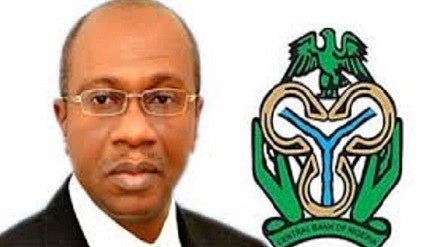
Godwin Emefiele, governor, Central Bank of Nigeria (CBN) is coming under fire from economists and investors as Nigeria, Africa’s top crude producer reels from the collapse in oil prices.
The governor has reportedly introduced a range of currency controls in recent months to try to halt the decline of the naira which has lost about 22 per cent of its value since the oil price collapse began in July 2014, according to Financial Times.
But critics say the measures are inflicting pain at the worst time for Nigeria. They fear that Mr Emefiele is jeopardising the hard-won credibility of the country as an attractive frontier market.
More than a dozen Lagos- and London-based economists, investors and analysts told the Financial Times last week they thought the central bank should allow the currency to find its market value. They estimate this should be between 10 and 20 per cent lower than the official interbank rate, which is between 197 and 199 naira per dollar.
President Muhammadu Buhari, who took office in May, has yet to outline a fiscal policy and observers say this has increased Emefiele’s influence.
“The new administration has not been engaging at the macro level in the past three months or so and this has caused this pressure on the naira and on the central bank,” said Ayodele Teriba, chief executive of Economic Associates, a consultancy in Lagos.
“Rather than comforting us, this has rather made us more worried,” he added.
Emefiele defends the new measures, which include the effective banning of 41 imports including key goods such as rice and steel pipes. He says the currency is appropriately priced and argues that “people are expecting the abnormal to happen in Nigeria.
“We can’t continue to pursue a policy of indeterminate depreciation of our currency,” he says, noting that fellow African oil producers, Angola and Ghana, have devalued by slightly more than Nigeria — 23 per cent and 25 per cent respectively.
Tony Elumelu, a prominent Nigerian businessman, agreed. He advocated conserving foreign reserves by removing fuel subsidies that cost the government an estimated $3 billion a year — a move Buhari has for now ruled out.
Emefiele’s predecessor, Lamido Sanusi, was widely praised for reforming Nigeria’s banking sector and increasing transparency at the central bank. He was suspended by former President Goodluck Jonathan just days after he exposed an alleged $20 billion in 'missing' oil revenues.
There are concerns that the central bank may be influenced by the presidency. Mr Buhari last week commented that he did not think the naira should be devalued further.
“The central bank needs to be seen as an institution which is operating with the very highest global standards, to reassure investors that the path of the bank is in keeping with the best practices in central banking,” said Charles Okeahalam, a Nigerian economist and chief executive officer of AGH Capital Group.
Sarah Alade and Joseph Nnanna, deputy governors of central bank, have publicly stated that there is insufficient liquidity in the market to meet dollar demand and say the bank needs to allow freer currency trading.
“The issue of obtaining dollars has become ludicrously difficult. If he is right that the price [of the naira to the dollar] is right, then there should not be a shortage,” said Paul Clark of Ashburton Investments in South Africa.
Mr Clark and other investors predict the impact of the central bank’s policies will be long lasting and fear that the ejection this month of Nigeria from JPMorgan’s influential emerging markets bond index will be the first of a number of blows to the country’s reputation.
The governor’s policies have been tried before in other emerging markets, and they 'buy time, but they always fail,' said Jan Dehn, head of research at emerging markets-focused asset manager, Ashmore.
“And as they do so, they create serious reputational damage that can take years to live down.”
Emefiele, CBN Gov. Under Fire over Cash Crunch, Hardship
Comms Week21 Sept 20150 Comments
Godwin Emefiele, governor, Central Bank of Nigeria (CBN) is coming under fire from economists and investors as Nigeria, Africa’s top crude producer reels from the collapse in oil prices. The governor…
C
Published by
Comms Week
Trained and practicing journalist passionate about telecommunications, fintech, cybersecurity, and digital economy reporting.
You May Like
Appeal Court Affirms N85m Fine against Zenith Bank over Account Freeze

Banks Close 476 Branches, Cash Centres in 3 Years - CBN

NAICOM Dismisses Allegations of $100Bn Fraud in Recapitalisation Exercise

Yellow Card Financial Gets SEC’s ARIP Recognition

NPF-NCCC @ CIBN Conference, Urges Banks to Set up eFraud Response Teams