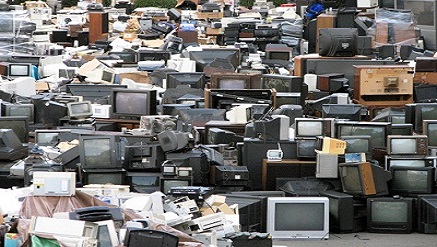
The International Telecommunications Union (ITU) has disclosed that e-waste could grow to 50 million metric tons by year 2018.
E-waste is generated by a wide variety of obsolete and discarded ICT devices.
While these devices have brought us the benefit of new innovative technologies, they have also inflicted us with the burden of growing quantities of e-waste – a “self-created evil”.
Malcolm Johnson, ITU deputy secretary-general, made the remark while declaring open a joint United Nations workshop on sustainable management of e-waste during the World Summit on the Information Society (WSIS) in Geneva, recently.
In a blogpost titled, Tackling E-Waste: ITU Drives Solutions’, he said that the situation is worsened by the frequent updating and upgrading of personal devices and people constantly clamoring for the newest and latest devices.
According to Johnson, e-waste is now one of the most rapidly growing environmental problems in both developing and developed countries.
In 2014, nearly 41.8 million metric tons of e-waste was generated and this is expected to grow to 50 million metric tons by 2018.
The increasing incidents of indiscriminate e-waste dumping is the incentive for responsible management of discarded ICT devices worldwide.
Building Effective Partnerships
He said, “To enable better recycling we need standards and policy that set requirements for disassembly and material separation, avoidance of glue and welding, and labeling of the materials used in a product.
“This is in line with the Sustainable Development Goals, especially the targets under Goal 12 on responsible consumption and production, the WSIS Action Line C.7 on e-environment, and the ITU’s ‘Connect 2020 Agenda’ which calls for minimizing the negative impact of ICTs on the environment, in particular by reducing the volume of redundant e-waste by 50% by 2020.
“The relevant UN agencies need to work together and I am pleased to say we are doing so. ITU, the Secretariat of the Basel Convention, the Basel Convention Regional Centre for South America, UNU, WHO, WIPO, UNIDO, ECLAC and UNESCO have developed a report outlining the state of e-waste management in Latin America”.
The report offers guidance on the steps to be taken towards environmentally sustainable e-waste management.
He added that ITU has also proposed to the UN Environmental Management Group the creation of an Issue Management Group to enhance coordination on e-waste within the UN system.
ITU Standards And Guidelines
Johnson noted in the blogpost that as an international standards developing organization, ITU also continues to develop standards on rare metal recycling from discarded ICT devices.
“The recovery of precious metals and critical materials from these products represents a significant economic opportunity but often missed. For example, ton of gold ore yields just 5 g of gold, whereas a ton of used mobile phones yields a staggering 400 g of gold!
“ITU through its ITU-T Study Group 5 has developed Guidelines for countries to establish sustainable e-waste management programmes and e-waste policies”.
eWaste Edges to 50m Metric Tons by 2018, ITU Seeks Solutions
Comms Week9 May 20160 Comments
The International Telecommunications Union (ITU) has disclosed that e-waste could grow to 50 million metric tons by year 2018. E-waste is generated by a wide variety of obsolete and discarded ICT…
C
Published by
Comms Week
Trained and practicing journalist passionate about telecommunications, fintech, cybersecurity, and digital economy reporting.
You May Like
Releasing President Tinubu’s Records Can Endanger Lives – FBI

Tinubu Orders Arrest of Nwabueze, Head of Another Fake Agency, Suspension of 3 Perm Secs
How AI, Poor Governance Aid Transnational Scams —UNODC

Access to Equipment, Specialists Key to Survival of Preterm Babies — Haven Pediatric CMD

Shell Reinforces Safety Commitment @ CEO Contractors Forum