

General News
FG Partners NASENI on Solar Panel Production

The Federal Government has expressed readiness to support the National Agency for Science Engineering Infrastructure (NASENI) in the production of solar panels for renewable energy.
Prof. Chinedu Nebo, Minister of Power, made this known when he inspected the NASENI solar panel manufacturing plant in Karshi, in Abuja.
Nebo said, “with the low level of electricity generation in the country which is mainly through gas fired turbines, the Federal Government is now focusing on solar to compliment it.
“We want to grow renewable energy resources utilization and deployment in Nigeria. With the low level of electricity generation and transmission in the country the only way to reach the rural communities is through renewable technology. This is one of the technologies that are far away from the national grid,’’ he said.
He said that with the launch of the Operation Light-up Rural Nigeria (OLRN), using renewable energy, it had become imperative to develop Nigerian solar manufacturing plants.

The minister said the Federal Government was ready to patronize products from the agency, especially for the OLRN.
“Patronising them will give them more encouragement to go into mass production and sales of the solar panels across the country. Solar is the only thing you can deploy to every part of Nigeria and get electricity. We have challenges with wind because the onshore wind velocity is not quite amenable with wind turbines and only select part of the country will use that,” he said.
He said that partnering with NASENI was part of government effort to ensure local content development in the power sector and the creation of jobs for Nigerian youths.
“I will say this is a learning visit and step to forge a relationship with NASENI solar company. It is also to ensure that we even train most of the technical people that will be going out there to deploy this technology in our rural communities. That is why the Ministry of Power will like to collaborate with NASENI in the deployment of solar power technology in the country,” he said.
The minister commended the professional and diligent methodology of quality control of the panels.
He stressed the need for NASENI to improve on its marketing and to always comply with international standard.
“We will be promoting NASENI; we will tell our partners that we prefer NASENI solar panels because Mr President is so concerned when it comes to local content development. Once the solar panels continue to be of international and best standard why go outside. We will patronise NASENI no doubt about that,’’ he said.
Earlier, Mr. Mohammed Haruna, NASENI executive vice chairman, said the 7.5mw pilot plant was already producing high quality solar panels that could be found in the market.
“The solar factory as you have seen is a demonstration plant and it was started as part of our research and development and we want to prove that it can work in Nigeria.
“So, it is a 7.5mw pilot plant and it is producing solar panels of high quality standard and the products are available in the market,’’ he said.
He said that the project started in May 2012 and became a Limited Liability Company in 2013 after surmounting so many challenges.
Nebo also visited a small hydropower installation at Gada village near Akwanga, Nasarawa State.
The small hydropower was built by NASENI engineers tapping into the River Mada.


Federal government has launched a N482.4 million investment fund to support 12 tech-enabled Nigerian startups.

The initiative under the federal government of Nigeria’s Investment in Digital and Creative Enterprises (iDICE) Programme was implemented by the Bank of Industry (BoI).
The initiative in a statement said applications have been opened for Growth Lab, a 12-week acceleration programme that will select the 12 tech-enabled Nigerian startups, from the six geopolitical zones, for intensive growth support, investment readiness training, and access to up to $350,000 in funding.
According to Ife Adebayo, national coordinator of the Programme, growth lab was designed to support startups that have achieved early traction and are seeking the expertise, networks, and investment required to scale following the implementation of Founders Lab.
“Growth Lab is the Startup Bridge accelerator programme, designed for startups that have developed an MVP and require structured support to scale. The programme focuses on strengthening venture fundamentals and preparing companies for external investment.
“The programme targets startup founders who are seeking the support, networks, expertise, and investment readiness required to accelerate growth and strengthen their position within the Nigerian innovation ecosystem,” he said.
He added that selected founders will gain access to structured growth support, investment readiness preparation, access to industry experts, market expansion pathways, a $100,000 cash investment (or Naira equivalent) for 7.5% equity upon entering the programme (terms and conditions apply), and up to $250,000 in potential follow-on investment should certain growth conditions be met.
“Eligible startups must be at the post-MVP stage, demonstrate evidence of market validation through users, customers, pilots, partnerships, waitlists or any other demand signals, and be willing to participate fully in the hybrid programme,” he said.
The programme will run as an intensive 12-week hybrid experience, including virtual engagements and two physical weeks in Lagos focused on collaboration, learning, and business growth.
The statement said applications opened on July 15, 2026, and will close on August 19, 2026.
According to him, female founders are strongly encouraged to apply. Selection will be conducted through a clearly defined, merit-based evaluation process aligned with published criteria.
iDICE is a $618 million federal government initiative backed by international lenders to boost the technology and creative sectors.
It provides young entrepreneurs with business skills training, mentorship, and access to capital through funds and accelerator programs like the iDICE Startup Bridge.

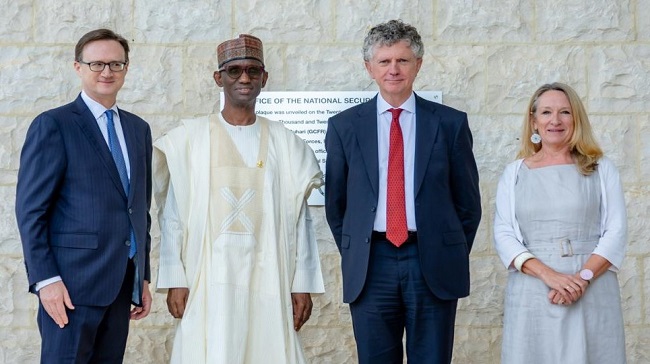
Nigeria and The United Kingdom held the fourth Security and Defence Partnership (SDP) Dialogue at the Office of the National Security Adviser (ONSA) in Abuja, recently. The dialogue, an important pillar of the bilateral Strategic Partnership, was opened by the National Security Adviser to the Federal Government of Nigeria, Nuhu Ribadu, and the United Kingdom’s National Security Adviser, Jonathan Powell.

Building on the third dialogue hosted in London in July 2025, the fourth SDP dialogue included inter alia, regional and domestic security challenges, human rights and non-kinetic solutions, defence staff talks, cyber and hybrid threats, as well as cross-government discussions on strategic trends, counter terrorism, fraud and illicit finance. Senior representatives from across the Governments of Nigeria and the United Kingdom participated, reflecting the breadth and extent of the partnership.
Nigeria and the United Kingdom agreed to deepen cooperation based on mutual accountability and delivery of commitments while working in a spirit of partnership.
Defence co-operation
The United Kingdom and Nigeria’s defence partnership continues to strengthen in the support of peace and stability in the region. Following on from the successes of previous SDP dialogues, the United Kingdom renewed its long-term commitment to Nigeria’s Armed Forces, including through efforts to counter the threat from Uncrewed Air Systems (UAS) and Improvised Explosive Devices (IED), via joint doctrine, training, technical advice and lessons learning, as well as exploring the development of Special Operations Forces.
The United Kingdom reaffirmed its support for Nigeria’s Joint Doctrine and Warfare Centre, and for strengthening Nigeria’s Maritime Domain Awareness capability. Both parties recognised the success of the hydrography partnership. The United Kingdom committed to continue supporting the National Hydrographic Agency to enhance autonomy and regional influence.
Both governments underscored their shared commitment to deepening cooperation on maritime security in the Gulf of Guinea. Recognising the critical importance of regional stability and secure trade routes, both governments committed to aligning efforts to combat illicit maritime activities, and transnational threats. Nigeria and the United Kingdom also agreed to explore opportunities to strengthen their defence trade relationship.
Countering hybrid threats
Nigeria and the United Kingdom reaffirmed their cooperation on countering hybrid threats, including cyber security and Foreign Information Manipulation and Interference (FIMI). Both sides welcomed progress under the existing Cyber Memorandum of Understanding [2024 to 2027] and agreed to further collaboration on threat intelligence sharing and a new phase of targeted programme partnership.
In this context, the United Kingdom and Nigeria recognised the challenged posed to open societies by hybrid threat actors and our shared assessment. Both countries committed to advancing a new structured framework for cooperation on countering hybrid threats.
This will include the advancement of concrete cyber resilience initiatives, a formalised intelligence-sharing mechanism, robust joint capability-building programmes, and cooperation on counter-hybrid threat strategies, in order to effectively counter mis/disinformation, cyber-attacks, transnational organised crime, and other hybrid threats, whilst upholding human rights and the rules-based international order. Both sides will seek to widen the conversation on hybrid threats.
Joint efforts will continue to build national capabilities, including through programme delivery and targeted support, while addressing developing risks, including from emerging technologies, and supporting Nigeria’s efforts to enhance its role in promoting regional resilience across West Africa.
Countering terrorism and violent extremism
Building on commitments agreed at the third dialogue, Nigeria and the United Kingdom agreed to deepen their partnership on counter terrorism and countering violent extremism. Both sides identified shared priority areas, including strengthening multi-agency coordination, enhancing intelligence and information exchange, as well as reinforcing crisis preparedness and protective security.
Both sides appreciated their continued collaboration on aviation security. The United Kingdom reinforced its support for capacity development efforts at Lagos and Abuja airports to build on progress made to date. Both sides agreed to continue working together in support of Nigeria’s efforts to roll-out the Multi-Agency Anti Kidnap Fusion Cell at the State level.
Continued cooperation will support the operationalisation of Nigeria’s counter terrorism architecture, particularly the National Counter Terrorism Centre, alongside efforts to build capabilities in investigations, forensics and strategic communications. Both sides agreed to renew their support to Nigeria Police Force’s Counter Terrorism Unit with a technical needs assessment planned for late 2026.
Nigeria and the United Kingdom have renewed their commitment to preventing violent extremism through non-kinetic approaches including Disarmament, Demobilisation and Reintegration (DDR) and implementing a comprehensive, whole-of-society approach to building sustainable peace under Nigeria’s national security framework. They welcomed the development of a national policy framework on DDR, and the United Kingdom committed to continuing support to implement the framework at national and state levels following formal sign-off.
Recognising the importance of justice in effective responses to terrorism, the United Kingdom welcomed the commitment and concrete actions by Nigeria to expedite terrorism cases through remote court proceedings, alongside other latest efforts to counter terrorism.
This includes the ongoing phases of mass trials at the Federal High Court, demonstrating Nigeria’s determination to deliver timely, effective, and human rights-compliant investigations and prosecutions of terrorism crimes. Both countries also committed to work together on human rights compliance and recognised the importance of transparency, accountability and respect for human rights as integral to effective counter terrorism cooperation.
Human rights and non-kinetic solutions
Nigeria and the United Kingdom reaffirmed the central role of human rights and non‑kinetic approaches in achieving sustainable security outcomes. Both sides welcomed progress since the third SDP dialogue and agreed to deepen cooperation on civilian protection, accountability, conflict prevention, and the Women, Peace and Security (WPS) agenda.
Both sides reviewed ongoing efforts, including Nigerian Armed Forces’ civilian harm mitigation measures, and underscored the importance of strengthening practices, ensuring transparent investigation of incidents, and embedding lessons learned to reduce harm and maintain public confidence. On accountability, both sides emphasised the need for robust mechanisms to investigate violations by both state and non-state actors.
The United Kingdom welcomed the involvement of the National Human Rights Commission with the Nigerian Air Force’s investigations into recent air strikes. The United Kingdom offered support to strengthen the National Human Rights Commission’s capacity to document and investigate abuses by non-state actors.
Recognising the importance of Nigeria’s upcoming national elections, both sides noted the importance of effective election security before, during and after polls, including efforts to protect voters and institutions, public order management in line with international standards, and reducing the risk of violence.
On preventing conflicts and violent extremism, both sides highlighted the importance of strengthening early warning and early response systems, improving coordination, and strengthening ability of peacebuilding agencies to ensure timely preventive action. On WPS, both sides welcomed progress on Nigeria’s third National Action Plan and committed to advancing participation, protection, and prevention, with the United Kingdom’s continued support for implementation. The United Kingdom offered continued technical assistance in support of Nigeria’s relevant national and state-level strategies in these areas.
Both sides agreed to explore a National Counter Terrorism Centre led quarterly working-level mechanism, with the National Human Rights Commission, to track progress on session agreements and reaffirmed their shared commitment to accountability, transparency, and civilian protection.
Fraud and illicit finance
Building on commitments agreed at the third Security and Defence Partnership dialogue and the State Visit of President Bola Ahmed Tinubu to London thereafter, the United Kingdom and Nigeria reiterated their shared ambition to tackle fraud and illicit finance.
Both sides welcomed progress on strengthening cooperation, including efforts to enhance public–private partnerships, increase capabilities to jointly tackle fraud, improve asset recovery processes and oversight of virtual assets and cryptocurrencies, as well as recognised the growing relationship between illicit financial networks and hybrid threats.
Further collaboration will focus on enhancing mechanisms to support informal bilateral and international cooperation, including timely operational engagements on relevant requests, while addressing evolving fraud threats through strengthened intelligence exchange, joint analysis and coordinated enforcement action. A joint action plan will advance delivery against shared priorities.
Both countries also committed to continued capacity building to support investigation, prosecution and judicial responses, reinforcing a coordinated approach to protect the members of the public in Nigeria and the United Kingdom from serious and organised fraud and financial crimes. Nigeria and the United Kingdom committed to continuing efforts to embody regional and global leadership on the issue of fraud.
Regional security co-operation
Nigeria and the United Kingdom exchanged views on the evolving regional and domestic security environment, noting the deteriorating situation in the Sahel and its impact across West Africa. Both sides reaffirmed Nigeria’s prominence and role as a key factor in promoting peace and stability across Africa over the years.
To this end, both sides agreed upon the importance of Nigeria leveraging its regional relationships and its participation in significant regional platform including through the Economic Community of West African States (ECOWAS) and emphasised the importance of continued outreach and collaboration with countries in the Alliance of Sahel States (AES).
The United Kingdom and Nigeria welcomed the analytical exchange on security and hybrid threats held in advance of the Forth SDP and committed to continuing these as part of future dialogues. Against this backdrop, both countries reaffirmed their intention to deepen cooperation on regional security.
The United Kingdom welcomed the efforts of Nigeria on progress made towards transitioning the National Counter Terrorism Centre to a Regional Centre of Excellence. The United Kingdom expressed its continued support to Nigeria’s regional counter terrorism efforts and welcomed Nigeria’s decision to join the International CT Academy in Ivory Coast (AILCT) to share its expertise across West Africa and the Sahel. The importance of strengthening coordination, information sharing and burden-sharing between regional initiatives were recognised.
Both sides acknowledged the increasing cross-border nature of threats, alongside the impact of hybrid challenges on regional stability, and agreed to work together to support effective regional leadership and partnership.
Implementation and accountability
Finally, Nigeria and the United Kingdom emphasised the importance of sustained delivery and structured engagement to ensure progress on agreed priorities. Both sides agreed to maintain close coordination, through ongoing monitoring of implementation and continued cross-government collaboration.
To support this, officials were tasked to take forward agreed actions and to review progress ahead of the next Security and Defence Partnership Dialogue, to be hosted by the United Kingdom in 2027. It was agreed the Dialogue will continue to support delivery of the United Kingdom–Nigeria Strategic Partnership as well as provide a platform to strengthen cooperation across shared security and defence priorities.

Mr. Khalil Suleiman Halilu, Executive Vice Chairman, National Agency for Science and Engineering Infrastructure (NASENI), has reaffirmed that the Agency’s remarkable transformation is powered by the dedication, innovation and professionalism of its workforce.

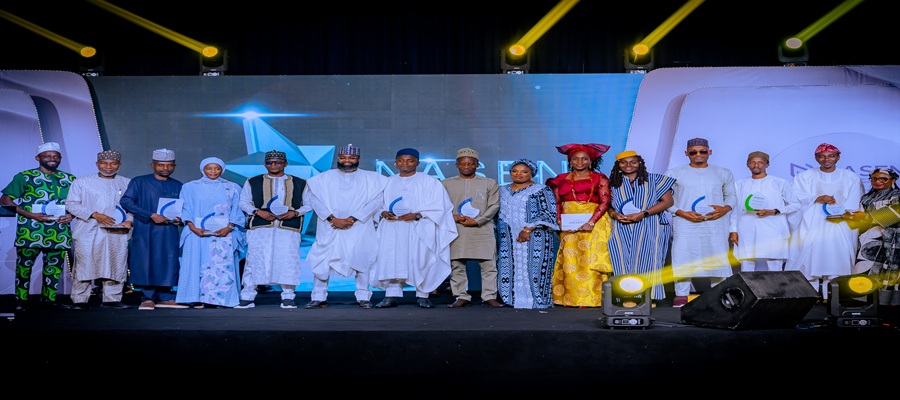
L-R: Best Staff, Manufacturing Services Dept, Engr. Odii Emmanuel; Best Staff, Audit Dept, Mr. Abbas Suleiman; Best Staff, Natural & Physical Science Dept, Mr. Usman Ahmadu (represented by Engr Yunusa Jubrin Sulieiman); Overall Staff of the Year, Barr. Hussaina Shehu; Driver of the Year, Mr. Abdullah Mohammed; Staff Choice Award Winner, EVC of NASENI, Mr. Khalil Suleiman Halilu; Best Staff, Accounts & Finance Dept, Mr. Salisu Mohammed; Best Staff, Technology Business Development Dept, Engr. Dr. Abayomi Okeshola; Best Staff, Planning & Policy Dept, Mrs. Ahmed Bilkisu; Best Staff, Technical Services- Engr. Mrs. Ugochi Chimaduruaku; Best Staff, EVC’s Office, Barr. Lilian O. Utaka; Best Staff, Civil & Environmental Engineering Dept, Engr. Aliyu Tahir Ahmed; Best Staff, PICTT, Mr. Umar Muhammad Bashir; Best Staff, Admin & HR, Shakir Owodunni; Best Staff, Research & Development Dept, Miss. Anita Egga during the 2025 NASENI Staff Motivation and Reward Event held in Abuja on Saturday, July 18, 2026.
Speaking at the 2025 NASENI Staff Motivation and Reward Event held in Abuja, he described the ceremony as more than an award presentation, saying it was a celebration of the people whose commitment continues to drive Nigeria’s industrial and technological advancement.
Halilu noted that although the event came later than scheduled, excellence remains worthy of recognition at any time. “Tonight is more than an award ceremony. It is a celebration of the people behind NASENI’s transformation.
“Behind every innovation, every partnership and every achievement are dedicated staff whose commitment has made our progress possible.”
The NASENI boss said the Agency has undergone a fundamental transformation under the Renewed Hope Agenda of President Bola Ahmed Tinubu, repositioning itself as a performance-driven institution focused on Creation, Collaboration and Commercialization (3Cs).
According to him, the (3Cs) principle continue to guide NASENI’s mission of developing homegrown technologies, building strategic partnerships and commercialising innovations that improve the lives of Nigerians.
Highlighting the Agency’s achievements in 2025, Halilu disclosed that NASENI has developed more than 44 commercially viable Made-in-Nigeria products, ranging from laptops and smartphones to solar irrigation pumps and electric tricycles.
The EVC also revealed the ongoing construction of the 40-hectare NASENI Solar Industrial Park in Gora, Nasarawa State, which will become Africa’s largest clean energy manufacturing hub while noting that through the Developing Engineering Leaders Through Her (DELT-Her) initiative, NASENI awarded over ₦229 million in grants to female engineers to promote innovation and expand opportunities for women.
He added that the Agency’s Irrigate Nigeria Programme and Agricultural Machinery Institutes have contributed to the creation of more than 30,000 direct and indirect jobs, while the Agency’s Zero Carbon Project and electric mobility initiatives continue to support Nigeria’s transition towards cleaner and more sustainable technologies.
He congratulated the award recipients while equally commended members of staff who were not recognised this year, assuring them that every contribution matters to the Agency’s success.
Best Staff of the year winners from each department are: Finance & Accounts, Mr. Salisu Mohammed; Technology Business Development, Engr. Dr. Abayomi Okeshola; Admin & HR, Shakir Owodunni; Information, Mr. Asake Michael; Manufacturing Services, Engr. Odii Emmanuel; Technical Services- Engr. Mrs. Ugochi Chimaduruaku; Environmental Engineering, Engr. Aliyu Tahir Ahmed; Natural & Physical Science, Mr. Usman Ahmadu; Nano Science, Dr. Mrs. Sherifat Adeleye; Research & Laboratory, Miss. Anita Egar.
The rest include: Procurement- Mr. Christopher Okpanachi; Planning & Policy, Mrs. Ahmed Bilkisu; EVC’s Office, Barr. Lilian O. Utaka; and Audit, Mr. Abbas Suleiman. Other winners include Driver of the year- Mr. Abdullah Mohammed; Overall Staff of the Year, Barr. Hussaina Shehu; and Staff Choice Award Winner, Mr. Khalil Suleiman Halilu.

YEDC Warns Customers, Says 20 Percent Electricity Bonus is Scam

FG to Support 12 Tech Startups with N482m under iDICE

NBC, INEC, Plan Joint Broadcast Monitoring Framework ahead of 2027 Elections

No Going Back on July 31 Deadline for Insurance Firms’ Recapitalisation – NAICOM

Court Affirms FCCPC’s Power to Regulate Digital Lending

NRC, Ponzi Scheme Collapses Resulting Loss of Billions of Naira

NASENI Moves to Digitize CCB’s 5m Assets Declaration and Operations

Lebara Nigeria Launches Lebara Play, Africa’s First Telecom-Owned Micro-Drama Platform

CANAL+ Partners Samsung to Pre-Load DStv Stream on New Samsung TVs In Nigeria, Other African Countries

Tokenization, Blockchain Technology will Transform Financial Institutions – IMF




 E-Financial2 days ago
Access Holdings Sells 7.44% Stake in Ghana Unit

 E-Financial2 days ago
NDIC Urges Youths to Shun Ponzi Schemes, Embrace Savings

 News2 days ago
Adebutu, PDP Chieftain Accuses Nigerian Governors of Embezzling LG Allocations

 News2 days ago
NIMASA Unveils Accelerator Scheme to Drive Innovation, Sustainable Growth

 E-Financial2 days ago
NRS Issues July 31 Deadline for e-Invoicing Compliance

 E-Business2 days ago
SERAP to Sue NASS over Bill Empowering NDPC to Regulate Social Media

 News2 days ago
ICPC Secures Final Forfeiture of N941m Linked to IPPIS Fraud

 News2 days ago
eBusinessLife Advocates Greater Support for Girls in ICT as Students Showcase AI Innovations