Federal Government’s debt repayment obligations exceeded the 2025 amended budget allocation by N1.90 trillion in the first nine months of the year, according to the latest Budget Implementation Report released by the Budget Office of the Federation.
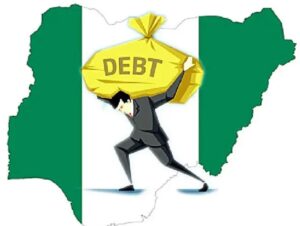
The report showed that total debt-related payments, comprising domestic debt service, foreign debt service and sinking fund obligations, rose to N12.63 trillion between January and September, compared with a prorated budget provision of N10.74 trillion.
The figure represents an excess expenditure of N1.90 trillion, or 17.65 per cent above budget.
According to the report, debt service alone amounted to N12.52 trillion during the period, exceeding the prorated allocation of N10.45 trillion by N2.07 trillion, representing an overrun of 19.8 per cent.
A breakdown of the figures showed that domestic debt service stood at N6.23 trillion, surpassing its budget provision of N5.39 trillion by N832.42 billion.
Foreign debt service also exceeded projections, rising to N6.30 trillion against an allocation of N5.06 trillion, an increase of N1.24 trillion.
The report indicated that debt servicing consumed 67.2 per cent of the Federal Government’s retained revenue of N18.63 trillion in the first nine months of the year.
When sinking fund obligations are included, debt-related payments accounted for approximately 67.8 per cent of retained revenue.
This implies that for every N100 earned by the government during the period, about N67 was used to service debt, leaving roughly N33 for recurrent expenditure, capital projects, transfers and other obligations.
The Budget Office also reported significant revenue underperformance during the period.
Aggregate Federal Government revenue stood at N18.63 trillion, falling short of the projected N30.67 trillion by N12.03 trillion, representing a 39.24 per cent shortfall.
In the third quarter alone, revenue amounted to N7.70 trillion, below the quarterly target of N10.22 trillion by N2.52 trillion.
The Budget Office attributed the weak performance largely to lower-than-expected oil revenue despite improvements in non-oil collections.
The report further showed that debt obligations continued to constrain government spending on infrastructure and development projects.
Capital expenditure amounted to N3.10 trillion during the first nine months of the year, significantly below the N17.58 trillion budgeted for the period.
This means debt-related payments were more than four times the amount spent on capital projects.
According to the report, the elevated debt service-to-revenue ratio underscores the need for stronger revenue mobilisation efforts and expenditure rationalisation to create additional fiscal space.
Total government expenditure during the period stood at N24.66 trillion, compared with a prorated budget estimate of N41.24 trillion.
The fiscal deficit was recorded at N6.03 trillion against a prorated deficit target of N10.58 trillion.
Financing items totalled N12.07 trillion, driven largely by domestic borrowing of N7.08 trillion and multilateral and bilateral project-tied loans amounting to N4.81 trillion.
Meanwhile, Chairman of the Presidential Committee on Fiscal Policy and Tax Reforms, Taiwo Oyedele, said the government was considering refinancing some of its costly debt obligations while exploring additional funding sources.
Speaking in an interview with Bloomberg Television, Oyedele said current market conditions offered opportunities for the government to refinance expensive debt and mobilise funds for development.
“We think that this timing is good for us to be able to maybe even refinance some of our expensive past debts, but also to raise more funding for our development at this critical time,” he said.
According to him, discussions are ongoing with multilateral institutions, including the World Bank, while investor confidence has improved following economic reforms implemented by the administration of President Bola Tinubu.
Oyedele, however, reiterated that Nigeria could no longer depend primarily on borrowing to finance development and stressed the need for a sustainable fiscal framework capable of supporting critical sectors of the economy.
Analysts say the figures highlight Nigeria’s persistent fiscal challenge, with rising debt service costs and weak revenue generation continuing to limit resources available for infrastructure development and economic growth.