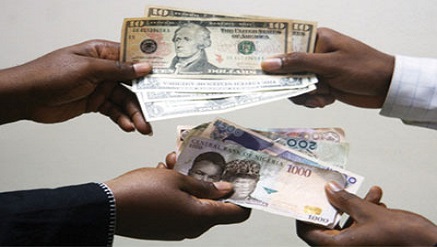
Central Bank of Nigeria (CBN) is preparing to weaken the Naira and abandon a peg to the dollar that has starved Africa’s biggest economy of dollars and slowed foreign investment to a trickle.
In a retreat for President Muhammadu Buhari, who has resisted calls to let the currency weaken, Godwin Emefiele, CBN governor, said Tuesday the Abuja-based bank would release details of a “flexible” exchange-rate framework “in coming days.”
The central bank will probably introduce a dual-rate system, with the naira trading at a market-related level while the central bank continues to make foreign-currency available to some importers at a fixed rate, according to Renaissance Capital Ltd.
The bank has pegged the local unit at 197-199 per dollar since March 2015, deepening an economic slump caused by the plunge in oil prices.
“It looks like the most investors could have hoped for from the CBN,” Charles Robertson, the London-based chief economist at Renaissance, told Bloomberg.
“If my interpretation’s right, they’re not going to throw away their reserves trying to manage the exchange rate and they’ll let the market determine that exchange rate.”
Six-month naira forwards jumped 1.5 percent to 273 per dollar after the announcement, pricing in a devaluation of about 36.5 percent. A basket of U.S. traded Nigerian stocks rose 1.2 percent.
“It is a technical devaluation,” Ayodeji Ebo, head of research at Afrinvest West Africa Ltd., said by phone from Lagos.
“The objective is clear. It will open up the foreign-exchange market, once there is liquidity.”
The central bank would make dollars available to companies importing “critical” materials, while others would have to buy foreign currency in the market, Emefiele said. Details of how the new system will operate have yet to be determined, he said.
“They’ll allocate dollars to those key sectors that will help Nigeria change the structure of its economy, probably agribusiness, industry and oil refineries,” Robertson said. “It sounds like the right policy stance to get Nigeria working again, although they’ll be an inevitable lag as devaluation always carries some short-term pain.”
The Monetary Policy Committee left its benchmark interest rate at 12 percent on Tuesday. Two of the 20 economists surveyed by Bloomberg predicted the decision, while the rest forecast the MPC would raise the rate by between 50 basis points and 250 basis points. The cash-reserve ratio was left unchanged at 22.5 percent.
Falling prices and production of crude, from which Nigeria derives up to 70 percent of state revenue, have caused the nation’s economic outlook to deteriorate as the government struggles to pay salaries and stimulate growth, forcing it to increase borrowing.
Nigeria’s gross domestic product contracted by 0.36 percent in the three months through March from a year earlier as oil output slumped, increasing chances that the economy could enter a recession.
Risks to the economy remain tilted to the downside and previous rate decisions must have time to work through to the system, Emefiele said.
Finally, CBN Prepares to Devalue Naira
Comms Week25 May 20160 Comments
Central Bank of Nigeria (CBN) is preparing to weaken the Naira and abandon a peg to the dollar that has starved Africa’s biggest economy of dollars and slowed foreign investment to a trickle. In a…
C
Published by
Comms Week
Trained and practicing journalist passionate about telecommunications, fintech, cybersecurity, and digital economy reporting.
You May Like

Moniepoint Says Unexpected Expenses Disrupt 73% of Nigerians’ Savings Plans

NAICOM Revokes Universal Insurance Licence, Appoints Receiver

EFCC Arraigns FCMB Staff, Accomplice over Alleged $25,000 Access Credential Deal

Agusto & Co Withdraws A-credit Rating on Geregu Power Over Bond Default

Banks, Others Report 42,082 Transactions to NFIU