

E-Financial
Heritage Bank pledges continued support for women empowerment

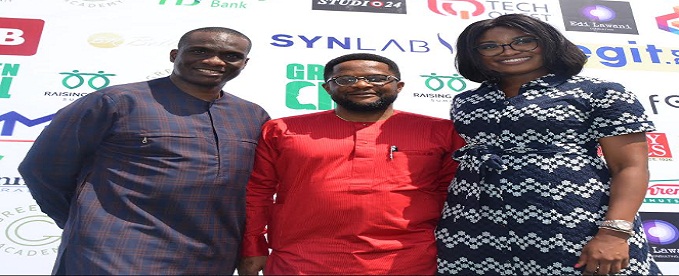
Heritage Bank Plc has said it will continue to lend support to causes that promote women empowerment as this will impact positively on the nation’s socio-economic development.
Ifie Sekibo, managing director, Heritage Bank stated this at the “Raising Girls Summit ‘19” which held in Lagos last Friday as part of activities to commemorate the International day of the Girl-Child.
Sekibo, who was represented at the event by Dike Dimiri, regional executive, Lagos & South-West, Heritage Bank, disclosed that the lender sponsored the “Raising Girls Summit ‘19” because as he put it: “At Heritage Bank, we are committed to anything that represents women empowerment.”
According to him, the Bank has been in the vanguard of promoting financial literacy and financial inclusion especially among women because it believes that this is key for advancement in today’s dynamic world.

He said: “If we can start promoting financial inclusion especially among the girl child, then we can stand a better chance of having our children growing up to help build a strong financial system.
“Heritage Bank has been in the fore front of trying to ensure that financial inclusion is not just for adults but for children and more so at a very early age.”
Sekibo, who noted that Heritage Bank actively participates in financial literacy programme organised by the Central Bank of Nigeria (CBN) in different parts of the country every year, assured organizers of “Raising Girls Summit ‘19” of Heritage Bank’s continuous support
Organsied by The Green Girl Company Limited, (organizers of the Miss Nigeria Beauty Pageant), the Raising Girls Summit, is part of a global effort to empower, and deliberate on issues affecting the girl-child in Africa.
It is also aimed at influencing social change and policies to ensure the better life and the future prospect of girls in Africa.
In her remarks at the event, the Green Girl Company Limited CEO, Dr. May Ikeora, thanked Heritage Bank for its support for the summit, adding that with the lender’s support, the organisation was making valuable contribution to Nigeria and the world.
She advised young girls not to focus on what society can do for them, but on what they can contribute to the society.
Also speaking at the event, a former “Miss Nigeria”, Helen Prest-Ajayi, stated that if the girl-child is better educated, the country would be a better place for all Nigerians.


NOVA Bank has opened its regional office in Owerri, Imo State, as part of its expansion drive across the South-East and South-South regions.

At the inauguration ceremony, recently, Senator Hope Uzodinma, Imo State Governor, announced that the state government would provide land for the development of the bank’s permanent regional headquarters for the South-East and South-South in Owerri.
The event was attended by government officials, business leaders from the two regions, and members of the Nigerian diaspora.
Governor Uzodinma stated that the bank’s entry into Imo State aligned with the government’s efforts to promote economic growth through infrastructure development, improved road networks, and market-driven initiatives.
He described NOVA Bank as an early investor in the region’s emerging economic opportunities.
He also commended the bank’s approach of combining physical banking infrastructure with digital platforms, noting that it aligns with the state’s emphasis on technology-driven governance and commerce.
“In recognition of NOVA Bank’s vision and long-term commitment to the region, the Imo State Government will allocate a suitable parcel of land in a prime location for the development of its permanent South-East/South-South Regional Headquarters,” the governor said.
Speaking at the event, Phillips Oduoza, chairman, NOVA Bank, thanked the Imo State Government and residents for their support, describing the Owerri office as a key part of the bank’s national expansion strategy.
“The opening of our regional office in Owerri marks a strategic milestone in NOVA Bank’s growth and underscores our commitment to the South-East and South-South,” Oduoza said, adding that the city would serve as a hub for the bank’s operations in the region.
He said the bank’s expansion is driven by a focus on sustainable growth, innovation and strong financial fundamentals, noting that NOVA Bank is investing in digital infrastructure and financial solutions to support small and medium-sized enterprises, corporates, public-sector institutions, high-net-worth individuals and the mass market.
According to him, the planned regional headquarters is expected to support job creation, improve access to credit, promote enterprise growth and deepen financial inclusion across the two regions.
Oduoza said the bank remains focused on building a resilient institution that delivers value to customers, partners and shareholders.
The opening of the Owerri regional office marks NOVA Bank’s latest step in expanding its presence in southern Nigeria.
Securities and Exchange Commission (SEC) has announced that Capital Market Operators (CMO’s) are to renew their registration from January 1 to 31, 2026.

In a bid to make the process seamless, the Commission says it will commence electronic receipt and processing of applications for registration and updates of registration information in the first quarter of 2026.
Dr. Emomotimi Agama, director general of the SEC, stated this during an interview in Abuja.
According to Agama, “These initiatives reflect our commitment to leveraging technology for faster, more transparent, and efficient regulatory processes. The Commission is taking deliberate steps to make regulatory processes faster, more transparent, and technology-driven. We are investing in automation, databased supervision, and secure infrastructure to improve how we interact with the market.
The SEC Boss stated that through its Digital Transformation Portal, the Commission has automated registration and licensing end-to-end as operators can now submit applications, upload documents, and track approvals online, cutting down manual processing time and reducing the need for physical visits.
Commercial Paper Issuance Module
He said the Commission has also rolled out the Commercial Paper issuance module, which allows operators to file documents, monitor progress, and receive approvals electronically while feedback from early users shows a clear improvement in turnaround time.
“Work is ongoing to automate quarterly and annual returns submissions, with structured templates and system checks to ensure accuracy. A returns analytics dashboard is also in development to support risk based supervision and exception reporting.
“To back these changes, we have started upgrading our IT infrastructure, servers, storage, networks, and security layers, to boost speed and reliability. Selective cloud migration is underway for platforms that need scalability and external access, while core internal systems remain on premisev5p for now as we assess security and cost implications.
“At the same time, we are strengthening data integrity and cybersecurity with vulnerability assessments and planned penetration testing once automation and migration phases are stable. These efforts show our commitment to building a modern, resilient regulatory environment that supports efficiency, investor confidence, and market stability.
Agama affirmed that the Nigerian Capital Market is clearly on a path toward digital transformation, therefore, there is an urgent need for regulatory clarity on advanced technologies, targeted support for smaller firms, and capacity-building initiatives.
He said, “A phased and proportionate approach to regulating emerging technologies such as AI is essential, complemented by internal readiness through supervisory technology tools. Furthermore, investor education, particularly among younger demographics, will be critical to future-proof participation and drive fintech adoption.
“Innovation is vital, but it must be accompanied by responsibility. As operators embrace automation, artificial intelligence, and data-driven tools, they bear a duty to ensure ethical, secure, and compliant deployment. Safeguarding investor data, preventing market abuse, and maintaining operational resilience are non-negotiable.”
The SEC DG said that ultimately, responsible technology adoption is about building trust, the cornerstone of our markets saying that trust thrives on fairness, transparency, accountability, and regulatory compliance.
He therefore urged operators to uphold these principles adding that it would not only protect investors and systemic stability but also strengthen the long-term credibility and competitiveness of the Nigerian Capital Market.

The naira is projected to remain largely stable in the coming months, while borrowing costs are expected to ease as inflation moderates, according to the Central Bank of Nigeria’s (CBN) latest Business Expectations Survey (BES).

CBN
The survey, which polled about 1,900 businesses nationwide, revealed that confidence in the local currency has strengthened. Respondents expect the naira to rise from an index of 28.8 points to 42.2 points by May 2026, extending the rare period of stability recorded throughout 2025.
Borrowing rates are also forecast to decline, with the index dropping from 15.4 points to 11.7 points, reflecting expectations of softer monetary conditions as inflationary pressures ease.
“Respondents expect the naira–US dollar exchange rate to steadily appreciate across the review periods, as indicated by the positive indices. They also anticipate a continuous positive outlook for borrowing rates during the same periods,” the BES report stated.
The naira has enjoyed an unusually long stretch of stability after losing about 41% of its value in 2024 following the unification of exchange rates. Analysts attribute the current calm to the CBN’s calibrated interventions and steady inflows from foreign portfolio investors.
Inflation, which stood at 14.45% in November 2025, is projected to fall to single-digit levels in 2026. This outlook could give monetary authorities room to begin a gradual easing cycle, potentially improving credit access for businesses.
Despite the improving macroeconomic environment, businesses continue to grapple with structural constraints. The survey highlighted insecurity (70.1 points), high/multiple taxation (69.7 points), and insufficient power supply (69.3 points) as the most pressing challenges. Other concerns include poor infrastructure and an unfavorable political climate, both scoring 57.7 points.
While optimism surrounds the naira and borrowing costs, the BES underscores the need for sustained reforms to tackle deep-rooted operational challenges. Analysts say that without addressing insecurity, taxation burdens, and infrastructure gaps, Nigeria’s businesses may struggle to fully benefit from the improving macroeconomic outlook.

NOVA Bank Opens Regional Office in Owerri

US Begins Partial Visa Ban on Nigerians January 1

DPLAN Threatens NDPC with Legal Action for Setting aside $32.8m Meta Fine

Glo Extends Christmas Greetings, Urges Unity and Care for Others

Galaxy Backbone Tops FG’s Website Performance Ranking

Nigeria Records Highest Weekly Cyberattacks in Africa — Report

Cyber Tsunami Hits Nigeria as Breaches Surge 1,047%, esentry Q3 Report Reveals

Minister Claims Bandits Exploit Poor Network, Bounce Calls Off Multiple Towers

GenAI Adoption Among African workers Outpace Global Peers

Jumia’s Data Shows Nigerians Turning to Digital Retail to Navigate Inflation Pressures



 News2 days ago
US Okays $2.1Bn for Christian Healthcare in Nigeria

 General News2 days ago
The Mood Market to Light Up Lagos with a Rooftop Gifting, Food & Lifestyle Fair this Christmas

 News2 days ago
SERAP Asks Tinubu to Release CTC of Tax Bill

 Broadcasting2 days ago
Tim Akano Recounts 20-Year Growth, Media Support at NITRA End-of-Year Meet

 E-Financial2 days ago
Sterling Bank, Water.org, Sterling One Foundation Partner on WASH Loan for Millions

 General News2 days ago
Leo Stan Ekeh: A “Rare Avis”, an Unconquerable Entrepreneur

 General News2 days ago
FCCPC Forces Ikeja Electric Into Compliance, Unseals Headquarters After Rights Breach

 General News2 days ago
NITDA Wins Triple SERVICOM Honours for Citizen-Centred Service Delivery