Declining income from the Federation Account due to the fall in oil prices; federal structure and the Constitution authorisation of certain items to be legislated across the three tiers of government, are among the causative factors why the telecoms in the country is over-regulated and multi-taxed.
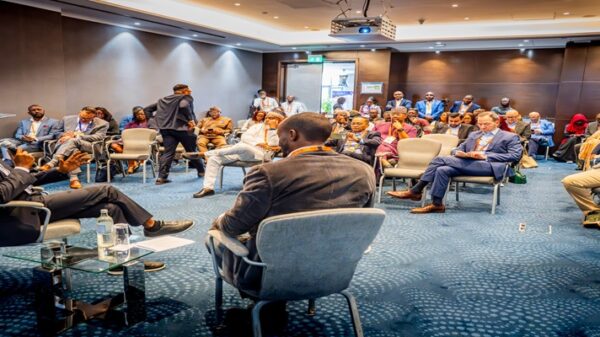
This formed part of key message by Airtel Nigeria at the recent third quarterly seminar organised by IT reporters in Lagos, Shola Adeyemi, director, Legal & Regulatory Affairs/ Company Secretary, of the Company, noted that “drive to increase internally generated revenue particularly at the State and Local Government levels; and the notion that telecoms is a “cash cow” and should be the main target in raising revenue for state”, should be discouraged.
Adeyemi identified that mis-appreciation of the role of infrastructure in overall socio-economic development by taxation of infrastructure will constrain infrastructure deployment, whereas subsidizing deployment of same will facilitate broader tax revenues from the ensuing value chain of economic activity.
Although, the industry accounted for N640bn in license and spectrum fees & N220bn annually in taxes and regulatory fees; attracted significant Foreign Direct Investment; created over 3m jobs and contributed about N1.58trillion, accounting for 9.8% in GDP growth in second quarter 2016, based on National Bureau of Statistics report, the telecoms sector is heavily taxed.
How States Usurp Telcos On Right of Way
In the presentation, Airtel decried how Kogi, Kano, Delta, Rivers Abia, Oyo, amongst others charged huge fees on right of way, especially on Federal roads that pass through their States.
Although he didn’t state the year or period the fees were charged, but Adeyemi cited examples: “Kogi State Board of Internal Revenue demanded the total sum of N2, 295, 000, 000 as ground rent fees for fibre optic cables laid on Federal roads inspite of the fact that Airtel obtained Right of Way permit from the Federal Ministry of Works; Kano State Urban Planning & Development Authority (KNUPDA) demanded the sum of N196,250,000 as Right of Way fees for fibre optic cables laid along federal Highway. KNUPDA also demanded for the sum of N324, 250,000 as annual planning permit renewal fees inspite of the fact that planning permit is a one-off fee”.
“Delta State Ministry of Environment demanded for the sum of N733,000,000 as Ecology fees for the period 2007 -2015; Rivers State Internal Revenue Services demanded for the sum of N1,600,000 as Premises fitness fees;
“Abia State Ministry of Industry, Science & Technology demanded for the sum of N96,000, 000 as Business Premises permit. Base Stations are classified as Business Premises;
“(Oyo) State Board of Internal Revenue demanded for the sum of N3,000,000 as Business Premises fees.
“National Inland Waterways Authority (NIWA) demanded for a total sum of N1,056,435,750.00 as right of way fees for fibre optic cables laid within the Federal Government’s Right of Way in Northern States inspite of the fact that similar fees had already been paid to Federal Ministry of Works.
Meanwhile, in May 2015, the office of Dr. (Mrs) Ngozi Okonjo-Iwuala, the erstwhile minister of Finance amended the Taxes and Levies (approved list for collection) Act Cap.T2, Laws of the Federation of Nigeria, 2004 (the Act).
By the foregoing, taxes for the Federal, State and Local Governments increased from 8 to 9, 11 to 25 and 20 to 21 items respectively; leading to new taxes such as Land use charge, Entertainment Tax, Environment (Ecology) fee, Infrastructure Maintenance Charge, Fire Service Charge, Property tax, Economic Development levy, Social Service Control levy. Caps placed on taxes such as business premises permit (N10,000) removed.
“The Amendment Order 2015,”Adeyemi said in his presentation, “legitimized multiple taxes & levies bedeviling telecoms industry and gave States unfettered powers to charge arbitrary fees”.
He also lamented that multiple taxation adversely impacts network costs, investment planning and business plan credibility; “Increased OPEX and lost revenue costs around N9bn each year depending on location and length of the shutdown. Adversely impacts other critical sectors (such as health, security, banking services, etc.) with attendant inevitable effect on the economy and affects emergency response and other related services which rely on communications services”.
Effects of Multiple Taxation
“Possible diversion of Foreign Direct Investments to other jurisdictions considered more investor-friendly; industry may not be able to adequately support Law Enforcement Agencies to investigate crimes at affected locations; probable barrier to broadband roll out with attendant adverse impact on internet penetration and services; unconventional tactics employed by the MDAs for the collection of the levies result in damage and injury to operators’ staff and property; and affects accurate business planning and forecasting which is critical for corporate growth”.
Adeyemi further called for political will, persuasive campaigns, cross‐sector and cross‐ministry coordination and executive power to implement and enforce the end of the multiple taxation regime.
“Airtel also aligns with industry stakeholders in canvassing for an implementation of a national strategy that will increase awareness of these issues and educate all about the impact of such acts, including the legal consequences; undertake critical review of current Taxes and Levies (Approved List for Collection); and expedited development and approval of a legal instrument to accord telecommunications networks the status and legal protection of Critical National Infrastructure”.
He said, “At 150m subscriber threshold and 107% penetration (June 16), telecoms plays a key role as an economic enabler and social overhead capital (SOC) with a 7% contribution to GDP.
“Stronger collaboration of relevant stakeholders required to address incidence of multiple taxation in order to ensure that the Quality of Service is improved upon for the ultimate benefit of the country”.
How FG, States & Local Councils Turn Telcos to ‘Cash Cows’
Comms Week18 Sept 20160 Comments

Declining income from the Federation Account due to the fall in oil prices; federal structure and the Constitution authorisation of certain items to be legislated across the three tiers of…
C
Published by
Comms Week
Trained and practicing journalist passionate about telecommunications, fintech, cybersecurity, and digital economy reporting.
You May Like

MTN Nigeria Endorses eWorldForum and Book Launch as GSM Revolution Turns 25

MTN Nigeria's ₦1.62 trillion network Investment builds 100 million subscribers using more data than ever

FG Plans Regulation of Internet Access for Nigerians below 16 Years

The Leadership Reset Powering West Africa’s Customer Experience Revolution

Digital Parks, Master Power Plan New Data Centre Facility in Lagos