Huawei has launched cloud infrastructure for agentic AI in Nigeria, allowing businesses and government agencies to develop and deploy AI agents on local infrastructure.
The launch comes as Nigeria rolls out policies aimed at attracting investment in cloud and data centers while strengthening domestic control over digital infrastructure and data.
Huawei, which launched its first local hyperscale cloud in Nigeria in 2024, is adding infrastructure designed for more computing-intensive AI applications.
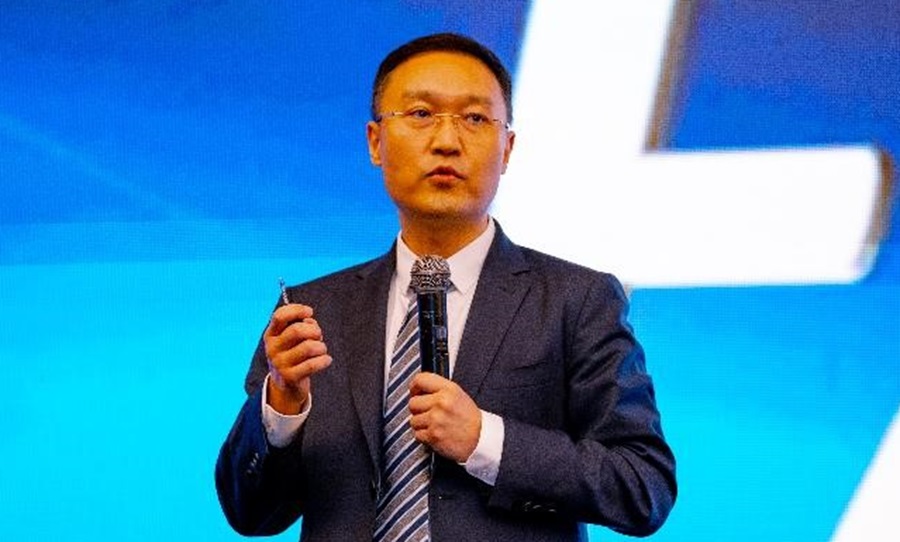
The Chinese technology group unveiled the offering at a summit in Lagos and said that the infrastructure will allow businesses and government agencies to develop and deploy AI agents using locally hosted computing resources.
Agentic AI refers to systems capable of autonomously carrying out multiple tasks toward a defined objective, rather than simply generating content or responses.
Such systems require significant computing power, access to data and infrastructure capable of processing requests with low latency.
Huawei is targeting the offering at financial services, telecommunications, internet companies, public services and other businesses.
The launch comes as Nigeria seeks to strengthen its domestic cloud capacity. The federal government unveiled a National Digital Cloud Policy in August aimed at attracting investment in cloud infrastructure and data centers, developing local capabilities and supporting the digital transformation of government.
The policy also provides a framework for data protection and the development of a more competitive cloud ecosystem.
Nigeria is pursuing those objectives alongside the National Sovereign Cloud Initiative led by the National Information Technology Development Agency (NITDA). A task force established in August to implement the initiative will work on issues including financing, investment, connectivity, energy, cybersecurity and data governance.
The initiative is intended to strengthen national control over cloud infrastructure while creating a more favorable environment for private investment.
Huawei already has a presence in Nigeria’s cloud market. The company launched its first local hyperscale cloud in the country in 2024 and expanded its capacity in 2025.
The new agentic AI offering is intended to extend that infrastructure to applications requiring greater computing power and closer integration with companies’ data and applications.
Nigeria is also seeking to build its domestic AI ecosystem. Its national AI strategy, published in 2025, identifies infrastructure, computing capacity, skills and investment among the requirements for developing the sector. The strategy also encourages the development of infrastructure that gives researchers, businesses and government agencies access to the computing resources needed for AI applications.