Making use of relevant information, reaching and implementing decisions quickly, simplifying operational models, as well as building up an organisational culture, among others have been identified as factors that would enable senior business leaders to achieve better decision-making in their organisations.
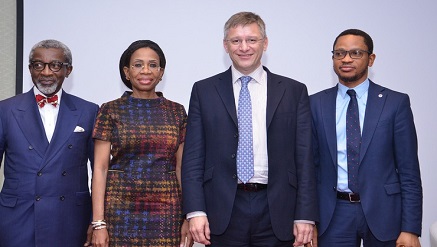
This was the view expressed by speakers at the inaugural edition of the CGMA Speaks Series, which held on Thursday in Lagos and was organised by the Chartered Institute of Management Accountants (CIMA) in conjunction with Phillips Consulting under the theme; “Joining the Dots: The Future of Executive Decision Making.”
The event, which had in attendance high-profile corporate executives from both indigenous and multinational companies,
spoke to power insisting that leaders must lead by example, while also prompting their employees to realise that they are part of a system in an organisation and not working as individuals.
Delivering a keynote address, Andrew Miskin, president, CIMA, said the mode of communication in business globally has transformed as a result of the invention and development of the internet and technology, with real-time data now easily accessible to obtain and sharing of business information now a broad two-way process.
He, however, noted that despite the presence of abundant data, interpretation of information has become less clear today because of the overload of records.
‘We have real-time information about what is happening in our businesses, yet we cannot have real-time assistance with data. That gives us a very different view in terms of what decision-making can achieve and we are going to have a lot to respond to as accountants because we are not comfortable with that”, he said.
Noting that we are in the era of decision relevance in business, Miskin said; “We have got to think about how we make those decisions relevant, and also in terms of decisions, we have got to think about what information is really needed. The question is: ‘what is it you want to decide that changes the information you want?"
Also speaking, Folusho Phillips, chairman and chief executive officer, Phillips Consulting, stated that while making relevant decisions is important, the ability to articulate, make, and execute decisions quickly is also a key component in the decision-making process.
“Yes, we’ve got to take good decisions, but once we do take a decision, it is the speed of execution that matters because it is the manner with which you use to execute such decision that would determine the outcome of such programme or plan. It goes beyond taking the decision at the right time; it’s about implementing and making sure that you make that decision relevant. Take good decisions quickly and there is the need to execute it in time”, he said.
On her part, Abisola Giwa-Osagie, deputy managing director, NEM Insurance, said the operating models in organisations, both private and public, need to be simplified in order to reduce the bureaucratic mechanism, which is an impediment in the decision-making process.
She said; “It is important for us to know that we need to simplify our operational models. Any system that has a model that is laden cannot be efficient. We need to delegate, we need to empower our people, and we need to trust the decisions that they take. That is very important.”
Sam Nwanze, chief investment officer/director, Finance & Investments, Heirs Holding Plc, who also spoke at the event, emphasised the need for organisations to institute right organisational culture in their workplaces to enable them to achieve their goals.
“One of the important roles of leadership in an organisation is the shaping of culture, and culture has a very strong impact on how an organisation is perceived. It also determines how decisions are made within an organisation and how the organisation functions. Everybody is driven in a culture that is geared towards achieving the goals of an organisation. The culture that is set up helps employees to place trust and commitment in how an organisation would eventually function and achieve its goals.
“If you have a culture where people feel to get certain things or make certain decisions, you would have to please certain people, and this is the tone of the leadership, then it completely breaks down. It is only a matter of time before you see that that organisation is not functioning”, he said.
CGMA Speaks is a thought leadership parley which brings notable business leaders together for broad reaching conversations, about the context of today’s business environment in Nigeria and across the world.
Info Evaluation, Decision-Making Techniques Dominate Discussion at CGMA Series
Comms Week4 Apr 20170 Comments
Making use of relevant information, reaching and implementing decisions quickly, simplifying operational models, as well as building up an organisational culture, among others have been identified as…
C
Published by
Comms Week
Trained and practicing journalist passionate about telecommunications, fintech, cybersecurity, and digital economy reporting.
You May Like

Google Issues Urgent Chrome Update to Block Active Attacks

RockPay Launches, Targets Digital Payments through Social Finance

NDIC Still Paying Depositors of 46 Failed MFBs — Sunday
NITDA Inaugurates Taskforce to Drive Sovereign Cloud Implementation

SEC Proposes N2bn Capital Requirement, N30m Registration Fee for Crypto Firms