Telecom
International Girls in ICT Day 2022: Microsoft Africa Development Center Inspires Schoolgirls on STEM Education

The International Girls in ICT Day was celebrated globally on April 28th, 2022, and the team at the Microsoft Africa Development Center (ADC), West Africa, celebrated the day at an intimate event with schoolgirls and female tech enthusiasts.

Themed “Access and Safety,” the day was marked to reinforce the safety for girls and young women to thrive in science, technology, engineering, and mathematics (STEM), and the need for safe and reliable access to the internet and digital tools.
This year and every year, the International Telecommunications Union (ITU) and partners work together to develop solutions and ideas for lowering barriers to access and improving safety online for girls and young women.
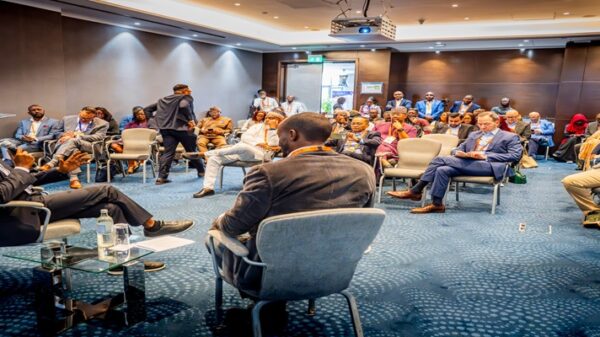
The event held at the newly launched Microsoft facility in Lagos with young girls from Girls Senior Secondary Grammar School Obalende, Ikoyi Lagos, female tech enthusiasts as well as 30 ladies under 30 with no prior tech knowledge all in attendance. This audience were treated to inspiring conversations, one-on-one sessions with mentors, a tour of the office facility, and an introduction to skilling pathways in technology.
On their part, the 30 ladies under 30 who attended the observance without an academic degree or career in tech left with renewed energy willing to pursue careers in tech and software engineering.
Hosted by Sefunmi Wande-Durojaye, Lead Ecosystem and Program Development at Microsoft ADC-West Africa, the observance sparked conversations in ICT for girls during the day-long event, with a keynote address delivered by Bolanle Olumekor, Knowledge Management Assistant at United Nations Information Centre Nigeria.
Participants had the opportunity to hear inspiring and insightful speeches from the speakers during the sessions.
Paula Wigwe, Business Manager at Microsoft ADC-West Africa, shared a relatable story of how she got into tech even though her first degree was in Estate Management. Her story had a lot to do with her curiosity, resilience and being focused.
Beyond the significance of internet access and safety for young women, the day was leveraged as another channel to inspire young women interested in STEM to dream and believe in a future at Microsoft like many women, they had the opportunity to meet. Jacquelyn Ekwueme, Senior Program Manager in the Governance, Risk, and Compliance (GRC), and Adora Nwodo, Software Engineer in Mixed Reality, shared their experiences on ways to become a voice and remain relevant within the tech industry.
Per opportunities in skill advancement, Microsoft ADC West Africa partnered with Utiva and Skillup Africa to help the females in skilling up toward their career journey in tech.
Other notable sessions during the day included a career session anchored by Tejumade Olaniyi, Recruiter at the ADC West Africa and an experience at the Garage led by Lydiah Karanja, Program Manager of the Garage, ADC East Africa.
The Garage session gave the participants the opportunity to try their hands on a few projects, bringing home how very accessible and fun tech can be for young women.
Telecom
Nnaemeka Ani – The Architect of ‘Code and Courage’

In the rapidly evolving landscape of African technology, few figures bridge the gap between high-level research and grassroots digital execution as effectively as Nnaemeka Ani.

Nnaemeka Ani
As the Founder of MGX Research Center and the visionary behind MexyGabriel, Ani has emerged as a leading protagonist in the narrative of Nigeria’s technological self-reliance.
The Visionary: Founding MGX Research
At the heart of Ani’s philosophy is MGX Research, a center dedicated to “first-principles thinking.” Under his leadership, the center has become a beacon for data-driven innovation, moving beyond the “hype” of the tech world to focus on persistent, localized solutions.
Through MGX Research Center, he is building a multidisciplinary ecosystem that cuts across artificial intelligence, data science, cybersecurity, smart cities, digital identity, e-governance, EdTech, HealthTech, robotics, and automation
Ani’s mantra – “Africa’s rise begins with its own innovation” – is not just a slogan; it is a call to arms for African builders to stop seeking international validation and start authoring their own digital destiny.
As Founder and CEO of MexyGabriel Tech Company, Nnaemeka has driven multiple large-scale technology projects across Nigeria, focusing on digital infrastructure, enterprise solutions, identity and payment platforms, and youth-centered innovation programs. MGX Research Center functions as the research and development arm of this broader ecosystem, providing the thinking laboratory, prototypes, and strategic insights that inform products, policies, and investment decisions.
Nnaemeka is passionate about youth empowerment, innovation, and Africa’s digital future. His work through MGX Research Center aims to position Nigeria not just as a consumer of technology but as a creator of solutions, producing world-class research, thought leadership, and practical tools that can be deployed across states, universities, and private organizations.
He frequently collaborates with universities, government ministries, tech hubs, and global partners, championing a model where research is not locked up in theory but translated into deployable systems, smart policies, and scalable ventures.
Ani has demonstrated a unique ability to turn complex code into commercial and social value. His work has focused on:
- Infrastructure for Good: Developing platforms that bridge the divide between urban tech hubs and rural communities.
- Sovereign Technology: Championing the idea that African data should be managed by African-built systems.
The Public Servant: Digitizing Enugu State
Ani’s influence extends into the corridors of power. Serving as the Special Adviser to the Enugu State Governor on ICT, he has been instrumental in transforming the state into a burgeoning digital ecosystem.
His work in Enugu serves as a blueprint for “Governance-Tech Synergy,” proving that when political will meets technical expertise, public service delivery can be revolutionized.
“We are no longer just ’emerging’; we are competing. Africa will rise by code, by courage, and by us,” said Nnaemeka Ani.
Quick Facts: Nnaemeka Ani
Category | Detail |
Current Roles | Founder, MGX Research; Founder, MexyGabriel; SA on ICT to Enugu State Governor. |
Core Philosophy | “First-Principles Thinking” – Breaking problems down to their core truths. |
Key Advocacy | Digital Sovereignty, Sovereign AI, and localized STEM education. |
Notable Mantra | “By Code and By Courage.” |
Why He Matters in 2026
As Nigeria enters a transformative year marked by the January 1, 2026 Tax Reforms and the push toward 70% Broadband Penetration, Ani represents the “New Guard” of leadership. He is one of the few voices consistently advocating for the Tripod Method, balancing technology, local policing, and traditional authority, to ensure that Nigeria’s digital growth is matched by national security.
Nnaemeka Ani is not just as a “tech guy,” but as a Strategic Reformer. He is a “Leader to Watch” because he understands that for technology to thrive in Nigeria, it must be supported by sound policy and cultural relevance.
Telecom
Google Finally Allows Users to Change Gmail Address, Keeps Data and Services Intact

Google has unveiled a new feature that allows Gmail users to change their existing email addresses without losing data or access to services, marking a major shift in the company’s long-standing policy.

Gmail
According to an update on Google’s account help page, the new option enables account holders to replace their current @gmail.com address with a new one while retaining all associated data, including emails, photos, and integrations with services such as Google Drive, Maps, and YouTube.
The guidance, however, was first spotted on the Hindi version of Google’s support page, suggesting that the rollout may begin in India or Hindi-speaking markets before expanding globally.
The English-language support page still carries the older advisory that Gmail addresses “usually cannot be changed.”
Google explained that under the new policy, users who update their Gmail address will automatically keep their original address as an alias.
This means emails sent to the old address will continue to arrive in the inbox, and the original address will remain valid for signing in to Google services.
Previously, users seeking a new Gmail address had to create an entirely new account and manually transfer their data, a process that often disrupted third-party app integrations. The new feature eliminates that inconvenience, ensuring continuity for users.
The company further clarified that while users can reuse their old Gmail address at any time, accounts that change their address will face certain restrictions.
These include a 12-month waiting period before another new Gmail address can be created, and the inability to delete the newly chosen address once it has been set.
Google assured users that all existing data would remain intact after an address update, including stored photos, messages, and emails.
The gradual rollout of the feature indicates that full global adoption is expected in the coming months, a move likely to be welcomed by millions of users who have long requested the ability to update their Gmail identities without starting afresh.
Telecom
Nigeria’s Internet Usage Hits 1.24m Terabytes – NCC

Nigerian Communications Commission (NCC) has said that Nigeria’s internet usage reached a record 1.24 million terabytes in November 2025.

According to the latest data from the NCC, the figure rose modestly from 1.235 million terabytes in October, reflecting steady growth in digital activity across the country.
Broadband penetration in Nigeria crossed the halfway mark in November 2025, reaching 50.58 per cent, up from 45.61 per cent in January, the telecoms regulator reported.
The figure, however, falls short of the 70 per cent coverage target outlined in the National Broadband Plan 2020–2025, which expires this month.
The country had roughly 109 million broadband subscriptions by November. Growth has been uneven, hindered by infrastructure and regulatory constraints, including frequent fibre-optic vandalism that triggers 30 to 43 network cuts daily, high right-of-way fees, and declining subscriber numbers earlier in the year.
Expansion of mobile networks, particularly 3G and 4G services, alongside limited 5G rollouts in urban centres, affordable smartphones, and competitive data plans, has driven uptake.
Investments in the National Communications Backbone and private-sector initiatives have also improved access, especially in underserved areas.
While Nigeria is gradually improving digital inclusion, achieving the original broadband plan remains challenging due to high infrastructure costs, coverage limitations, and deployment hurdles.
The NCC maintains that continued investment in mobile networks and broadband infrastructure will sustain gradual growth in the sector.
Commenting on the development, some Nigerian analysts attributed the surge to the broader mobile and broadband adoption and the growing appetite for streaming, online learning and other digital services.
According to the analysts, the figures suggest that internet connectivity is no longer a luxury but a necessity for both business and leisure, underscoring the slow but steady expansion of Nigeria’s digital economy.
News3 days agoHow Moniepoint’s Founders, Tosin Eniolorunda and Felix Ike are Redefining African Tech and Finance
Telecom1 day agoGoogle Finally Allows Users to Change Gmail Address, Keeps Data and Services Intact
News1 day agoInsomniaQ Spotlights African Creativity in Lagos
General News1 day agoT2 Backs Youth Excellence as NCBC Wins Bosun Tijani Foundation Basketball Tournament
E-Financial5 hours agoNigeria’s N58.18trn Budget and Rising Cost of Deficit Governance
Telecom5 hours agoNnaemeka Ani – The Architect of ‘Code and Courage’