President Mohammadu Buhari has been urged to establish the Office of the Chief Information Officer (CIO) General for the Federation.
The federation’s CIO would oversee the spending of the federal government as well as the strategic planning of all federal IT investments.
Yele Okeremi, managing director and CEO of Precise Financial Systems (PFS), who made this call at the maiden edition of ICT retreat held in Ibadan, Oyo state last week, said the CIO’s office should be charged with establishing a government-wide enterprise architecture that would ensure system interoperability, information-sharing and maintain effective information security and privacy controls across the federal government.
He asked the Ministry of Communications [MoC] as presently consisted to focus on development, implementation and evaluation of the relevant IT policies for the country.
Okeremi, who was served two consecutive years as Chairman of the Local Organising Committee (LOC) of DEMO Africa, which Nigeria hosted in 2014 and 2015, advised the Ministry of Communications to strengthen the Office of ICT Innovations and Entrepreneurship (OIIE).
According to him, this would enable the OIIE to access the required resources and power to support incubation centres and hubs while facilitating collaboration between the incubation centres and hubs with industry practitioners, particularly the software houses.
It would be recalled that the OIIE was established to nurture, cultivate and expand ICT innovation and entrepreneurship in Nigeria in line with NITDA Act 2007 and the National ICT Policy.
For the ICT industry to generate the needed employment opportunities and contribute to the Gross Domestic Product (GDP) of the country, Okeremi opined that Nigeria must prioritise ICT local content and innovation on agriculture, petroleum, finance, communication, educations and entertainment.
He warned that unless the current administration tackles the problems of poor quality of education, the disconnect between academia and industry, inadequate broadband availability, poor power supply and non-availability of incubation hubs and centres, the fourth industrial revolution may yet elude Nigeria.
While lamenting the erosion of excellence in the nation’s moral fibre, Okeremi explained that the lack of trust in fellow Nigerians and the craze for foreign solutions have forced so many brilliant and hitherto promising local ICT firms to abandon the development of innovative ideas.
“More Nigerians have become mere resellers of foreign software solutions in the country. How many practitioners have stayed long enough to see it all? How many practitioners have remained focused without diversion to value reselling or outright departure from the business?”
He said government have no choice than to support the local ICT industry by creatively using trade protectionism and provision of support to teeming youth in the knowledge economy.
IT Expert Urges Buhari to Establish Office of CIO of the Federation
Comms Week30 Jan 20160 Comments

President Mohammadu Buhari has been urged to establish the Office of the Chief Information Officer (CIO) General for the Federation. The federation’s CIO would oversee the spending of the federal…
C
Published by
Comms Week
Trained and practicing journalist passionate about telecommunications, fintech, cybersecurity, and digital economy reporting.
You May Like

North Korea Recruiting IT Professionals in Nigeria, Others to Plant Fake IT Staff in US Tech Companies- NBC News

Google Issues Urgent Chrome Update to Block Active Attacks

RockPay Launches, Targets Digital Payments through Social Finance

NDIC Still Paying Depositors of 46 Failed MFBs — Sunday
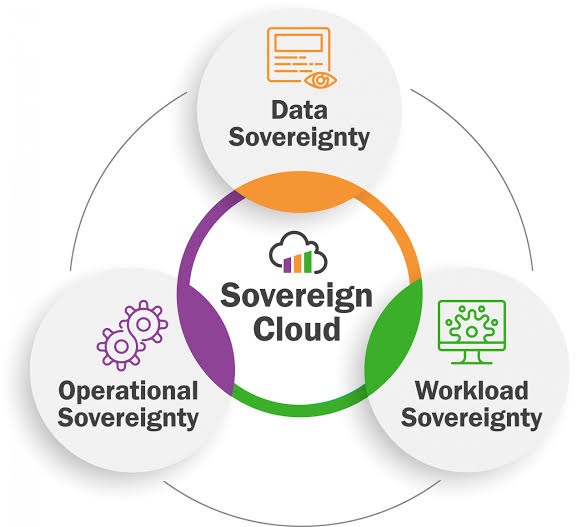
NITDA Inaugurates Taskforce to Drive Sovereign Cloud Implementation