Telecom
Johnson, Nigeria’s ComTech Minister Lauds CTO

Mrs. Omobola Johnson, minister of Communications Technology, said that the Commonwealth strengthens “cooperation in the midst of diversity, describing it as an established, independent and voluntary space at which issues that are common to all countries.
This is coming in the face of recent withdrawal from the British Commonwealth by The Gambia, the tiny West African nation bordered by Senegal, and growing concerns about the body’s relevance in contemporary international play.
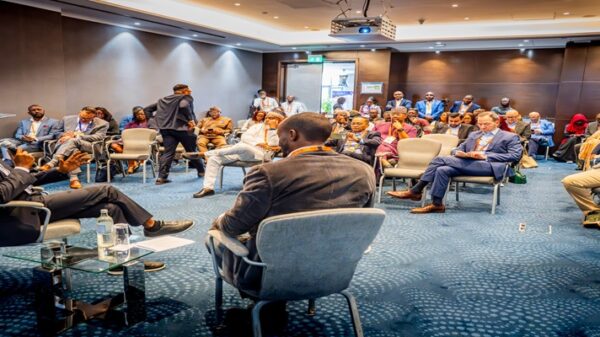
She stated this at her keynote speech at the 11th Commonwealth Telecommunications Organisation (CTO) Forum which opened last night in Abuja.
She described the CTO as “an established, independent and voluntary space at which issues that are common to all countries, irrespective of their level of economic advancement, can be dispassionately discussed; and where realistic and realisable solutions can be proffered.”
Acknowledging that “recent events have led to some discussion on the continued relevance of the Commonwealth,” Johnson said the CTO “serves to remind us of one of the core strengths of the Commonwealth that the World appears to be losing sight of – that of cooperation in the midst of diversity.”
“Although we represent countries with diverse social, political, and economic backgrounds, at this Forum we regard each other as equal in status. We have come with a learning attitude and a willingness to co-operate in achieving the goals that we all agree are important.
“These goals relate to the ability of our populations to communicate freely and affordably with each other … an ability that is fundamental to our success in building a more tolerant and peaceful World.”
She noted that the heart of the CTO deliberations will be how to make high-speed access to the Internet more pervasive, affordable and safe to the citizens of the Commonwealth (who make up close to 30 per cent of the global population).
According to her: “Global Internet penetration rates have continued to increase and almost 40 per cent of the world’s population are now online. However, the numbers of people connected to the Internet are fewer in developing countries than in more industrialised ones.”
She expressed concerns on the growing use of the social media, especially by the youth population in Nigeria, Johnson stated that “there is no denying the increasing influence of social media.
Just as the “Big Mac Index” has developed to be the informal way of measuring the purchasing power parity between inhabitants of different countries; the number of Facebook users is becoming an informal indication of the social media activity of a country.
“Nigeria recently became the location of the largest user base of Facebook users in Sub Saharan Africa. About half of the 11 million Nigeria users are under the age of 25 (5.6million), which perhaps underscores the importance of understanding how young people make use of ICTs. However, beyond knowing who is using social media, this Forum will discuss ways in which such tools can be leveraged as a platform for development, learning and increasing communication.”
She believes the Forum is veritable avenue to “assess the different stages of broadband development and discover best practice strategies for moving forward.”
Telecom
Airtel Africa Records $586m Rise in Profit on FX Gains, Tariff Hike

Airtel Africa’s profit after tax grew to $586 million in the nine months ended December 31, 2025, up from $248 million in the corresponding period of 2024.

According to the company’s nine-month financial results released on Friday, the higher profit after tax in the current period was driven by higher operating profit and derivative and foreign exchange gains of $99 million, as compared to $153 million in derivative and foreign exchange losses in the prior period.
It disclosed that the group’s revenues in reported currency increased by 28.3 percent to $4,667 million, with constant currency growth of 24.6 percent. Reported currency revenue growth at a premium to constant currency growth reflects currency appreciation in key markets. In Q3’26, constant currency revenue growth improved to 24.7 percent from 24.2 percent in the previous quarter (Q2’26).
“Constant currency revenue growth was supported by tariff adjustments driving a 50.6 percent growth in Nigeria and a strong performance in Francophone Africa, which saw revenues accelerate to 17.0 percent in the nine months.”
In Nigeria, revenue grew by 50.4 percent in constant currency, largely driven by continued strength in the demand for data services, further supported by the tariff adjustments. The constant currency revenue growth was driven by ARPU growth of 39.6 percent and customer base growth of 7.8 percent.
“In reported currency, revenue grew by 52.1 percent to $1,123 million, with Q3’26 revenue growth accelerating to 70.9 percent compared to constant currency growth of 52.9 percent.
“Significantly higher reported currency growth during the quarter compared to constant currency growth was due to the appreciation in Nigerian naira from a weighted average NGN/USD rate of 1,627 in Q3’25 to NGN/USD 1,456 in the current quarter,” it disclosed.
Insights from Airtel’s financials revealed that voice revenue in Nigeria grew by 35.8 percent in constant currency, driven by voice ARPU growth of 26.0 percent, reflecting the tariff adjustments earlier in the year.
Data revenue also grew by 65.4 percent in constant currency as a function of both data customer and data ARPU growth of 8.0 percent and 49.7 percent, respectively. Data usage per customer increased by 26.2 percent to 10.7 GB per month (from 8.4 GB in the prior period), with smartphone penetration increasing 4.6 percent to reach 54.1 percent. Smartphone data usage per customer reached 13.4 GB per month compared to 11.2 GB per month in the prior period.
Sunil Taldar, chief executive officer, said these results highlight the strength of our strategy, with strong operating and financial trends across the business.
He added that “During the quarter, we accelerated investment to enhance coverage and data capacity while also expanding our fibre network. Coupling this investment with innovative partnerships strengthens our customer proposition and positions us to capture the considerable growth opportunity across our markets.
Digitisation, technology innovation, and embedding AI in our processes will also optimise the customer experience with increased digital offerings and closer integration of GSM and Airtel Money services, allowing us to unlock the strong demand across our markets.
Smartphone adoption continues to increase with a penetration of 48.1 percent, and we are seeing solid progress in the development of our home broadband business, reflecting the need for reliable, high-speed connectivity across our markets.
“Our push to enhance financial inclusion across the continent continues to gain momentum with our Mobile Money customer base expanding to 52 million, surpassing the 50 million milestone.
Annualised total processed value of over $210 billion in Q3’26 underscores the depth of our merchants, agents, and partner ecosystem and remains a key player in driving improved access to financial services across Africa. We remain on track for the listing of Airtel Money in the first half of 2026.
“Disciplined execution on cost efficiency, alongside accelerating revenue growth, has enabled another sequential improvement in our quarterly EBITDA margin to 49.6 percent, underpinning constant currency EBITDA growth of 31 percent, and we remain focused on driving further incremental margin improvements.
“Our strategic priorities remain clear: to continue investing in best-in-class connectivity, accelerate financial inclusion through our mobile money platform, and deliver an exceptional customer experience. These results reinforce our confidence in the long-term potential of our markets and our ability to create value for all our stakeholders,” he added.
Telecom
Africa’s AI Guru Abodunrin Charts Path to Continent’s Digital Dominance

David Adeoye Abodunrin, Africa’s foremost AI transformations coach and internationally recognised futurist, has declared that the continent’s immense potential can only be unlocked when purpose is aligned with strategic intelligence.

David Adeoye Abodunrin
Speaking to ICT editors in Lagos, Abodunrin—renowned for nearly three decades of multidisciplinary expertise spanning artificial intelligence disruption, digital governance, behavioural intelligence, cybersecurity, and human capital transformation—said Africa must embrace AI as a transformational frontier rather than a mere tool.
“AI is not merely a tool, it is a transformational frontier that can unlock prosperity, resilience and leadership for Africans in the global digital era,” Abodunrin stated.
Abodunrin, widely sought after by C-suite executives, policymakers, founders and institutional boards, is recognised internationally as a foresight architect and strategic transformation coach. His mission, he explained, is to help individuals, governments and organisations engineer strategic advantage through anticipatory intelligence and ethically aligned innovation.
His work focuses on decoding emergent AI and intelligence systems that reshape markets, redefine competitive advantage, and enable sovereign digital ecosystems.
He is also a 14-time international bestselling author whose frameworks integrate behavioural psychology, foresight strategy and digital sovereignty to prepare leaders for future complexities. Through his organisations, including Cubed Integrated Consulting and Cyberfore Consulting, Abodunrin equips governments, boards, and enterprises with tools to build secure, future-ready institutions that thrive amid volatility.
He stressed that Africa’s transformation must be rooted in local contexts and values, not imported wholesale from global models.
“In Africa, transformation must not just follow global models, it must reflect our cultures, our challenges and our collective aspirations,” he emphasised. “This continent holds immense potential; we simply need to align purpose with strategic intelligence to unlock it.”
His coaching and advisory services emphasise strategic AI governance tailored for African economies, executive and leadership transformation for sustained institutional resilience, digital and cyber intelligence frameworks to protect sovereign infrastructure, and behavioural intelligence and insights for inclusive growth and innovation.
Despite his international recognition, Abodunrin insists that his philosophy centres on African solutions for African realities—developing local talent, embedding ethical AI adoption, and fostering foresight strategies that account for Africa’s unique socio-economic ecosystems.
Telecom
NCC Unveils Q4 2025 Network Performance Report, Pledges Transparency and Accountability

Nigerian Communications Commission (NCC) has reaffirmed its commitment to transparency, accountability, and consumer protection with the release of its Q4 2025 Network Performance Report.

NCC
Speaking at a media engagement in Abuja, the Executive Commissioner, Technical Services, Engr. Abraham Oshadami, said the Commission’s proactive disclosure of industry data is designed to strengthen public trust and ensure service providers remain accountable to consumers.
“Transparency for us has become a guiding principle that underpins our regulatory approach. Open access to information strengthens the industry, builds public trust, and reinforces accountability among operators,” Oshadami stated.
He recalled that in 2025, the NCC partnered with Ookla to develop nationwide Network Coverage Maps, giving consumers objective tools to compare network quality across locations and operators. The Commission also began publishing quarterly performance reports, with the Q3 2025 edition released in October.
Oshadami noted that the Q4 2025 report shows measurable improvements in network performance and in the quality of experience delivered to consumers. He urged the media to critically engage with the data and help amplify stories of progress, accountability, and reform.
In her remarks, the Head of Public Affairs Department, Mrs. Nnenna Ukoha, described the media as indispensable partners in shaping public understanding of the telecommunications sector.
“Your reporting shapes the national narrative around telecommunications. It affects investor confidence, consumer trust, and policy direction. It influences how Nigerians understand the technologies that power their daily lives,” she said.
Ukoha stressed that the Commission’s quarterly reports provide rich material for news coverage, investigative reporting, and sector monitoring. She encouraged journalists to adopt constructive framing in their reporting—highlighting progress alongside challenges, and reflecting the investments and innovations driving industry resilience.
The engagement session, held at the Commission’s headquarters, provided journalists with access to the Q4 2025 data and contextual insights to aid accurate reporting. Both officials reiterated that the NCC’s goal is to ensure that reforms, accountability measures, and improvements in service delivery are widely understood and properly communicated to the Nigerian public.
E-Business2 days agoKaspersky Launches OT Calculator to Align Cybersecurity Investments with Business Goals
News2 days agoStanley Amandi, Nollywood Actor Arrested over Alleged Coup Plot against Tinubu
E-Financial2 days agoFBNQuest Merchant Bank Rebrands as Quest Merchant Bank
General News1 day agoNigeria’s Data Privacy Economy Hits ₦16.2bn – NDPC Commissioner
Telecom2 days agoFG to Acquire Two Communications Satellite to Boost Digital Access
General News2 days agoHow Plot to Topple Tinubu was Uncovered, Foiled
General News2 days agoMoniepoint Marks 10 Years of Transforming Nigerian Businesses
General News2 days agoParadigm Initiative Hails New Data Protection Laws as World Marks Privacy Week