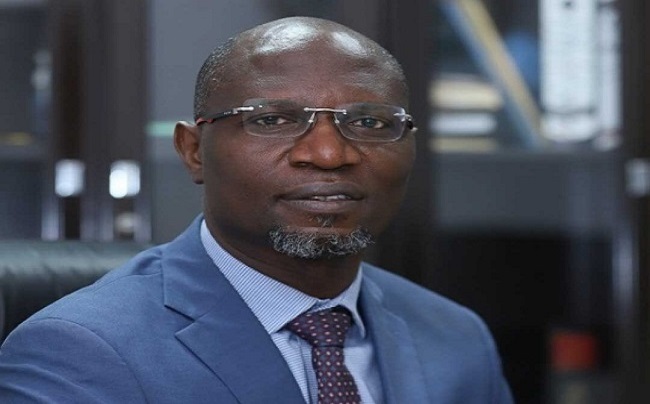
After the initial noises, serious players in the mobile money payment space have begun to emerge with the pretenders taking the exit doors, according to Sola Bickersteth, chief executive officer, One Network, a structured agent management organization recognized by the Central Bank of Nigeria (CBN).
Bickersteth, who spoke to Nigeria CommunicationsWeek, said though the viability of the industry is unquestionable; that some “unserious”, “get-rich-quick” operators and others with structural challenges are gradually withdrawing the market.
“It is not like mobile money is declining, but people are taking it for granted. I keep telling people, we used Kenya as example, for the first 10 years that mobile money started in Kenya, people didn’t see the value in the first 5 years. It was after that that the drive went wild. Then, it was as if it has been every where. There is no magic to it. In the next 2 years mobile money will blossom. So, the industry is downsizing itself”. He eadded
Although the specific services and their modes of operation vary among the different MMOs, the general functions of mobile money in Nigeria include, transfer and receipt of money; payment of bills e.g. utility bills, shopping bills, cable TV bills etc, purchase of airtime; cash deposits and withdrawals and Balance inquiries
The CBN introduced mobile money services to provide basic financial services and create payment access especially to Nigerians without bank accounts, as well as to help drive financial inclusion in the country.
Some of these mobile money operators (MMOs) include: Guaranty Trust Bank (GTBank), United Bank of Africa (UBA/Afripay), Stanbic IBTC, Ecobank, Fortis MFB, Pagatech, Paycom, eTranzact, FETS (Funds and Electronic Transfer Solutions), Eartholeum, M- Kudi and Virtual Terminal Network (VTN).
According to Bickersteth, the enthusiasms initially exhibited by some of the operators have waned.
“When mobile money started, everybody joined the ship; I said it that after 3 years the serious players will remain. What happened to mobile money sub-sector could be described as noise makers just left and the serious players; who do not have time for noise, are doing serious business,” he argued.
With an estimated population of 167 million people and less than 30 million bank accounts, a larger number of Nigerians lack access to basic financial services.
An Enhancing Financial Innovation & Access survey, recently found that 63.5 per cent of Nigeria’s adult males and 76.8 per cent of adult females are unbanked, while 78.8 per cent of the country’s rural populations are largely unbanked.
But with over 90 million active mobile subscribers, the mobile phone has become a significant means of providing financial access to the huge unbanked population of the country.
Also, a recent survey conducted by the NOI Polls on the adoption of the mobile money services showed that only 6 in every 10 Nigerians (59 per cent) are not aware of mobile money services. The survey disclosed that only 13 per cent of those that are aware (49 per cent) of the services currently use it.
Mobile Money Industry Rightsizing Self- Bickersteth
Comms Week6 Apr 20140 Comments
After the initial noises, serious players in the mobile money payment space have begun to emerge with the pretenders taking the exit doors, according to Sola Bickersteth, chief executive officer, One…
C
Published by
Comms Week
Trained and practicing journalist passionate about telecommunications, fintech, cybersecurity, and digital economy reporting.
You May Like

Cyberattack Sends IMO Crashing Back to Earth

NCC’s Anti-Scam Platform Goes Live Next Month
FG Targets 200 New Telecom Sites before December
MTN Nigeria Receives EDGE Advanced Certification from IFC for Advancing Gender Equality
Appeal Court Affirms N85m Fine against Zenith Bank over Account Freeze