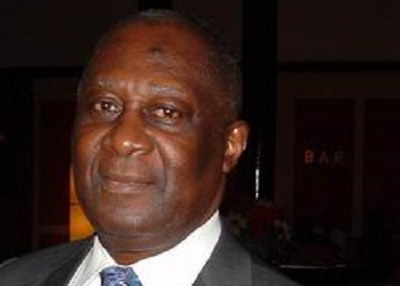
The decision to bail out 84 failing stock broking firms with a princely sum of N22.6 Billion (approximately US $144.9 million) by President Goodluck Jonathan’s administration has come under fierce opposition from Olu Akanmu, chief marketing officer, Airtel Nigeria who described the government offering as “rewarding bad behaviour and excessive risk-taking at public expense.
Akanmu, a seasoned marketing expert with considerable years of experience in the banking and telecom sectors, said government had no business bailing out private investor who took risk expecting to make their kill in the capital market, sharing profits at public expense.
The Airtel CMO noted that it was a moral burden and exactly what killed ‘Wall Street’ and other global financial hubs recently. “This moral hazard problem was at the heart of the misbehaviour of investment bankers in the recent global financial crisis, when they could made huge bonuses if their bets worked out but pass the loss to shareholders if it didn’t.”
“By setting this precedent, the government has further ossified the moral hazard problem in our financial system. If an investor taking an investment risk knows that he can appropriate his gains but can pass his losses to another party, he will take excessive unreasonable risk as he has nothing to lose,” said Akanmu.
He reasoned that in bailing out ‘errant’ investors, the government was encouraging more ‘bad behaviour’ as they would continue to play “roulette and casino at public expense, made initial huge gains which they pocketed until their financial derivative instruments fell like a pack of cards.”
He listed two critical tests to be passed by any sector to be bailed out with public funds as: too big to fail, the TBTF test or must be ‘too interconnected to fail’, the TICTF test.
The “TCITF test,” he reasoned “measures whether a group of institutions represent critical connected dependencies with no existing market alternative in size and function such that their failure will pull down the financial system.”
“It is difficult to see how the group of stock brokers who will enjoy these N23b public largesse could pass the “too big to fail” or the “too interconnected to fail” test. Their collective size does not pose significant systemic risk to the financial system. In the last three years, since these firms have had to deal with their margin loan challenges, the financial system has carried on. The capital market measured by the Nigeria Stock Exchange All Share Index has witnessed a year to date gain of more than 25 percent. This is because there are alternative market transaction agents whose collective size moderate any potential “too interconnected to fail” effect of the stock broking firms being bailed-out by government. Whither then is the logic of government action?”
Although the sum released by the government’s Asset Management Corporation of Nigeria (AMCON), falls short of the N500 billion demanded by industry stakeholders, Akanmu insisted that the ailing firms pose no grave danger to Nigeria’s economic buoyancy.
“Capital market operators specifically stock broking firms are no banks. They are capital market transaction agents. They do not warehouse public assets or owe public liability like the banks that hold public deposits that could create a collapse of the financial system if a critical number of them fail. The stock asset that the public buy is not warehoused by the stockbroker but by the public themselves directly and the company from whom the stock was bought with a clearing system maintained by the independent Central Security Clearing System (CSCS),” Akanmu maintained.
But in sharp reaction, Mike Itegboje, immediate past president of Chartered Institute of Stockbrokers (CIS), said the bailout fund from AMCON does not involve public risk.
“The stimulus package does not involve tax payers’ money, what is required is for the government to borrow the money with a guarantee. There are people willing to put money.”
He maintained that if the government could bail out other sectors like aviation and textile, there was nothing unholy about extending similar gesture to the capital market. “If the federal government provided huge funds as bail out for other sectors considered as critical to economic development, what is wrong with it pumping money to bail out the capital market?,” said Itegboje.
N22Bn Capital Market Bailout Draws Jabs from Expert
cwadmin17 Jan 20130 Comments
The decision to bail out 84 failing stock broking firms with a princely sum of N22.6 Billion (approximately US $144.9 million) by President Goodluck Jonathan’s administration has come under fierce…
c
Published by
cwadmin
Trained and practicing journalist passionate about telecommunications, fintech, cybersecurity, and digital economy reporting.
You May Like

NAICOM Dismisses Allegations of $100Bn Fraud in Recapitalisation Exercise

Yellow Card Financial Gets SEC’s ARIP Recognition

NPF-NCCC @ CIBN Conference, Urges Banks to Set up eFraud Response Teams

Dangote Refinery IPO Opens Banks, Fintechs, Apps for Share Purchase

CBN Warns Banks, Says A Bank’s Cyber Weakness Could Trigger System-Wide Crisis