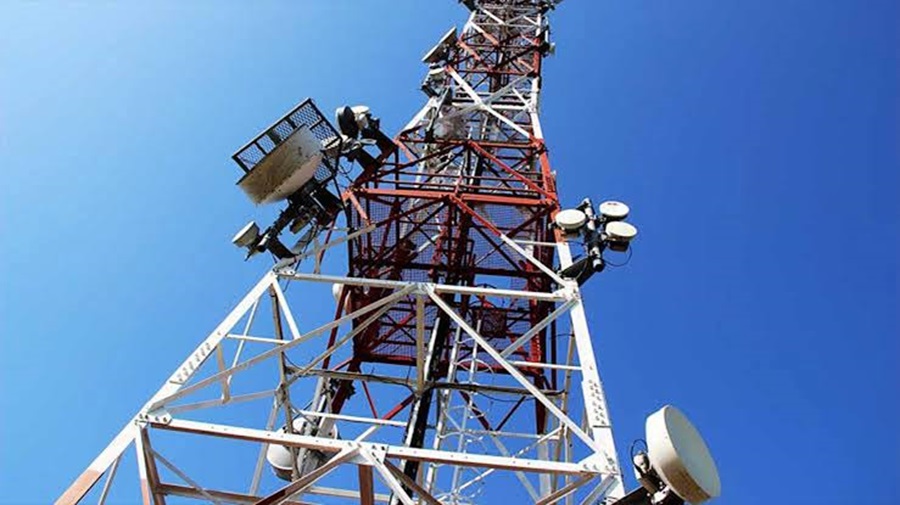
A recent industry report released by the Nigerian Communications Commission (NCC) has revealed that 5G penetration grew from 0.12 per cent in May 2023 to 1.11 per cent in January 2024.

In telecommunications, 5G is the fifth-generation technology standard for cellular networks, which cellular phone companies began deploying worldwide in 2019, and is the successor to 4G technology that provides connectivity to most current mobile phones.
Since licensing by the NCC, three mobile network operators, MTN, Airtel, and Mafab Communications have rolled out 5G in Nigeria.
The network coverage which has seen massive investment by telecom operators closed the year 2023 with an adoption rate of 1.04 per cent in December, according to the Whistler newspaper.
But the growth was sluggish in January at 1.11 per cent.
In December 2021, MTN Nigeria and Mafab Nigeria Communications Limited emerged winners of a 5G auction after about eight hours and 11 rounds of bidding.
A year later, Airtel emerged as the sole winner of the second phase of the 5G auction. MTN deployed its 5G in Lagos and six other cities in August 2022.
In 2023, Airtel deployed 5G in Lagos, FCT, Ogun and Rivers. For MAFAB, the NCC had said upon the issuance of the 5G licence, Mafab publicly launched its services in Abuja on 24 January, 2023, and in Lagos on 26 January, 2023.
Mafab services were targeted at six cities – Lagos, Abuja, Port Harcourt, Enugu, Kano and Kaduna.
However, the industry report released by the regulator shows that 5G is the least adopted by subscribers utilising telecommunications services per the various mobile phone generations currently deployed in Nigeria.
According to the NCC, the 2G network is the most adopted at 57.78 per cent, 4G network adoption is at 31.75 per cent, 3G is 9.36 per cent while the 5G settled at 1.11 per cent as of the review month.
Asides the low 5G adoption, the industry saw a plunge in the number of active lines from 224,713,710 in December 2023 to 218,400,965 in December 2024 resulting in the fall of teledensity from 103.66 per cent to 100.75 per cent in January.
The number of active internet service subscribers also fell from 163,838,439 in December last year to 161,977,883 in January 2024.
Consequently, broadband subscriptions in Nigeria fell from 43.71 per cent in December to 42.53 per cent, the report noted.