

E-Business
.ng Domain Names Surpass 27,000, NiRA Seeks Support


Statistics released on Wednesday by the Nigerian Internet Registration Association (NiRA) revealed that the domain name renewal rate in September 2015 was higher compared to the renewals in other months of the year except in March 2015.
In the report titled, “Domain Name Report – January to September 2015”, NiRA said that the significant increase was with domain name renewals at the third level, while seeking stakeholders support to deepen .ng domain name adoption.
According to Mr. Sunday Folayan, president of NiRA, without the support and efforts of all stakeholders, it will be an uphill task to make .ng popular within and outside the country.
However, in general for September 2015, domain name registration was the lowest in the past four months.
From January to September 2015, NiRA said it recoded a total of 16,191 domain names registered and 11,263 domain names renewed.
“It is worthy to note that from January to September 2015, we have 27,454 domain names, inclusive of new registrations and renewals at both second and third levels,” the Association said in the report.
Similarly, Folayan, NiRA’s president, said, “Our engagement strategy is borne out of the desire to popularize the brand and grow the numbers. The media is very key, as a partner, in promoting the .ng brand. We continue to have interactions and engagements on the social media, print and electronic media, in order to create further visibility of the brand.
This week, I was a guest on the interview segment of TechTrends of ChannelsTV discussing the domain name industry ecosystem. I took time to explain why Nigerians should embrace the .ng brand and register their domain name(s), through NiRA Accredited Registrars. I elaborated on the benefits of having a .ng domain name, pointing out the competing global brand price of .ng domain name, brand protection, national pride, faster response time and ranking from the search engines.
“We believe that domain names are very similar to real estate. In the coming weeks, .ng will be more visible on the social media and other platforms, as we engage more Nigerians to take advantage and claim their own turf, before other investment savvy individuals do so.
“Have you registered your own .ng domain name? Better late than never, contact a NIRA Accredited Registrar as soon as possible.
He disclosed that as part of NiRA’s Corporate Social Responsibility (CSR) programmes, it has instituted the ‘.ng Best Graduating Student in B.Sc Computer Science’ award in selected Federal Universities.
“One of such awards will be made at the Federal University Dutsin-Ma, Katsina State on the occasion of the Maiden Convocation Ceremony of the university. The award is to recognize, honour and encourage graduating students whose academic achievements display the best level of excellence and distinction in Computer Science at the university each year. NiRA aims to be socially responsible in educating the Nigerian public, especially the young public, creating the awareness and promoting the pride in/of the .ng brand,” he said.
The NiRA president added “The knowledge and opportunities available from being part of the .ng ecosystem is eminent. We recognize the employment opportunities especially for the youth, in growing our economy. We need the involvement of our people from a very young age”.


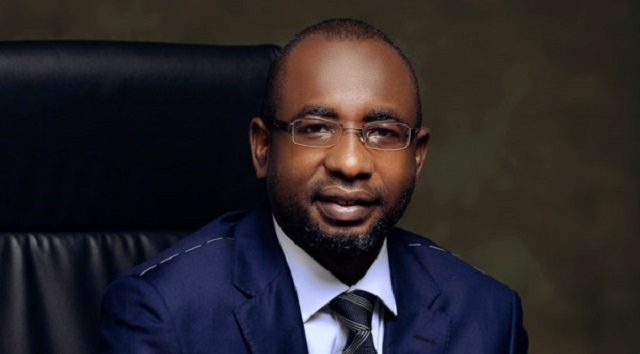
Kashifu Inuwa, the Director General of the National Information Technology Development Agency, has issued a decisive mandate for African nations to establish domestic cloud infrastructure and data sovereignty or risk permanent digital subservience.

Speaking during a high-level strategic session at the GITEX Africa 2026 summit in Morocco, Inuwa argued that the continent must move beyond being a passive consumer of foreign technology to becoming a primary architect of its own digital ecosystem.
He warned that the current state of continental fragmentation leaves Africa vulnerable to external disruptions and prevents the realization of a truly integrated digital economy.
Inuwa characterised the modern global landscape as an environment defined by high-velocity data processing and pervasive intelligent systems, noting that digital integration is now a non-negotiable prerequisite for national survival.
He grounded this technical reality in a striking analogy, describing the cloud as the fundamental life-support system of the modern world. “In today’s reality, digital is no longer optional; it is a way of life,” Inuwa stated. “And the cloud is the oxygen that sustains that life.
The question we must ask ourselves is: who controls that oxygen?”
The push for cloud sovereignty represents a move toward localised data residency and autonomous computational power. Inuwa stressed that without regional data centers and unified regulatory frameworks, African nations remain subject to the policy shifts and geopolitical priorities of overseas providers.
He advocated for a shift from fragmented, siloed efforts toward a federated regional approach that pools resources and expertise to build a robust, self-sustaining African cloud. This transition is essential for ensuring that the massive datasets generated by African users are utilized to train local artificial intelligence models and catalyse internal economic growth rather than being exported for external profit.
The NITDA boss expressed concern over Africa’s limited share of global digital infrastructure, noting that while the continent accounts for between 15 to 19 percent of the world’s population, it holds only about 0.6 percent of global data centre and computing capacity.
He described the imbalance as a structural disadvantage that exposes African countries to risks around data security, economic dependency, and limited participation in the global innovation ecosystem.
“This is not just a technology gap, it is a sovereignty gap,” Inuwa stated. “We are generating data, but we are not in control of how and where that data is stored, processed, or monetised.”
He warned that over reliance on foreign owned cloud platforms could have long term implications for national security, economic competitiveness, and policy autonomy, especially as data becomes a critical resource in the global economy.
Despite these challenges, Inuwa highlighted Africa’s immense potential, pointing to its youthful population, expanding internet penetration, and fast growing startup ecosystem as key drivers of digital growth.
He said the continent is uniquely positioned to leapfrog legacy systems and build modern, scalable infrastructure that can support innovation across sectors.
However, he stressed that achieving this vision would require coordinated action among African governments, private sector players, and regional institutions.
“There is no single country in Africa that can do this alone,” he said. “We must collaborate, integrate our efforts, and build shared infrastructure that benefits the entire continent.”
Central to his recommendation is the creation of a “cloud of clouds” a federated cloud ecosystem that connects multiple national and regional cloud platforms into a unified, interoperable network.
Such a system, he explained, would allow countries to maintain control over their data while benefiting from shared standards, scalability, and cross-border collaboration.
Inuwa pointed to Europe’s Gaia-X as a useful reference model, noting that while Africa’s context is different, the principle of building a trusted and interconnected cloud ecosystem remains relevant.
He emphasised that cloud sovereignty should not be misunderstood as protectionism or digital isolation, but rather as the capacity for self determination in the digital age.
“Sovereignty is about having the ability to make our own choices, to define our own standards, and to build systems that reflect our values and priorities,” he said.
Inuwa further noted that developing indigenous cloud capacity could unlock significant economic opportunities, including job creation, local innovation, improved digital services, and increased investor confidence.
It could also strengthen Africa’s position in emerging technologies such as artificial intelligence, big data analytics, and the Internet of Things, all of which depend heavily on robust cloud infrastructure.
The DG concluded by emphasising that the quest for digital sovereignty is not merely a technical objective but a strategic imperative for long-term stability. He asserted that for Africa to achieve meaningful autonomy in an increasingly digitised world, it must secure its own computational foundations.
By establishing indigenous control over data processing and storage, the continent can insulate its critical national infrastructure from external volatility while ensuring that its digital future is determined by its own policies and priorities. The message was clear: Africa must harmonise its infrastructure and localise its computational assets now or face an era of unprecedented digital marginalisation.
As global competition in the digital space intensifies, Africa’s ability to act collectively and strategically will determine whether it emerges as a major digital powerhouse or remains on the periphery of the digital revolution.
E-Business
As Nigerians Struggle to Save, Mutual Benefits Highlights Power of Structured Financial Planning


A growing number of Nigerians are struggling to build sustainable savings habits, leaving many without a financial safety net in times of need. Insights from the PiggyVest Savings Report 2025 reveal a concerning trend of declining savings culture among Nigerians. A significant segment of the population either does not prioritise saving or lacks the discipline to maintain consistent savings, with many unable to cater for emergencies or achieve meaningful financial satisfaction.

Mutual Benefits
Released in March 2026, the report which sampled over 20,000 respondents in rural and urban areas across all six geopolitical regions in Nigeria, highlights key gaps in financial behaviour. Highlighted issues revolve particularly around emergency preparedness and long-term financial planning, underscoring the urgent need for more structured and accessible savings solutions.
With rising living costs and economic pressures, many Nigerians are increasingly focused on meeting immediate needs, often at the expense of saving for the future. As a result, emergency funds remain inadequate or non-existent for a large proportion of households.
This reality has far-reaching implications, not only for individual financial stability but also for broader economic resilience. Without a financial buffer, unexpected events such as medical emergencies, job loss or business disruptions can quickly escalate into crises.
Financial experts note that the challenge is not just about earning more income, but about adopting disciplined and structured approaches to saving.
Unlike informal or ad-hoc savings methods, structured financial products combine consistency, growth and protection, ensuring that individuals are better equipped to navigate uncertainties.
This is where solutions like Mutual Benefits Assurance’s savings and investment offerings play a critical role.
A leading player in Nigeria’s insurance industry, Mutual Benefits’ savings and investment products are designed to help individuals and families build financial discipline while enjoying the added advantage of protection.
Products such as the Individual Savings and Protection Plan (ISPP), Children Education Plan (CEP) and Mutual Investment Plan (MIP) help customers build disciplined savings, earn competitive returns through compounded interest and benefit from life insurance coverage, providing an added layer of security. Similarly, the Personal Pension and Investment Plan (PPIP) provides financial support in the event of job loss, whether voluntary or involuntary, while also serving as a valuable tool to supplement retirement income. In the event of death, designated beneficiaries receive the entitled benefits.
By combining savings with protection, these solutions address two critical gaps identified in the report: lack of emergency funds and low financial confidence.
Structured savings plans not only encourage financial discipline but also provide reassurance that funds will be available when needed. In contrast to informal savings methods, they offer a more reliable pathway to achieving both short-term and long-term financial goals.
For many Nigerians, this represents a much-needed shift from reactive financial habits to proactive financial planning.
As Nigeria continues to navigate economic uncertainty, the importance of financial preparedness cannot be overstated. Encouraging a culture of saving supported by structured, accessible financial products will be key to improving financial well-being across the population.
Mutual Benefits remains committed to empowering Nigerians with solutions that promote financial security, resilience and peace of mind. By making savings simpler, more rewarding and more secure, the company continues to support individuals and businesses in building a more stable financial future.

e-commerce company, Jumia Nigeria, has announced a significant expansion of its logistics and pickup network across Nigeria, extending its reach into underserved regions and strengthening access to e-commerce services for millions of consumers.

The expansion, executed during the first quarter of 2026, marks a deliberate shift toward upcountry growth, with new and expanded operations across Northern Nigeria, including Kebbi, Sokoto, and Kaduna, while also strengthening presence in strategic cities like Zaria. The move is designed to close long-standing coverage gaps in high-potential areas and bring its services closer to more customers.
According to the company, the expansion reflects a convergence of customer demand, infrastructure strategy, and long-term market development, as more Nigerians outside major urban centres seek reliable access to digital retail.
“We are seeing a structural shift in where demand is coming from. What this expansion does is align our infrastructure with that reality. By extending our network deeper into the country, we are not only improving service delivery, but we are also unlocking new demand, enabling more sellers to participate in the digital economy, and building a more inclusive retail ecosystem that reflects the true scale of the Nigerian market,” said Temidayo Ojo, CEO of Jumia Nigeria.
The rollout includes a significant increase in pickup stations and delivery touchpoints across both established and emerging cities. Existing urban centres such as Lagos, Ibadan, Abuja and Port Harcourt have seen network density increase, while new and previously underserved locations are being integrated into Jumia’s logistics grid. This broader footprint is supported by investments towards parcel distribution centres, designed to decentralise inventory flow, reduce delivery time, and optimise operating costs across regions.
As part of the expansion, Jumia has also strengthened its logistics partnerships and delivery capacity, enabling more efficient last-mile fulfilment while creating income opportunities for a growing network of logistics partners and JForce agents. The company notes that these investments are critical to sustaining scale as order volumes increase across a more geographically diverse customer base.
Looking ahead, Jumia plans to extend its expansion into the South-East and South-South regions ahead of the peak retail season, further increasing its national coverage and reinforcing its position as a leading e-commerce platform in Nigeria.

Nigeria Demands Cloud Sovereignty to Anchor Africa’s Digital Independence

Digital Encode Sponsors PAFON 3.0 as CVO Prof. Adewale Set to Deliver Keynote on Cybersecurity and Trust

Polaris Bank Targets Youth with Financial Literacy Drive

As Nigerians Struggle to Save, Mutual Benefits Highlights Power of Structured Financial Planning

NITDA Boss Warns of AI Threat Shift @ GITEX Africa

Spotify’s Loud & Clear Report Reveals Over ₦60Bn Revenue for Nigerian Artists in 2025

Why JustMarkets Is a Strong Choice for Gold Trading

Kuda MFB Increases Kuda for Her Business Grants to ₦10 Million

Canal+ to Cut Jobs as Part Sweeping Restructuring

Nigeria tops global rankings for USDT, USDC ownership




 Telecom3 days ago
From Import Dependency to Local Capacity: Nigeria’s Tech Manufacturing Journey

 E-Financial2 days ago
How Unethical Deals Triggered CBN Takeover of Union Bank -Forensic Report

 E-Financial1 day ago
How Sterling Bank Is Empowering 1m Women with ₦500Bn

 E-Financial2 days ago
BVN Database hits 68.6m – NIBSS

 E-Business2 days ago
Kaspersky Warns of Digital Medicine Risks on the Occasion of World Health Day

 Broadcasting2 days ago
Multichoice Bleeds Customers in South Africa, Loses 580,000 Subscribers

 Broadcasting2 days ago
Broadcast Station Owners Reject IBAN’s Threat to Boycott Wike’s Media Engagements

 General News2 days ago
FG Asks MDAs to Halt New Policies Until Full Compliance with RIA