

News
Nigeria, Tanzania Take First Prize in Huawei’s Sub-Saharan Africa ICT Competition

Students from Nigeria and Tanzania were the overall joint winners of this year’s sub-Saharan regional finals of Huawei’s global ICT Competition.
Together with second prize winners, Angola and Kenya, the four teams will travel to China for the finals, which will see 40 teams from around the world compete for the championship title.
The competition covered the latest ICT technologies, such as cloud computing, artificial intelligence, mobile networks and big data. Almost 30 000 students from over 100 universities in Nigeria, Ghana, Kenya, Uganda, Tanzania, Angola, South Africa, Mozambique, Zambia, Botswana and Mauritius participated.
At the finals, held this weekend in Johannesburg, it came down to 42 students in 14 teams. They sat for theory and practical examinations at the finals at Huawei’s regional headquarters, in Woodmead, Johannesburg.
Speaking at the final award-giving presentation, Xue Man, Vice-President of Huawei, said: “Huawei understands the value of a good talent ecosystem, which is the foundation for a smart future. This ICT Competition is part of our innovative initiatives to support that and promote ICT skills.
“We believe that this event will inspire more students’ interest in ICT learning in Africa; it provides them with a world-class stage to showcase themselves and consolidate the vital ICT needed for Africa’s development”
Alfred Cheruiyot, a representative from Kenya Ministry of Education, praised Huawei’s actions to raise skills and partner with national governments and local tertiary institutions to strengthen the skills pool in ICT.
“We are fully aware how important this is for our students to get good jobs and to become successful entrepreneurs. We are fully aware that this will drive our economy forward for many years to come if we can get it right,” Cheruiyot told the gathering.
Tanzania ICT student Emanuel Chaula was overjoyed that his team emerged as one of the two winning countries. He said: “We worked hard as a team because we wanted to seize the opportunity to get to travel to China to compete in the global finals.
“We really want to show Africa and the world that Tanzania is an up-and-coming ICT player, and we want to be a part of that growth in our country. We will study and practise for the finals in China as we are going there to win. ”
The Huawei ICT Competition is a global ICT talent competition exchange event, which is aimed at the Huawei Authorized Information and Network Technology College (Huawei ICT Academy) and related universities.
Since the first Huawei ICT Competition, held in 2015, the number of participants in the competition has grown exponentially and has become one of the largest ICT events in the world. The 2018/19 event has attracted more than 1 000 universities in more than 50 countries around the world, under the slogan: “Connection, Glory and Future”. The total number of students participating globally was 80 000 students, including 28 000 students from southern Africa.
During the competition, through the road show, training, lectures and other special activities, the latest technology, information and industry trends are passed on to students and practitioners. The focus is to bridge the gap between theoretical study and practical experience, to get students more ready to join the job market and increase their competitiveness.
The winners of the sub-Saharan Africa region will go to China in May to participate in the global finals in Shenzhen, China. There they will compete with the 22 winners from other parts of the world for the global finals.


News
World Health Summit Regional Meeting Opens in Nairobi, Focuses on Stronger African Health Systems

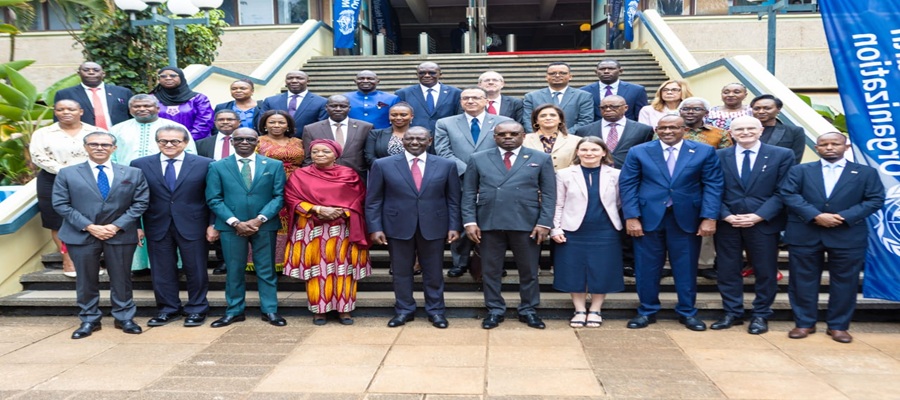
The 2026 World Health Summit Regional Meeting opened in Nairobi on Wednesday with a strong call for coordinated action to build more resilient health systems across Africa.

The summit, hosted by Aga Khan University in partnership with the World Health Organization (WHO), Kenya’s Ministry of Health, and the Africa Centres for Disease Control and Prevention (Africa CDC), attracted over 2,000 health leaders, policymakers, researchers, and development partners from more than 50 countries.
The meeting is themed: “Reimagining Africa’s Health Systems: Innovation, Integration and Interdependence.”
Speaking at the opening ceremony, Kenya’s President, William Ruto, urged African governments, health institutions, donor agencies, and development partners to move away from fragmented interventions and adopt system-wide reforms anchored on local ownership, strategic investment, and accountability.
Ruto said Africa must reposition itself within the global health architecture by leveraging its strengths and becoming a source of scalable health solutions rather than being viewed solely through the lens of persistent challenges.
“This imbalance is neither sustainable nor tenable. It calls for a decisive shift from fragmented, piecemeal interventions to comprehensive, system-wide transformation backed by coherent strategy, domestic and international financing, and accountable institutions,” he said.
President of the World Health Summit, Prof. Axel Pries, described the Nairobi meeting as a reflection of Africa’s growing influence in shaping global health priorities.
He said the summit was designed to convene leaders across sectors and regions to translate policy discussions into practical actions that strengthen health systems globally.
Also speaking, Prof. Lukoye Atwoli, International President of the World Health Summit Regional Meeting and Dean of Medical College East Africa at Aga Khan University, said the summit marked a shift in Africa’s role in global health governance.
“For too long, Africa has been the subject of health conversations held elsewhere. Today, African institutions, researchers, and policymakers are co-authors of global health policy,” Atwoli said.
President and Vice Chancellor of Aga Khan University, Dr. Sulaiman Shahabuddin, said despite ongoing challenges such as climate change, chronic diseases, inadequate funding, digital inequality, and workforce gaps, Africa’s health sector is increasingly better positioned to integrate systems, deploy technology, and develop talent for quality healthcare delivery.
WHO Regional Director for Africa, Dr. Mohamed Yakub Janabi, said the summit offered an important opportunity to strengthen collaboration and advance universal health coverage through robust primary healthcare systems.
According to him, discussions at the summit are expected to generate a practical blueprint for building a more coherent and integrated health ecosystem across the continent.
Kenya’s Principal Secretary for Public Health and Professional Standards, Mary Muthoni, said global health security must remain a top priority for governments.
“Global health security is not a luxury; it is a prerequisite for national stability. We must move from reactive crisis management to proactive pandemic preparedness,” she said.
Director-General of Africa CDC, Dr. Jean Kaseya, stressed the need for Africa to finance and build resilient health systems at scale to strengthen health security and reduce dependence on external support.
He said the Nairobi meeting provides a strategic platform for mobilising investments, strengthening partnerships, and advancing African-led healthcare solutions.
The summit will feature over 80 sessions focused on health financing, workforce development, digital health innovation, climate and health, and strengthening universal health coverage.
The meeting continues over the coming days with further discussions expected on emerging health challenges and long-term healthcare resilience across Africa.
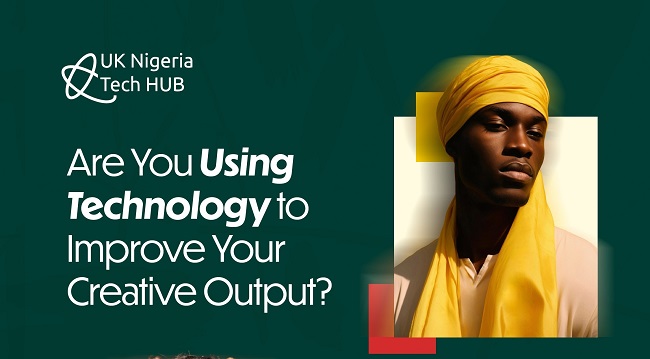
The UK-Nigeria Technology Hub has launched its Creative Fund, a first‑phase grants initiative designed to address critical technical capacity gaps across Nigeria’s film, fashion, and music industries.

The fund will support the development of local digital production capacity, encourage the adoption of modern creative technologies, and promote the responsible use of Artificial Intelligence (AI), to strengthen Nigeria’s creative value chain.
The initiative directly supports the priorities of the UK‑Nigeria Economic Transformation and Investment Partnership (ETIP) Creatives Working Group launched in March 2025 and the delivers on commitments made during President Tinubu’s State visit to the UK in March 2026. It is designed to ensure that high potential creative projects can access the technical talent, tools, and resources required to produce, scale and complete their work locally.
Funded by the UK-Nigeria Tech Hub, under the UK Government’s Digital Access Programme and implemented by Tech4Dev, the Creative Fund responds directly evidence gathered through the State of the Creative Innovation Ecosystem in Nigeria, study in 2024. Drawing on over 1,700 survey responses, and fieldwork across seven states, the research showed that Nigeria’s creative economy employs approximately 4.2 million people and contributes around US$3 billion to GDP annually.
Despite this scale, the sector continues to face structural constraints – over 80% of practitioners are self-taught, fewer than 10% have access to formal financing, and high-value technical work is routinely outsourced outside the country. The Creative Fund is a direct response to these gaps, and central to the work of the ETIP Creative working Group.
Oyinkansola Akintola‑Bello, Director of the UK‑Nigeria Tech Hub, said: “Nigeria’s creative sector already delivers real economic value, and both governments have committed under the UK‑Nigeria Economic Transformation and Investment Partnership to supporting its growth.
“Through the ETIP Creatives Working Group, we are moving from ambition to action. The Creative Fund is a practical first‑phase intervention that addresses critical gaps in skills, infrastructure, and access to advanced tools, enabling Nigerian creatives to produce and scale high‑quality work locally.”
The Fund will support high-potential creative projects covering three industries; Film, Fashion, Music and will focus on initiatives that demonstrate strong potential for impact, scalability, and job creation.
It will subsidise projects that need to close technical gaps including critical specialists like VFX artists, sound engineers, post-production editors, and design professionals, or the digital tools and resources that make professional-quality work possible locally, for example digital asset management systems, content delivery tools, Digital Rights Management solutions, and AI-driven production technologies. The aim is straightforward; Nigeria’s best creative work should be made in Nigeria.
Abraham Akpan, Tech4Dev’s Country Manager for Nigeria and Sub-Saharan Africa said: “The Creative industries are a core part of the digital economy, bringing together technology, culture and entrepreneurship.
“This Fund is about ensuring that Nigeria’s creative success is underpinned by sustainable local talent and capacity, while deliberately expanding access to tools, skills and finance for those who have been historically excluded. By prioritising women-led enterprises, youth-led ventures, and underrepresented groups, the fund embeds inclusion into every stage of delivery.”
The Fund is open to creative companies, studios, production houses, fashion enterprises, and music labels leading projects with clear technical needs. Applications will be assessed on project quality, its potential for local and international impact, and the applicant’s level of commitment to co-investment.
The initiative also encourages the responsible use of emerging technologies, including artificial intelligence with selected projects expected to explore its application in production, storytelling, and innovation.
Applications are open now and will be accepted on a rolling basis throughout the programme period.


Economic and Financial Crimes Commission (EFCC,) insisted on Monday at the High Court of the Federal Capital Territory that the signatures of late President Muhammadu Buhari and former Boss Mustapha, secretary to the Government of the Federation (SGF), were forged by unscrupulous Nigerians to defraud the country of $6,230,000.

Mr Godwin Emefiele, former CBN governor
Mr Chinedu Eneanya, assistant commander II, EFCC, told the court that five officials of the Central Bank of Nigeria (CBN) moved the money out of the apex bank under the guise that it was meant for the payment of foreign election observers in the 2023 general elections.
The anti-graft agency testified on Monday at the resumed trial of Mr Godwin Emefiele, former CBN governor, on a 20-count charge of criminal breach of trust brought against him by the federal government.
Emefiele is being prosecuted by the EFCC in the charge marked FCT/HC/CR/577/2023.
He is standing trial on an amended 20-count charge bordering on criminal breach of trust, forgery, abuse of office, conspiracy to obtain by false pretence, and obtaining money by false pretence while serving as CBN governor.
Emefiele was, among others, alleged to have knowingly obtained by false pretence the sum of $6,230,000 purportedly meant for international election observers for the 2023 general election.
The EFCC accused him of conferring corrupt advantages on two companies — April 1616 Nigeria Ltd and Architekon Nigeria Ltd.
He, however, pleaded not guilty to the charges during his arraignment.
At Monday’s proceedings, Chinedu Eneanya, who served on the probe panel, was called to testify as the 13th prosecution witness (PW13).
In his evidence-in-chief, the witness told the court that his team was assigned to investigate the matter.
“The investigation revealed that the money, $6.2 million, was removed from the coffers of the CBN for a purported funding of foreign observers for the 2023 elections.”
He told the court that those connected with the movement of the fund were interviewed.
The witness said documents were recovered from the CBN regarding the release of the money.
Eneanya told the court that investigations also revealed that the signatures of the then President, Muhammadu Buhari, and then Secretary to the Government of the Federation (SGF), Boss Mustapha, were forged to collect the money.
He said forensic examination was carried out, which established that the two signatures were forged.
Drama, however, ensued during cross-examination by Mathew Burkaa, SAN, counsel to Emefiele, when the witness admitted that forensic examination was not carried out on Emefiele’s signature despite Emefiele’s claim that his signature was also forged by the culprits.
The witness said five CBN officers signed the internal memo that authorised the release of the money and that none of them is standing trial alongside Emefiele, but were only suspended by the CBN.
The witness told the court that he was not the one who took Emefiele’s extra-judicial statements.
When asked if any of the investigators established that Emefiele received any money, he said Emefiele’s lawyer, Ifeanyi Omeke, said he received money on behalf of Emefiele, but that he did not interview Emefiele on the claim.
Earlier, Emefiele’s counsel had frowned at bringing another Investigating Police Officer (IPO) on the ground that the witness would say the same thing said by two other IPOs.
He also drew the attention of the court to the last proceedings where the EFCC told the court that it was bringing its last witness.
“We understand their strategy. It seems they are ridiculing the court. All the same, we are ready to go on.”
Emefiele, through his counsel, applied for the foreclosure of the EFCC’s case after prosecution counsel, Rotimi Oyedepo, SAN, told the court that he was not sure of bringing two witnesses on April 28.
Oyedepo informed the court that the EFCC was yet to obtain the subpoena from the court and that the witnesses were outside jurisdiction in Benin and Lagos.
When the court asked the prosecution how many more witnesses it intended to call, Oyedepo said two more and mentioned their names as Jim Obessa and CP Eloho Okpozikbo.
The court then asked the prosecution to bring all the witnesses between April 27 and 28.
At this point, Burkaa applied to the court that the EFCC’s case be foreclosed if it failed to bring the two remaining witnesses to court on April 28.
“If the witnesses do not come on April 28, we apply that they should be foreclosed. Justice is both for the prosecution and the defendant.
“This is an antic by the prosecution to put maximum hardship on the defendant. Please let it be on record that the prosecution has severally brought out this scenario,” he said.
Responding, Oyedepo told the court that he was not there to be a clog in the expeditious trial of the case and prayed the court to refuse the application to shut the doors against the prosecution.
Justice Hamza Muazu advised parties to reserve their arguments till their final addresses and directed Oyedepo to go to the court registrar for the signing of the subpoena.
Justice Muazu then adjourned till April 28 for continuation of trial.

Telcos Defend N6.98 USSD Charge despite Failed Transactions

Fidelity Bank “Basking in Approval” under Onyeali-Ikpe, CEO

FRSC, BSG Renew Pact to Tackle Drink-Driving

GSMA, Pleias Seek to Close African Language Gap in AI

Firm Reveals a 37% Increase in Malicious Packages Compromising Software Supply Chains

FG to Gift Nigerians over 100 Free TV Channels from May 15

Microsoft Revamps Copilot in Workplace AI Push

UBA Beefs Up Mobile App Security to Stop Fraudulent Debits, Withdrawals

What Adekunle Gold’s Support Means for ‘The Gathering on 100

NRS Takes Over Mineral Royalties Collection Under New Tax Laws




 News3 days ago
Buhari, SSG’s Signatures Forged to Defraud Nigeria of $6.2m in CBN – EFCC

 General News3 days ago
Reliable Payment Rails Key to Financial Inclusion – TeamApt

 News3 days ago
CSCS Targets Market Leadership Through Technology, Diversified Revenue

 General News3 days ago
MTN Powers the Ultimate Youth Link-Up with the Launch of Live It 100 Youth Campaign

 General News3 days ago
EFCC Declares Tejuosho, City Boys Movement’s Women Leader Wanted over “419”

 E-Business3 days ago
Angst as FG Drops $32.8m Fine on Meta for Data Breach

 General News3 days ago
Afreximbank to Fund 3 New Refineries in Nigeria

 Telecom2 days ago
ALTON Urges Urgent Resolution of Regulatory Dispute over Airtime Loans