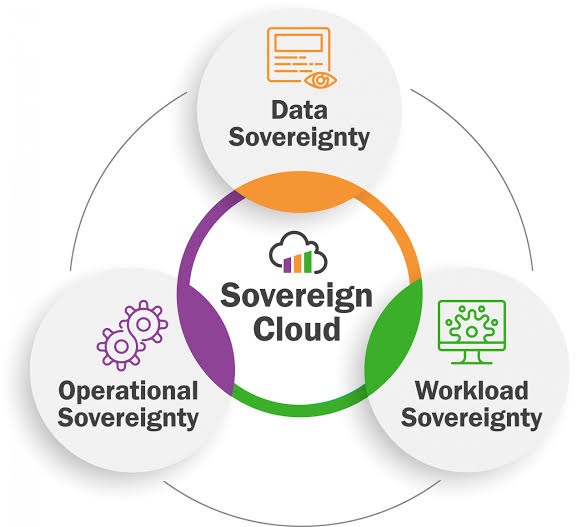
National Information Technology Development Agency (NITDA) has introduced so-called Nigeria's Certified Cloud Register, regulatory framework developed under the agency's National Sovereign Cloud Initiative to determine which cloud providers are authorized to handle sensitive data, such as banking records.

In effect, from October, NITDA requires banks, fintech companies and other regulated organisations to source cloud infrastructure providers from a national register of certified firms approved to host sensitive financial and government data.
The Certified Cloud Register, is expected to strengthen data sovereignty, improve regulatory oversight and support the implementation of the Central Bank of Nigeria’s (CBN) data localisation policy, which takes effect on January 1, 2027.
Under the framework, banks, fintechs, government institutions and other regulated entities will be able to verify whether cloud service providers, data centre operators, managed service providers and Artificial Intelligence (AI) infrastructure companies have met NITDA’s certification requirements before entrusting them with critical digital workloads.
The initiative is expected to provide regulated institutions with a standardised process for selecting cloud infrastructure providers that satisfy Nigeria’s technical, security and regulatory requirements.
According to NITDA, the framework establishes “a common national standard, an independent assessment process and a public register of approved providers that banks, fintechs and government institutions can rely on when selecting cloud infrastructure partners.”
The register is expected to become a key compliance tool ahead of the CBN’s directive, which requires all payment transaction data generated within Nigeria to be stored and processed locally, effective from January 1, 2027.
The policy applies to deposit money banks, microfinance banks, mobile money operators, payment service providers, switching companies and other financial institutions.
The certification regime is also expected to reshape Nigeria’s cloud computing ecosystem, making regulatory approval a major requirement for cloud providers seeking to handle sensitive data for regulated industries.
Figures cited by NITDA showed that Nigeria’s 10 largest banks spent about N177.91 billion on information technology in the first quarter of 2026, representing a 31 per cent increase over the corresponding period last year.
A sizeable portion of the investment currently supports cloud infrastructure hosted outside Nigeria, a trend the new certification framework is expected to address by encouraging greater utilisation of compliant local infrastructure.
NITDA said the certification programme will apply the same technical and regulatory standards to indigenous cloud providers and international hyperscale operators, creating a level playing field for all companies seeking to provide cloud services to regulated sectors.
The agency also disclosed that more than 85 per cent of Nigerian businesses currently rely on cloud services, with the majority using infrastructure hosted outside the country.
It said the new framework is aimed at improving confidence in Nigeria’s digital infrastructure while promoting local capacity and enhancing oversight of critical national data.
Speaking on the objective of the initiative, Kashifu Inuwa Abdullahi, director-general of NITDA, said the programme is designed to strengthen Nigeria’s position in the global digital economy rather than exclude foreign technology companies.
According to him, the initiative is intended “to redefine the terms under which Nigeria participates in the global digital economy rather than isolate the country from international technology providers.”
The Certified Cloud Register forms part of broader efforts by the Federal Government to deepen digital trust, strengthen cybersecurity and ensure that critical financial and public sector data are managed in line with Nigeria’s evolving data governance and sovereignty objectives.