SAP Africa has completed one of its largest ERP implementations in Nigeria following the completion of the Greenfields rollout at Oceanic Bank, one of the country’s largest financial institutions. The project is the first by an indigenous bank to settle on SAP as its primary business management solution.
The implementation centered on SAP Business Suite, which enables the bank to continue using its core banking solution that integrates seamlessly and swiftly with the ERP back-end functionality and management tools. Oceanic Bank bought a 4216-user license to be deployed across its 400 branches.
“Oceanic Bank is a premier customer for SAP Africa and Serve Consulting, a key SAP partner in Nigeria and we are extremely proud to have concluded this deal and implementation,” said Ayokanmi Ayuba, alliance and channel manager WA for SAP Nigeria. “One of the major reasons for looking for an ERP solution was to jettison their manual processes, and thereby improve efficiencies across the board. They now have full visibility at board and management level and can see what is going on in the bank on a day-to-day basis.”
Ayuba says the bank is now in a far stronger position to drive efficiencies and performance, both operationally and financially, thanks to the control that SAP brings to managers' desktops.
This is made possible due to the breadth of services delivered under SAP Business Suite, which includes Financial Accounting, Management Accounting, Budgetary Controls, Supply Chain Management modules, as well as Materials Management and HR, including Payroll and Employee and Manager Self-service tools.
Cornel Ononeze, head of the SAP Competency Center at Oceanic Bank International PLC said, “The bank’s investment in the SAP implementation has begun to pay dividends since going live with the initial modules. The decommissioning of seven legacy applications has also resulted in savings on multiple licensing, individual support infrastructure, multiple support personnel and maintenance of several interfaces in the bank. The overall benefit is a reduction in operating costs.
“The SAP system has given our bank greater process transparency as the status of all transactions can be tracked online in real time through appropriate workflows and authorizations without recourse to very expensive follow-ups via telephone, fax or other channels. Today all policies relating to expense controls and budgets are effectively deployed and monitored on SAP without leakages bank–wide, thus providing the bank with reliable consumption data for decision making.”
Ononeze went on to add that SAP ERP has given the bank the capability to evaluate work load across the various departments for objective assessment of resource allocation bank-wide. This implementation has equally facilitated the reduction and redeployment of personnel in several departments without adversely affecting service delivery.
“Clearly, the SAP platform is a key facilitator of our current reengineering efforts aimed at inculcating best practices on all processes, transparency, good corporate governance and compliance with all international and regulatory requirements,” said Ononeze. “Above all, the skills for first line support have also been transferred to a dedicated Competence Center, thus effectively reducing the need for constant consulting interventions as all new business requirements have been implemented by the team since the initial go-live.”
The project planning and implementation was completed by one of SAP Africa's leading partners in the region, SERVE Consulting.
Adeola Adejuyigbe, company’s Managing Director, said the project had its own unique challenges, particularly as it was a brand new implementation that required a definitive mind-set change from the bank and its executives.
“The quality of data that we had to migrate to SAP Business Suite was particularly troublesome, but we eventually overcame these challenges to complete the project,” he says. “Change management and user acceptance, as with all such implementations, was critical to the success and we have made steady headway in guiding the bank and its staff through this process.”
Benefits to the bank include the improved visibility, but also significantly tighter control of budgets and spending across all of its operations, he says. Adejuyigbe said there is a great sense of achievement in concluding a Greenfields project of this magnitude, with the team comprising up to 40 members at its peak.
While Oceanic Bank is becoming accustomed to the new system, it is already exploring additional modules and functionality – such as Business Intelligence – which it may implement later this year.
Ayuba says the project demonstrates SAP's capabilities in the region, which is central to the company's drive to establish sustainable and long-lasting partnerships on the continent.
Oceanic Bank Inks SAP Business Suite to Phase out Manual System
Comms Week15 Mar 20100 Comments
SAP Africa has completed one of its largest ERP implementations in Nigeria following the completion of the Greenfields rollout at Oceanic Bank, one of the country’s largest financial…
C
Published by
Comms Week
Trained and practicing journalist passionate about telecommunications, fintech, cybersecurity, and digital economy reporting.
You May Like

Google Issues Urgent Chrome Update to Block Active Attacks

RockPay Launches, Targets Digital Payments through Social Finance

NDIC Still Paying Depositors of 46 Failed MFBs — Sunday
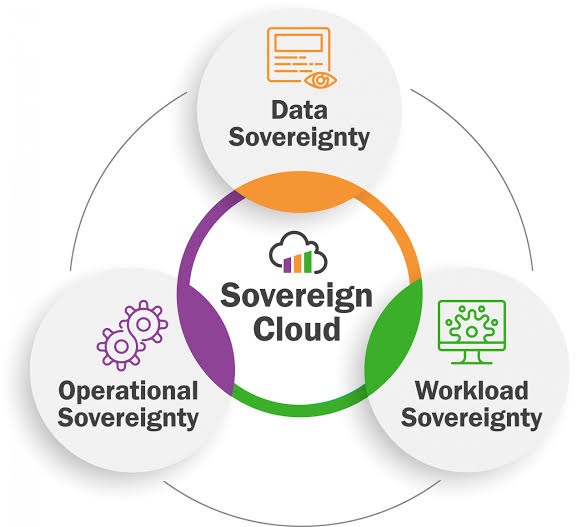
NITDA Inaugurates Taskforce to Drive Sovereign Cloud Implementation

SEC Proposes N2bn Capital Requirement, N30m Registration Fee for Crypto Firms