E-Financial
Phillips Oduoza: Inspirational Giant of Banking Industry

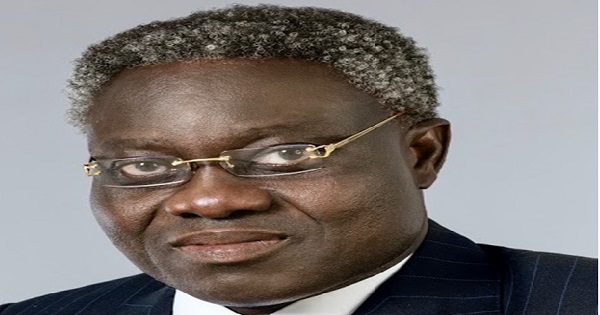
Phillips Oduoza, founder and chairman, NOVA Merchant Bank Limited is inspired by Nigeria’s future, which he believes holds potential waiting to be harnessed.

Phillips Oduoza
NOVA Merchant Bank offers an integrated suite of financial solutions covering Wholesale Banking, Investment Banking, Asset Management, Wealth Management, Trade Services, Transaction Banking, Cash Management and Digital Banking.
Phillips, also former group managing director (GMD), United Bank for Africa (UBA), is gifted, a deep thinker, selfless with a knack for seeing what others couldn’t see and making the seemingly impossible possible in addition to great leadership skills.
In this article, we will look at his new bank, banking career, his leadership skills and background.
NOVA Merchant Bank
NOVA Merchant Bank founded by Phillips is a licensed merchant bank with a focus on wholesale and investment banking.

The bank which began operation in 2018- became an instant success and broke-even in the first year of operations.
Recall at the time of commencement of operations by NOVA Merchant Bank, the economic environment was quite challenging, because the country just exited from recession.
Secondly, there was still turbulence in the industry resulting from interventions in some banks by the Central Bank of Nigeria (CBN).
But the new bank’s growth trajectory has also continued as it reported a profit after tax of N3.49bn for the financial year ended December 31, 2020.
This represents a 112% increase when compared to N1.65bn in 2019.
All the key financial parameters recorded major improvement over the prior year performance; Gross Earnings showed a quantum leap of 130% growth over 2019 and Profit Before Tax at N3.52bn recorded a 135% growth over the 2019 figure of N1.5bn.
The bank achieved such growth amidst the unprecedented nature of the COVID-19 pandemic and resulting macro-economic headwinds.
Also, the Nigerian Exchange Limited (NGX) recently admitted the bank’s N10 billion bond on its platform.
The bank made history as the youngest merchant bank to issue a bond in Nigeria which also oversubscribed by 300 per cent
The success of the bond is an indication of the level of investor confidence in the bank’s reputation, brand and corporate performance.
Banking Career
Phillips started his banking career in 1989 with Citibank as the first set of Executive Trainees where he trained in every aspect of banking after a brief stint with International Merchant Bank (IMB) as a Credit Officer in 1987.
Within the three years at Citibank, he was equipped with knowledge of banking operations, relationship management, credit/marketing, efficient implementation of technology, risk management and lean banking methods.
He moved from Citibank to Diamond bank in 1991, as one of the pioneer staff who built the bank to become a strong and notable brand in the industry.
Phillips rose through the ranks to become an Executive Director, serving as ED, Operations and Technology (1999-2002) the period where most banks had to do the IT transformation to meet up with global standards and practices.
He was also Executive Director, Commercial/Retail Banking from 2002 to 2004.
His next stop was at the Reliance Bank Limited where he had a blinking stint as Deputy Managing Director for 4 months before moving on to join the Management and Board of Standard Trust Bank PLC in December 2004.
He was with STB at the time of the merger with UBA and became a key player in the new UBA, rising through the ranks to serve two terms as MD/CEO before his retirement in 2016.
He was succeeded by Kennedy Uzoka.
Leadership Skills
Phillips is a consummate banker with limitless energy who believes in team work.
He is hard worker who avoids shortcuts and do not jump leadership ladder.
He possess the Midas touch, everything he touches turns into gold
Phillips has mentored and is mentoring crops of young bankers and entrepreneurs.
He is also my benefactor.
Tony O. Elumelu, chairman, United Bank for Africa (UBA), described Philips as “a man with a very cerebral mind, very diligent, loyal and astute”
He is man who loves and encourages progress and a man who always works for the best of everything.
Elumelu said that the performance of UBA today, both financial and brand management are all attributable to Philips and all the team he worked with.
Alex Otti, former CEO of Diamond Bank Plc, praised Philips for his extra-ordinary talent and management skills and leaving the banking industry with his integrity intact.
Philips has won several awards and is one of the most popular bankers in the continent of Africa.
In 2013 and in 2015, he emerged as the Africa investor (Ai) Socially Responsible Investment (SRI) 30 CEO of the year.
He currently serves on the boards of Veritas University Abuja, Lagos State Security Trust Fund, and the Development Bank of Nigeria.
Philips has also served on several boards including Interswitch Plc (representing UBA), Valuecard Plc (Unified Payment Services Plc), Nigeria Interbank Settlement System, Nigeria Economic Summit Group, Financial Markets, and Dealers Quotations (FMDQ).
Background
Phillips was born into a large family in Owerri, Imo state Nigeria.
He attended St. Kelvins Primary School, Owerri, and Government College, Owerri before moving down to Lagos state for his university education.
He bagged a Civil Engineering degree (with First class honours) from the University of Lagos.
He was intelligent and excelled in his studies.
According to Phillips, he never considered banking or accounting in his first degree because he did not want a sedentary career.
Instead, he wanted a career in civil engineering where he felt he would be more actively engaged.
“As a student, I was very proficient in science subjects,” he recalled, “and I could have studied Medicine or any other such course. However, I wanted a profession that is involved in physical activities, as against research. That was why I chose to study engineering because it has physical applications. As a civil engineer, you are involved in building roads, bridges, houses and so many diverse things.”
However, in the course of his engineering study, he took a couple of courses that were business-related and his interest was piqued.
After school, he considered several career options before eventually settling for banking, and this became the epicentre of his entire career.
He went back to UNILAG and obtained an MBA in finance to guide his new career path.
Since then, he has attended numerous banking, management and leadership courses including the Advanced Management Programme of the Harvard Business School.
He is an honorary fellow of the Chartered Institute of Bankers.

E-Financial
World Bank Reveals Obstacles to Growth of Mobile Money Accounts in Sub-Saharan Africa

Despite being the global epicentre of mobile money innovation, Sub-Saharan Africa remains home to tens of millions of adults who do not own a mobile money account. A new World Bank report disclosed.

According to the Global Findex Database 2025, Sub-Saharan Africa is widely celebrated as the birthplace of mobile money, a technology that has transformed how people send, receive, save, and borrow money using basic mobile phones.
“Yet, the region still accounts for one of the world’s largest concentrations of adults without mobile money accounts,” it said.
The report shows that while about 40 percent of adults in Sub-Saharan Africa had a mobile money account in 2024, up sharply from 27 percent in 2021, roughly 60 percent still do not.
The reasons, the report argues, are less about lack of awareness and more about deep structural barriers that continue to exclude large segments of the population.
According to the report, a lack of money is the single most common barrier to mobile money account ownership in the region.
For many low-income households, irregular earnings, subsistence livelihoods, and dependence on cash-based transactions reduce the perceived value of maintaining an account, even when services are widely available.
This challenge is compounded by affordability issues. Transaction fees, charges for cashing out, and the cost of maintaining an active SIM card can deter the poorest adults, reinforcing the perception that mobile money is not designed for very small or infrequent transactions.
In Nigeria, the World Bank Group has announced an estimate that 139 million in 2025 will be living in poverty despite the reforms of the federal government.
Mobile phone ownership gaps persist
Mobile money cannot function without a mobile phone, yet phone ownership itself remains uneven. The report finds that 40 percent of adults now own a mobile money account, up from 27 percent in 2021.
And those who do not have a financial account also do not own a mobile phone of any kind.
This creates a double barrier: adults who are financially excluded are often also digitally excluded.
Among those without phones, the cost of the device is cited as the primary obstacle. While basic phones are more affordable than smartphones, the report notes that even these can be out of reach for the poorest households, especially in rural areas. Without addressing device affordability, efforts to expand mobile money risk leaving behind the very groups they aim to serve.
The report disclosed that even when phones and accounts are available, digital capability remains a challenge. The report finds that only about half of mobile money account owners in Sub-Saharan Africa protect their phones with passwords, compared with much higher shares in other regions.
Limited digital literacy raises concerns about fraud, mistaken transfers, and scams, which in turn undermines trust in mobile financial services.
Trust issues are further reinforced by negative user experiences. Only about half of the adults in the region who sent money to the wrong person using mobile money reported getting it back, according to the report. Such experiences can discourage first-time users and lead dormant users to abandon their accounts.
A large untapped opportunity
Despite these challenges, the report points to a significant opportunity. In Sub-Saharan Africa, about a quarter of adults without accounts already own a mobile phone, have official ID, and have a SIM card registered in their own name, meaning they have all the prerequisites for mobile money adoption.
“Closing the gap will require coordinated action: reducing the cost of devices, expanding ID coverage, strengthening consumer protection, and designing low-cost products that reflect the financial realities of poor and rural households,” the World Bank argues.
ation for Africa, turning ambition into scalable capital and risk mitigation solutions.
E-Financial
AfDB Group Mobilises Global Private Capital to Close Africa’s Financing Gap

Building on the successful conclusion of the 17th replenishment of the African Development Fund (ADF-17), which mobilised $11 billion for Africa’s most vulnerable countries, the African Development Bank Group and the Government of the United Kingdom convened global investors and private sector leaders in London to accelerate a new phase of private capital mobilisation for Africa’s development.

The inaugural Africa Private Capital Mobilisation Day, held on 17 December at Lancaster House, brought together more than 150 senior decision-makers from private equity firms, sovereign wealth funds, pension funds, insurers, philanthropies, and development finance institutions and export credit agencies—marking a decisive shift from dialogue to execution.
The high-level event was hosted by the African Development Bank Group in partnership with UK government institutions, the Foreign Commonwealth and Development Office, UK Export Finance and British International Investment, reflecting a shared ambition to scale private capital flows into African economies.
Speaking at the opening, African Development Bank Group President Dr Sidi Ould Tah described the event as a natural continuation of the ADF-17 replenishment process and a decisive step toward addressing Africa’s estimated $402 billion annual development financing gap.
“We will build on recent engagements with development finance institutions, export credit agencies, pension funds, sovereign wealth funds, insurers, and philanthropic partners to advance concrete initiatives under our vision for a New African Financial Architecture,” said Dr Ould Tah.
The Africa Private Capital Mobilisation Day aligns with President Ould Tah’s Four Cardinal Points vision, which focuses on unlocking Africa’s capital potential, strengthening financial sovereignty, transforming demographic growth into a dividend, and delivering resilient infrastructure and value chains.
UK Minister for Development, Jenny Chapman said, “We are delighted that President Ould Tah decided to hold the first Private Capital Mobilisation Day here in London, recognising the critical role of the City of London in mobilising investment for Africa. The UK’s shifting role—from donor to investor—will support countries who want to grow their economies and ultimately ultimately exit the need for aid.”
The programme featured focused discussions on reshaping perceptions of risk in Africa, designing innovative financial platforms, and mobilising capital in fragile and frontier markets.
New analysis on the Global Emerging Markets Risk Database delivered by the Center for Global Development presented new evidence showing that long-term lending to African borrowers has historically been significantly less risky than commonly perceived.
Sector-focused discussions underscored the strategic role of healthcare and aviation in strengthening Africa’s economic resilience, productivity and integration. Participants were introduced to two flagship initiatives championed by the Bank Group and its partners:
– The Africa Medicines and Equipment Facility, developed in partnership with the Gates Foundation, will provide African countries with predictable, timely, and affordable financing to secure essential medicines and medical equipment.
– The Integrated Aviation Transformation Programme for Africa—supported by a dedicated blended-finance facility—aims to modernise and expand Africa’s aviation ecosystem—from airports and airlines to enabling services critical to trade, tourism, and regional integration.
In parallel, President Ould Tah convened a closed-door roundtable with senior executives from approximately 30 leading institutional investors to explore the launch of an Africa-focused Private Sector Innovation Lab. The proposed platform would serve as a dedicated space to co-create new financing instruments, partnership models, and risk-sharing solutions tailored to African markets.
The outcomes of the Africa Private Capital Mobilisation Day are captured in the London Communiqué, setting out clear commitments by the African Development Bank Group and its partners to scale private capital mobilisation for Africa.
Further work will go into setting out priority actions and implementation pathways to scale private capital mobilisation for Africa, turning ambition into scalable capital and risk mitigation solutions.
E-Financial
FIRS says NIN, CAC Numbers to Serve as Tax IDs from 2026

The Federal Inland Revenue Service (FIRS) has announced that the National Identification Number (NIN) will automatically serve as the Tax Identification Number (TIN) for individual Nigerians beginning in 2026.

The clarification was issued on Monday through a public awareness campaign on the new tax laws shared by the Service on X.
According to the FIRS, registered businesses will also no longer need a separate Tax Identification Number, as their Corporate Affairs Commission (CAC) registration numbers will now function as their official tax identifiers under the revised tax framework.
The announcement follows public concerns over aspects of the new tax laws that require a Tax ID for certain transactions, including the operation and ownership of bank accounts.
Providing further explanation, the FIRS said the Nigeria Tax Administration Act (NTAA), scheduled to take effect in January 2026, mandates the use of a Tax ID for specified transactions. It, however, noted that the requirement is not entirely new, stressing that it has been in existence since the Finance Act of 2019 but has now been strengthened.
“The Tax ID unifies all Tax Identification Numbers previously issued by the FIRS and State Internal Revenue Services into a single identifier,” the Service said.
“For individuals, your NIN automatically serves as your Tax ID, while for registered companies, your CAC RC number is used. You do not need a physical card, as the Tax ID is a unique number linked directly to your identity.”
The FIRS explained that the new system is intended to simplify identification processes, eliminate duplication, close gaps that enable tax evasion, and promote fairness by ensuring that all individuals earning taxable income contribute accordingly.
The agency also urged Nigerians to ignore misinformation surrounding the reform, assuring the public that the new tax framework is designed to improve efficiency and transparency in tax administration.
Meanwhile, the Chairman of the Presidential Committee on Fiscal Policy and Tax Reforms, Taiwo Oyedele, disclosed that banks will be required to request a TIN from all taxable Nigerians as part of the federal government’s new tax administration framework, which will take effect on January 1, 2026.
News3 days agoUS Begins Partial Visa Ban on Nigerians January 1
E-Financial2 days agoFIRS says NIN, CAC Numbers to Serve as Tax IDs from 2026
News3 days agoGlo Extends Christmas Greetings, Urges Unity and Care for Others
News3 days agoDPLAN Threatens NDPC with Legal Action for Setting aside $32.8m Meta Fine
E-Financial3 days agoNOVA Bank Opens Regional Office in Owerri
Telecom2 days agoOyedele Dismisses Claims Bank Accounts Without TIN Will Be Frozen
E-Financial2 days agoAfDB Group Mobilises Global Private Capital to Close Africa’s Financing Gap
E-Financial3 days agoNaira Stability, Lower Borrowing Costs Expected in 2026 — CBN Survey