The decision of the National Broadcasting Commission (NBC) to sell the nation’s valued asset to MTN Nigeria has generated negative reactions.
For some time now, the nation’s telecom sector has been embroiled in what could be regarded as a macabre dance between the Nigerian Communications Commission (NCC), the National Broadcasting Commission (NBC), and telecoms operators over the sale of digital spectrums.
According to industry watchers, this war of attrition, if not immediately arrested, may well deny the country another chance to join the rest of the world in the brave new world of digital broadcasting, if it fails to beat the deadline of July 2017 set by the International Telecommunications Union (ITU) for nations to join the digital super highway.
On the top burner of the controversy is the sale of 700MHz spectrum by the NBC to MTN Nigeria early last year.
At the time of the sale, Mr. Emeka Mba, director general of the NBC, had stated that the 700MHz spectrum was being sold to raise the funds to enable the country meet the ITU 2017 deadline for Digital Switch Over (DSO). However, the transaction has now become an issue of debate, owing to the circumstances surrounding it.
Mba had explained that the 700MHz spectrum had to be sold to MTN Nigeria to raise money when it became obvious that the Federal Government could not afford the extra expense.
According to him, the action was taken in order to avoid missing another ITU deadline, adding that the agency looked inwards and discovered that it could sell part of the broadcast frequency allotted to NBC, instead of letting it lie fallow.
Nigeria had missed the DSO deadline of July last year, with the NBC citing lack of fund from the Federal Government as reason for its inability to join the countries that were able to effect the digital switch as stipulated by the ITU.
However, stakeholders in the telecoms industry have described the sale of the 700MHz spectrum by the NBC to MTN as illegal, and have called for its outright cancellation.
They have also queried the rationale behind selling the 700MHz spectrum at a paltry sum of N34 billion, whereas the industry value was put at over N200 billion.
Okwudili Arinze, a manager at a telecoms service provider, expressed surprise that the NBC licensed MTN Nigeria Limited to use part of the 700MHz to provide digital television transmission (DTT), but so far nothing of such had been done. “Instead, MTN is planning to deploy the 700MHz spectrum to broadband services and not digital TV, which is contrary to the ITU agreement,” he said.
The 700MHz spectrum is currently used by the broadcasting industry worldwide but owing to its value in the cost effective deployment of broadband services, member nations of the International Telecommunications Union (ITU), including Nigeria, signed a treaty on the transfer of 700MHz spectrum from the broadcasting industry to the telecommunications industry.
According to other telecom stakeholders, the NBC has neither the legal nor statutory right to make such a sale, which right they said, reside only with the NCC.
It is believed that MTN Nigeria used underhand means to get the NBC to approve the sale of the 700MHz spectrum to it under controversial and non-transparent circumstances, which observers say did not follow due process and best practice.
Last year, the NBC sold the 700MHz spectrum to MTN for N34 billion. The transaction allegedly failed to comply with the Communications Act 2003 as well as the Procurement Act 2007, both of which made clear provisions that such assets should be sold through competitive bidding process.
Mba had insisted that the NBC owned the 700MHz spectrum and sold it to MTN after a rigorous due process which included the approval from the Federal Government and the Frequency Management Council (FMC).
NBC is charged with the responsibility of driving the freeing up of the 700MHz spectrum band by the broadcasting industry for its eventual handover to the NCC. But the NBC has so far failed to complete the freeing up and transfer of the 700MHz spectrum within the initial July 2015 deadline. Another deadline of July 2017 has been set for completion of the transfer and Nigeria may yet miss the deadline if nothing is urgently done.
James Ekenwa, a consumer rights activist, said: “It is morally indefensible for the NBC to engage in the sale of a scarce and critical national resource, which it has been mandated to free up and hand over to the telecommunications industry. The sale process was not publicly advertised and there was no bid process which calls into question the methodology adopted by the NBC in determining what a fair price for the spectrum would be. Spectrum is typically auctioned through a bid process.”
With the sale of the 700MHz spectrum to MTN and its additional acquisition of 800MHz spectrum through its buy-out of Visafone, MTN now has an unusually large amount of the most valuable spectrum resource in Nigeria, which its competitors do not have access to and are unlikely to ever have access to.
The 700MHz spectrum signals travel longer distances than the higher frequencies and requires fewer cell towers to reach the same geographic areas. In addition, signals in this spectrum penetrate walls and other obstacles easier than existing spectrum currently used for cell phone networks.
Due to increased demand for spectrum by the telecoms industry, member nations of the ITU Regional Telecommunications Conference agreed to switchover from analogue to digital TV broadcasting since digital broadcasting requires much less spectrum and offers better quality.
After the digital switchover, the 700MHz was to be transferred to the National Frequency Management Council (NFMC) for onward transfer to the NCC.
The NBC however sold a portion of the 700MHZ meant for the telecoms industry to MTN as a Digital Terrestrial Television (DTT) license, even though MTN has announced that the spectrum will be used for mobile broadband services.
Being the broadcast industry regulator, the NBC is not in a position to sell spectrum to MTN, a telecommunications operator for the provision of telecommunication services.
This transaction seems like a calculated attempt to provide MTN with the ammunition to dominate the data market too (they have already been declared dominant in the voice market by the NCC). Arinze queried: “Why will NBC single out MTN for the sale of this spectrum? What is their objective?”
The Economic and Financial Crimes Commission (EFCC) recently arrested Mba reportedly in connection with the about $170million (over N20billion) paid to the commission by MTN Nigeria for the 700 MHZ spectrum. Investigations are currently ongoing, which suggests that the deal might not have been transparent and did not follow due process.
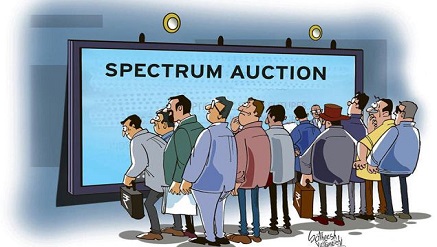
Spectrums are typically sold through an open auction system in order to efficiently allocate these scarce resources to interested parties and also secure revenue for the government in the process.
This was clearly not the case in the sale of the 700MHz by the NBC to MTN. Why then has this deal not been reversed so that due process can be followed?
The negative impacts of this deal to the telecoms industry cannot be over emphasised. Industry watchers agree that the deal will provide an already dominant operator in the voice market with resources to take over the data market also. “This is anti-competitive and unhealthy for a growing and vibrant industry”, Ekenwa added.
The nation’s nascent telecom industry can only thrive when operators compete for customers through innovative products and services.
Granting one operator access to scarce spectrum such as the 700MHz spectrum band disqualifies other operators from the race even before the kick-off. The NCC in recognition of this fact has historically assigned spectrum to telecommunications operators on a fair and equitable basis.
Spectrum War: Stakeholders Ask NCC to Reverse Sale to MTN
Comms Week24 Feb 20160 Comments
The decision of the National Broadcasting Commission (NBC) to sell the nation’s valued asset to MTN Nigeria has generated negative reactions. For some time now, the nation’s telecom…
C
Published by
Comms Week
Trained and practicing journalist passionate about telecommunications, fintech, cybersecurity, and digital economy reporting.
You May Like

MTN Nigeria Endorses eWorldForum and Book Launch as GSM Revolution Turns 25

MTN Nigeria's ₦1.62 trillion network Investment builds 100 million subscribers using more data than ever

FG Plans Regulation of Internet Access for Nigerians below 16 Years

The Leadership Reset Powering West Africa’s Customer Experience Revolution

Digital Parks, Master Power Plan New Data Centre Facility in Lagos