In spite the Central Bank of Nigeria (CBN) Monetary Policy Committee’s decision on Tuesday to retain the country’s benchmark interest rate at 14 percent, Lukman Otunuga, research analyst at Forex Times (FXTM) has expressed optimism that positive outlook attainable in the economy might lead to reduction of MPC in no distant time.
Lukman who commented to the CBN Committee’s decision to also leave the existing cash reserve ratios for commercial banks at 22.5 percent and the Liquidity Ratio at 30 per cent, said that it did not come as a surprise.
Following the CBN’s Committee decision, Asymmetry Corridor is maintained at +200 and -500 basis point.
This is the fourth time in a row the CBN has decided to leave all rates at the same level.
The CBN’s decision comes weeks after Nigeria’s inflation rate recorded its first reduction in fifteen months.
The inflation rate fell to 17. 78 in February from 18.72 in January.
“On a Headline basis, the Consumer Price Index (CPI) which measures inflation increased by 17.78 percent (year-on-year) albeit at a slower pace in February 2017, 0.94 percent points lower from the rate recorded in January (18.72) percent,” NBS said.
“This represents the first time in 15 months that the headline CPI has declined on year on year basis representing the effects of slower rises in already high food and non food prices and favourable base effects over 2016 prices.”
MPC said inflation was down, year-on-year, but the food index rose in February from figures recorded in January, mounting pressure on consumers.
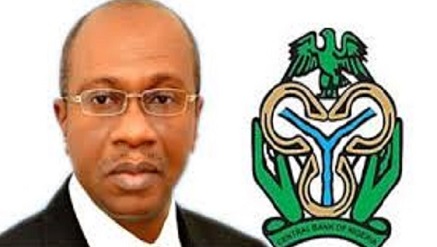
Godwin Emefiele, CBN Governor, however advised Government to step up efforts to implement the Recovery and Growth plan
The document is a medium term plan aimed at revamping the economy between 2017 and 2020.
“The Plan outlines bold new initiatives such as ramping up oil production to 2.5mbpd by 2020, privatizing selected public enterprises/ assets, and revamping local refineries to reduce petroleum product imports by 60 percent by 2018.” The document read
“Other initiatives include environmental restoration projects in the Niger Delta, which demonstrate the Federal Government’s determination to bring environment sustainability to the forefront of its policies.
“As part of this Plan, oil revenues will be used to develop and diversify the economy, not just sustain consumption as was done in the past.
In his comment, Lukman said, “The fact that the Central Bank of Nigeria has decided to keep monetary policy unchanged should be no surprise especially when factoring how the nation is in the process of a critical structural transformation.
“Although the lingering fears decelerating economic growth and concerns over surging prices have partially attributed to the Central Bank's passive stance, the overall sentiment towards the nation continues to display early signs of improvement. Some optimism exists over the nation’s recovery, with Nigeria’s inflation declining for the first time in 15 months in February and the noticeable increase in Dollar sales for importers bolstering the Naira on the black market exchange. If economic data continues to follow a positive path in the longer term and inflation cools then there is a possibility of the Central Bank cutting interest rates to stimulate growth.
“On the foreign exchange front, the Naira was boosted on the black market this week after the Central Bank of Nigeria offered another $180 million to meet bids for forwards.
“While the repeated injections of Dollars in the foreign exchange may buoy the Naira, questions may be raised over the sustainability of this method.
“With the multiple exchanges still a cause for concern that the needs to be dealt with, expectations remain elevated over the CBN taking further steps to fully bridge the gap, ultimately creating one equilibrium currency exchange”.
There’re Signs CBN May Cut Monetary Policy Rates Soon- Lukman
Comms Week22 Mar 20170 Comments
In spite the Central Bank of Nigeria (CBN) Monetary Policy Committee’s decision on Tuesday to retain the country’s benchmark interest rate at 14 percent, Lukman Otunuga, research analyst at Forex…
C
Published by
Comms Week
Trained and practicing journalist passionate about telecommunications, fintech, cybersecurity, and digital economy reporting.
You May Like

PwC Nigeria Points at Ambiguities in Virtual Assets Tax Rules
SEC Orders Capital Market Operators to Cut Banking, Business Ties with Iran, DPRK

Cyberthreat: New Malware, Turns Phones into Tools for Card Fraud- Report

SEC Clears Blockchain for Accelerated Regulatory Incubation Programme

Leadway Unveils Multi-generational Insurance Plan for Nigerian Families