International Monetary Fund (IMF) has projected that tokenization and blockchain technology will fundamentally transform global financial market infrastructure (FMI), but insisted that regulated financial institutions will remain indispensable despite increasing automation of financial transactions.

The position is contained in a new IMF working paper titled “The Evolution of Financial Market Infrastructures in a Tokenized Economy: Exploring Blockchain Implementation Options for Issuance, Central Clearing, Settlement, and Reporting,” prepared by Yaiza Cabedo, Tommaso Mancini-Griffoli, Fabian Schär and Nicolas Zhang.
According to the report, tokenization represents the most significant technological advancement in financial market infrastructure since the transition from paper-based securities to electronic records, with the potential to streamline trading, settlement and post-trade operations across global financial markets.
However, the IMF cautioned that while blockchain technology and smart contracts can automate several operational processes, they cannot replace the governance, legal accountability and risk management functions performed by regulated financial institutions.
“Tokenization has the potential to reshape Financial Market Infrastructures more profoundly than any technological shift since securities dematerialization,” the report stated.
The IMF explained that distributed ledger technology (DLT) and programmable smart contracts can automate critical market activities, including record-keeping, transaction reconciliation, delivery-versus-payment settlements and collateral management, thereby reducing operational costs, settlement risks and processing delays.
While acknowledging the efficiency gains associated with tokenization, the IMF warned that the technology introduces new risks that policymakers and regulators must address.
Among the challenges identified are vulnerabilities in smart contracts, governance concentration within blockchain networks, reliance on external data providers known as “oracles,” privacy concerns, cybersecurity threats and fragmentation across different blockchain ecosystems.
Financial technology experts say the IMF’s position reflects growing consensus among regulators that blockchain should be viewed as an enabler rather than a replacement for traditional financial institutions.
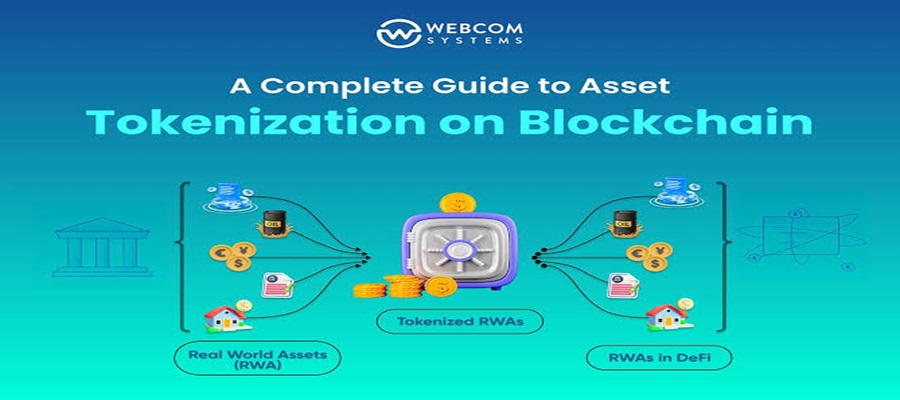
Tokenization is the process of converting sensitive information or physical assets into secure, randomized digital identifiers called tokens.
On the other hand, Blockchain is a decentralized, distributed digital ledger that securely stores data across a network of computers.
Instead of relying on a central authority like a bank, network participants use consensus mechanisms to verify transactions.
Data is grouped into cryptographically secured "blocks" and chronologically linked into an unalterable chain