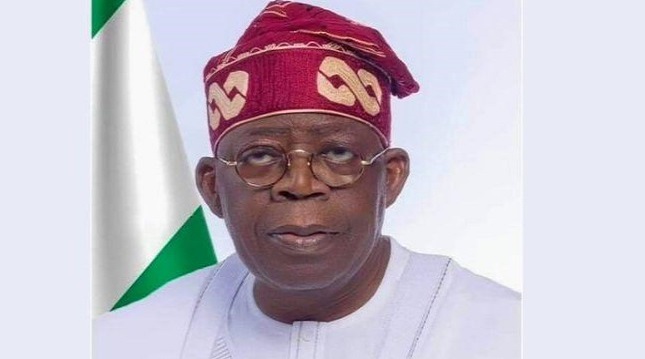
Prof. Charles Soludo, Governor of the Central Bank of Nigeria (CBN) last week told a charged senate session that the recent devaluation of naira was a deliberate policy of the nation’s apex bank to further shield the economy from the financial crisis and that there was no need for panic.
Soludo said that CBN would only insist on stable exchange rate and not fixed exchange rate as most would want.
Soludo, s appearance before a charged senate followed a motion by Ike Ekweremadu, the deputy senate president and 23 others drawing the attention of the senate to a continued decline in the value of naira
The CBN boss was summoned alongside other members of the economic team including Dr Samsudeen Usman, the finance minister to brief the senate on the sad trend
Senate in a dramatic twist refused to take on the finance minister who was the leader of the team and instead asked the team to go after over two hours briefing by Soludo.
It would be recalled that senate had recently asked the finance minister to apologize to it over his recent claim that the delay in the passage of the 2008 budget by National Assembly was responsible for the poor implementation of the estimate
But Ayogu Ezeh , spokesman of the senate said that the senate decided to take on only Soludo because of the subject matter which is crash of the naira . Soludo at the briefing said there was no cause for alarm insisting that the country has not been hit by the financial crisis even as he admitted that the economy could be affected by the crash in the price of crude oil at the global market.
Again he said that the weak naira or exchange does not suggest weak government or weak economy
Responding to questions yesterday on the naira drop Soludo said ‘I want to submit that this was carefully thought through and deliberately implemented in order to ensure that you maintain an internal and external balance for the economy. The economic of exchange rate is such that in a world where you face any fracture on your balance of payment, especially thought he external sector, especially since we experience much of the later part of this year, declining oil prices which account for 95 percent of our foreign exchange.
Every country that experiences that, you have two options: you either allow the prices to adjust by way of exchange rate or quantities would adjust. The quantity that will adjust would either mean that you cut down on domestic consumption, domestic investment and government spending in order to retain pressure on the external sector or you allow the price to do the readjusting. Generally, the exchange rate responds to several factors. Currently we operate a flexible exchange rate regime as most economies of the world. This actually determines by the demand and supply in the market. If you have an increasing supply of foreign exchange, the exchange rate appreciates. If there is a declining supply and the demand is still up there or rising, you have depreciation. There quite a number of factors that could lead to the demand in foreign exchange, including the liquidity condition in the economy induce by money supply, government spending the net capital flows, the level of their foreign reserves and the rates at which it grows, domestic productivities and that will actually increase your exports and import. The global shock that we have experienced like we did mention in our last presentation before this House, the major channel of effect on Nigeria would be the declining oil price and therefore what could put pressure on the foreign reserve and the exchange rate and if care is not taking, it could go via the fiscal sector down to the financial sector if not managed. But we hope that that we not happen. Look around the world today, because of our declining commodity prices, declining trade, and therefore declining foreign exchange earning by most stable country in the world. Whether or not they are experiencing financial crisis, there are many countries in the world that do not have financial crisis and are not experiencing financial crisis including Nigeria . However, these countries as well are experiencing declining commodity prices and therefore declining export earning. Therefore their earnings of foreign exchange declining. In almost all of these countries today, with little or no exception, the exchange rate under a flexible exchange rate regime is the variables that do the adjustment. I have with me here a table of countries, even here in Africa, with the largest level of reserves such as Algeria , Algeria has the largest level of reserves in Africa . As 2007 it had about 110 as at September this year it has 130 billion dollars but its exchange rate has also depreciated and you take them all from the emerging market, most of them whether it is Malaysia, Thailand or Brazil, India Russia, Indonesia, Philippines, South Africa all down the line with even higher level of diversify export structure, most of these countries are not having any financial crisis.. But it is simply that the global trading regime has altered and therefore the variables that you allow to adjust is the exchange rate and Nigeria happen to be one of such countries. Nigeria is not having a financial crisis but the global financial crisis impact on the Nigeria economy through the declining oil and therefore the declining squeeze the reserves. There is as we operate a flexible exchange rate like I said, that is the variable that is expected to do the adjustment. If you recalled Mr. President, Distinguish Senators, this is not the first time that Nigeria is experiencing the most significant shock occurred late 1981 through early 1982 and the differences between then and now interms of the economy is about three four key areas: the first is that then we had high external debt relative to GDP, relative to government expenditure.. Now we don’t have it. Then we had fragile financial banking system that most of the banks owned by the government lack depth, just too fragile to take up the flak between then and now. Today we have a stronger banking sector that grant credit, the total credit. The total credit granted as at the end of September to the private sector was indeed larger than the Federal government expenditure.
Soludo Explains Reasons behind Naira Crash
Comms Week22 Dec 20080 Comments
Prof. Charles Soludo, Governor of the Central Bank of Nigeria (CBN) last week told a charged senate session that the recent devaluation of naira was a deliberate policy of the nation’s apex…
C
Published by
Comms Week
Trained and practicing journalist passionate about telecommunications, fintech, cybersecurity, and digital economy reporting.
You May Like

U. S. Mission Nigeria Celebrates Azih, Nigerian for Fintech Innovation

Autobrake Failure Contributed to Enugu Air’s Benin Runway Overrun - NSIB

NLNG, NCDMB Boost Engineering Research with Innovation Centre

NITDA Seals Strategic Deals with Goose FL and Fireflies AI to Power $1 Trillion Digital Economy Vision

Anambra Seeks Digital Inclusion in Rural Communities