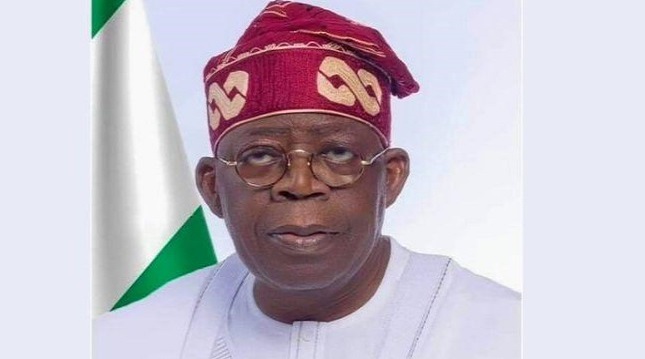
Eugene Nweke, is the new national president of National Association of Government Approved Freight Forwarders (Nagaff). A product Nagaff Academy with an advance diploma in international freight forwarding, Nweke, started his freight forwarding career in 1989 with Greenlight Limited and has been a member of the association from its inception in 1999. The new Nagaff boss in this interview with nkechi david –iwuchukwu, talked about the freight forwarding industry and ICT.
Nagaff
Nagaff is a professional association that took its root from freight forwarding. It came as a child of necessity, to change the perception of the general public on the activities and practices (services) of a freight forwarder. Before now there was an old nomenclature referred to as clearing and forwarding, which some members of the public believe is synonymous to 419, there by discrediting the noble profession of freight forwarding which is a global profession.
As such Nagaff carried out a vision with a mission statement to usher in a sustainable freight forwarding practice in Nigeria by institutionalizing ethics, code of professional conduct and respect to rule of law. In addition, to give a direction to a better way of settling trade disputes through dialogue, consultation, and communication, as opposed to confrontation, antagonism, strike actions and so on.
To achieve, we needed a pro-active public advocacy and that has been our tradition. This is what we have been doing for the past 10 years and we will continue to intensify our public advocacy.
Area of Courier Services
Freight forwarding covers so many areas, that is why one of our books published asked a question: A freight forwarder, what does he do?
International Federation of Freight Forwarders Association (Fiata) adopted a definition for freight forwarding and logistics services as : services of any kind relating to the carriage performed by single mode or multi-modal transport means ( consolidation, storage, handling, packing or distribution) of goods, as well as ancillary and advisory services, in connection, including but not limited to customs and fiscal matters, declaring the goods for official purposes, procuring insurance of goods and correcting or procuring payment or documents relating to the goods. Freight forwarding services also includes logistical services with modern information and communication technology (ICT) in connection with the carriage, handling or storage of the goods referred to a de facto total supply chain management. These services can be tailored to meet the flexible application of the services provided. Therefore, a freight forwarder can be defined as the party who ensures that international traded goods move freely from point of origin to point of destination to arrive; (i) at the right place (ii) at the right time (iii) in good condition (iv) at the most economic cost. If you look at this definition, you now see that a freight forwarder is a logistician, which means he maintains a close cooperation with other actors within the maritime chain, including transporter, negotiating freight rate, comparing cost, moving cargo along different routes, observing different modes, designing logistic infrastructure that provide the best compromise between cost, speed and reliability. With this, you see that a freight forwarder is a logistic officer and one adhering to and ensuring statutory compliance. A freight forwarder therefore carries out an aspect that is gratifying in the facilitation of trade through consultancy and networking. In summary the freight forwarding family comprises the following; packaging and warehousing firms, custom licensed agents, courier companies, global logistics and air freight companies, cargo brokers and consolidators and multimodal transport companies.
Changing Roles of Freight Forwarding
The traditional freight forwarding functions are divided into (i) documentation (ii) planning and costing routes (iii) booking and coordinating freight, arranging and ancillary services such as; warehousing and packing, consolidation, paying charges and dues to carriers, ports, customs etc (iv) rendering advices to shippers and providing information to help them prepare quotation, these are the activities that makes a freight forwarder to be portrayed as agent to the shipper.
Scope in Terms of Spread
Nagaff is in three zones of the federation; South- East zone, comprising; Onne, Port Harcourt area 1, Airport, Calabar and Warri. Northern zone, which comprises; Kano, Abuja and Kaduna-Katsina. Finally, the Western zone, comprising; Murtala Mohammed airport, Apapa port, Tincan Island port, Seme, Idiroko, Ikorodu, KLT, Port Terminal Management Limited (PTML), and Federal Operation Unit (FOU).
Major Focus as New Nagaff President
From all that I have said, you can see that freight forwarding is a gamut of activities, therefore in sustaining our passion at ushering in freight forwarding practice in Nigeria, the area of training and retraining of members in accordance with the Council for Regulation of Freight Forwarding in Nigeria (CRFFN) act number 16, 2007, is a primary area of focus in this administration, because there is an urgent need for skill acquisition and capacity building. Secondly, I will look at the area of intensifying on public advocacy, because the old orders, practices and procedure are still living with us. Finally, I will also look out to advise government on the consequence of inimical trade policies where and when the need arises.
Challenges Faced
Administering an association like Nagaff, which is a non-profit making organization, yet committed to public advocacy, sustains itself through membership subscription. In this wise, the obligation of making members to be loyal and committed requires extra effort.
IT Impact on Service Delivery
Obviously, before now the World Trade Organisation (WTO) / World Custom Organisation (WCO), has been at the forefront of championing IT driven cargo clearance procedures and transactions, which culminated into simplification, harmonization of custom tariffs and clearance procedures with emphasis placed on elimination of cumbersome procedure and bottleneck in cargo clearance processes. Therefore, in pursuit of globalization and in compliance to IT driven trade transaction and facilitation the WTO is promoting a paperless shipping and trade environment. IT has also encouraged an “increased cargo through-puts “(influx of cargo) and enhanced “turn around time of vessel “(discharging time for ship).
ICT Growth
One important thing that has happened has to do with exchange of expertise between Nigeria and other nations, talking about globalization. And since Nigeria can not be isolated from the world, then obviously looking at our population, human resources and natural resources, Nigeria has between 1999 following the introduction of GSM and in compliance to Y2K (computerization), it is remarkable to note that Nigeria has been ICT compliance for over 20 years. Therefore, the growth of ICT in Nigeria is at a steady increase but there is still room for improvement, especially within our educational sector and some aspect of government dealings, because ICT has a place in promoting transparency.