MTN has disclosed that since Nigeria’s telecom revolution started, about 25 years now, it has paid over N7 trillion in taxes, underscoring not only its immense contribution to the country’s fiscal strength but also its role as a cornerstone of Nigeria’s economic development.
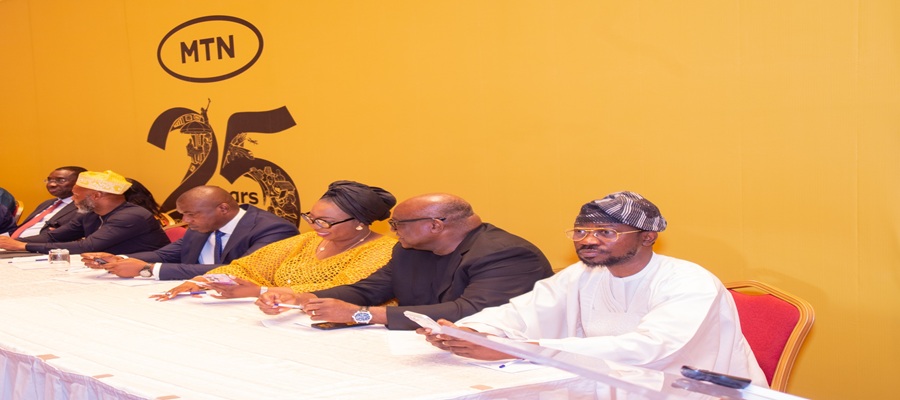
Modupe Kadiri, chief financial officer, MTN Nigeria, disclosed this in Lagos at the Nigeria-South Africa Chamber of Commerce August 2026 Breakfast Forum themed: ‘Building Local Content Together 25 Years of Shared Growth’.
Kadiri, while emphasising the importance of local content development, which reflects a forward-looking strategy aimed at empowering Nigerian talents and businesses by prioritising indigenous participation in the telco operations, disclosed that MTN spent over N2.7 trillion in 2025, with 62 per cent of its procurement expenditure directed to local suppliers, up from the 9.6 per cent recorded in 2024.
Kadiri, said the firm has equally invested over $3 billion in digital infrastructure across the country.
The CFO said the figures represented different aspects of the company’s contribution to the economy, ranging from taxation to employment, infrastructure and enterprise developments, and Nigerian ownership.
The CFO said: “When companies pay taxes, national institutions are supported; when infrastructure is built, economic capacity expands; when Nigerians lead businesses, professional capacity grows and when Nigerians own shares, participation in wealth creation increases.”
Kadiri noted that the increase from 9.6 per cent to 62 per cent represented significant progress, noting that the remaining 38 per cent of procurement spending presents a huge opportunity to strengthen local capacity, specifically in technology-intensive areas.
The CFO stated that most of MTN’s technology requirements are now fulfilled by local suppliers, unlike in the early years of the company’s operations when such requirements were largely handled by foreign contractors.
According to him, the first phase of telecommunications local content was largely driven by network rollout, site acquisition, distribution, civil works, marketing, support, logistics and operational services.
The CFO argued that the rise in local procurement should be measured by the extent to which such spending builds sustainable Nigerian businesses, skills, technology and employment and not simply by the amount of money retained in the country.
He explained that MTN Nigeria’s increasing reliance on local suppliers had created commercial demand that encouraged indigenous businesses to improve quality, enhance governance, employ more Nigerians and invest in equipment, technology and specialised skills.
“The real measure is not the invoice. The real measure is actually the capability that remains in the economy after the investment is made,” he said.
Kadiri stressed some categories remain difficult to source locally at scale because of the highly technology-dependent nature of the telecommunications industry.
He identified telecommunications equipment, devices, software and specialised technologies as areas where Nigeria still needs to develop greater domestic manufacturing and technical capacity.