Connect with us

General News

Alison-Madueke Elected First Female President of OPEC

Published

on

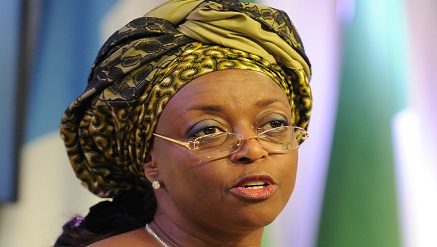
Mrs Dieziani Alison-Madueke, petroleum resourses minister
Kindly share this post

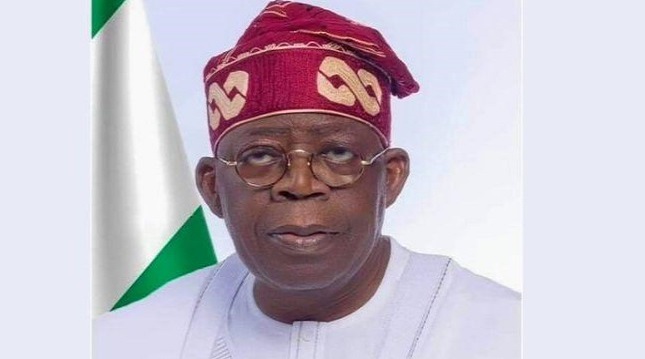
Mrs. Diezani Alison-Madueke, Nigeria’s minister of petroleum, has just been elected the first female president of OPEC (Organisation of Petroleum Exporting Countries). She is the replacement for the former president, Abdourhman Atahar Al-Ahirish who hails from Libya.

She is expected to hold the post for one year and to resume the position immediately. She was elected today at the 166th General Meeting of the organization in Vienna, Austria.

She was the first female to take on the position of Minister of Petroleum resources in Nigeria and also elected the first female president of OPEC.

Diezani (born 6 December 1960) became Nigeria’s minister of transportation on 26 July 2007. She was moved to Mines and Steel Development in 2008, and in April 2010 was appointed Minister of Petroleum Resources.

She was born in Port Harcourt, Rivers State, Nigeria. Her father was Chief Frederick Abiye Agama. She studied architecture in England and then at Howard University in the United States. She graduated from Howard with a Bachelor’s degree on 8 December 1992.

She returned to Nigeria and joined Shell Petroleum Development Corporation that year. In 2002, she attended Cambridge University for her MBA. In April 2006, Shell appointed her its first female Executive Director in Nigeria.

Since 1999 she has been married to Admiral Allison Madueke (retired), one-time Chief of Naval Staff who was at various times governor of Imo and Anambra State.

In September 2011 Alison-Madueke was awarded an honorary Doctorate in Management Sciences by the Nigerian Defence Academy, Kaduna.

Diezani Alison-Madueke has held three significant positions in the Nigerian federal government. She was appointed Transport Minister in July 2007. On 23 December 2008, she was named as Minister of Mines and Steel Development.

After Vice-President Goodluck Jonathan became acting President in February 2010, he dissolved the cabinet on 17 March 2010, and swore in a new cabinet on 6 April 2010 with Alison-Madueke as Minister for Petroleum Resources. As Minister of Petroleum Resources, Alison-Madueke has pledged to transform Nigeria’s oil and gas industry so that all Nigerians benefit.

In April 2010, President Goodluck Jonathan signed the Nigerian Content Act, which aims to increase the percentage of petroleum industry contracts that are awarded to indigenous Nigerian businesses – a reaction to the domination of the sector by foreign operators.

One of the most controversial policies introduced under Alison-Madueke is the government’s plan to remove state subsidies on fuel prices. Alison-Madueke has supported the discontinuation of the subsidy on the grounds that it “poses a huge financial burden on the government, disproportionately benefits the wealthy, [and] encourages inefficiency, corruption and diversion of scarce public resources away from investment in critical infrastructure.”

Alison-Madueke is the first woman to hold the position of Minister of Petroleum Resources in Nigeria, and in October 2010 she became the first woman to head a country delegation at the annual OPEC conference. She was also the first female Minister of Transportation, and the first woman to be appointed to the board of Shell Petroleum Development Company Nigeria.[10] On the 27th of November, 2014 she got elected as the first female President of OPEC.

On working in male-dominated sectors, Alison-Madueke said she warned the young women she mentored while at Shell to “change their mode of thinking.”

In June 2008 Alison-Madueke was subject to a Senate probe after it emerged that as Transport Minister she had paid 30.9 billion naira ($263 million) to contractors between 26 and 31 December 2007. She is said to be worth over a billion naira . However, she has never been charged or tried for these allegations and has strongly denied any wrongdoing.

In September 2008 there was an unsuccessful attempt to kidnap Alison-Madueke at her house in Abuja.

In October 2009, the Senate of Nigeria indicted her and recommended prosecution for the alleged transfer of 1.2 billion naira into the private account of a toll company without due process and in breach of concession agreement. However, the allegations have never been taken to law, and the Minister maintains her innocence.


Kindly share this post

Nigeria CommunicationsWeek believes that technology makes life more exciting and helps improve the lives of people around Nigeria and indeed the world. So since 2007, we have devoted our energy to independent reportage of technology and how they affect lives.

General News

Ecobank Guarantees Seamless Digital Banking Services Throughout the Christmas and Year-End Period

Published

on

Kindly share this post

Ecobank Nigeria, a member of Africa’s leading pan-African banking group, has assured customers of uninterrupted access to banking services throughout the year-end holiday period via its secure and robust digital platforms. The Bank also urged customers to remain vigilant against fraud and scams during the festive season.

Ecobank Guarantees Seamless Digital Banking Services Throughout the Christmas and Year-End Period

Ecobank Bank

Speaking on the development, Victor Yalokwu, Head, Products & Analytics, Consumer & Commercial Banking, Ecobank Nigeria, said the Bank’s digital channels – including the Ecobank Mobile App, Ecobank Business App, USSD *326#, Ecobank Online, OmniPlus, Omnilite, EcobankPay, RapidTransfer, Ecobank Cards, ATMs, PoS terminals, and over 35,000 Ecobank Xpress Point (Agent Banking) locations nationwide – will remain fully available to support customers throughout the yuletide and year-end holiday period.

He noted that customers will continue to enjoy a wide range of services during the period, including local and international funds transfers, bill payments and airtime top-ups, merchant payments, balance inquiries and account statements, as well as cardless cash withdrawals via ATMs.

According to Yalokwu, “Ecobank encourages customers to leverage these digital solutions for safe, fast, and efficient banking, especially during the festive season when convenience and reliability are essential.

“While physical branch operations may be subject to adjusted working hours in line with public holidays, customers can be assured that Ecobank’s digital platforms are designed to deliver uninterrupted service and enhanced security at all times.

“Ecobank remains committed to providing innovative financial solutions and exceptional customer service, and we wish all our customers a joyful festive season and a prosperous New Year.”

Yalokwu also cautioned customers to remain vigilant against fraudsters and scammers during the period. “Before you wrap up the year, tighten your security. December brings online sales, travel, and year-end distractions—this is exactly when scammers are most active. From fake festive deals to cloned merchant sites and suspicious messages, staying vigilant helps keep your money safe.”

He advised customers to shop only on trusted websites, never share their PINs, passwords, or one-time passwords (OTPs), avoid banking on public Wi-Fi networks, be cautious of urgent or emotionally charged messages, and regularly review their account activity.


Kindly share this post
Continue Reading

General News

Woherem Proposes Pragmatic Roadmap to End Terrorism and Banditry in Nigeria

Published

on

Kindly share this post

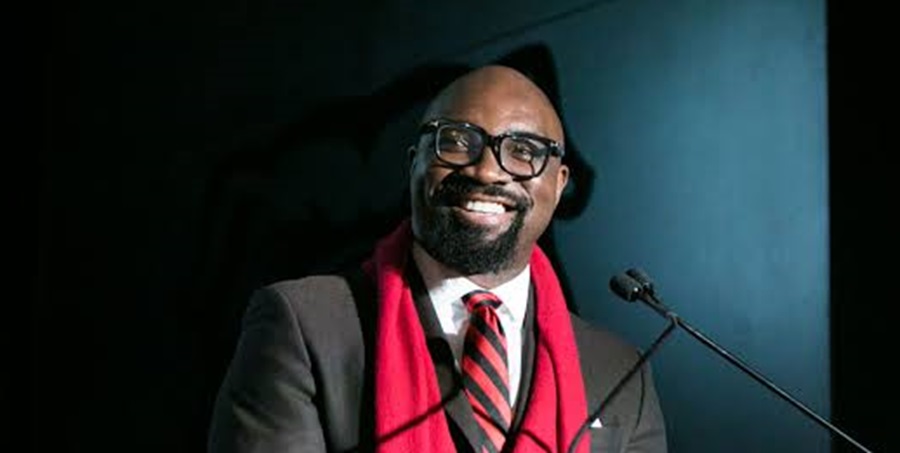
Dr. Evans Woherem, an award-winning African technology researcher, analyst, and writer, has proposed a comprehensive and implementable strategy to end terrorism, banditry, and criminal violence in Nigeria, warning that the country’s prolonged insecurity has reached a critical point that demands urgent, coordinated action.

Titled “A Comprehensive Strategy for Ending Terrorism, Banditry, and Criminal Violence in Nigeria: A Pragmatic, Multi-Layered, and Implementable Framework,” the paper presents a holistic roadmap designed to reverse more than a decade of escalating violence that has claimed thousands of lives, displaced communities, weakened local economies, and eroded public trust in governance.

According to him, insecurity has become deeply entrenched in everyday life across the country. “Terrorism, banditry, and criminal violence have become so commonplace that they now dominate daily conversations among Nigerians,” Dr. Woherem noted, adding that while the crisis is most acute in the North-East, North-West, and North-Central regions, “its effects are now being felt even in the southern parts of the country.”

Citing the 2025 Global Terrorism Index, which ranks Nigeria sixth globally in terms of terrorism impact, Dr. Woherem described the ranking as “a sobering statistical confirmation that terrorism still weighs heavily on the Nigerian state.”

The paper traces the roots of the crisis to the emergence of Boko Haram in 2009 and the subsequent rise of splinter groups such as ISWAP. It recalls high-profile incidents including the 2014 abduction of schoolgirls in Chibok, the Dapchi and Kankara kidnappings, and a series of mass abductions and attacks on schools and places of worship recorded in 2025.

Dr. Woherem observed that banditry, largely driven by ransom payments, “has spread across the entire nation, creating fear, weakening productivity, and pushing millions of households deeper into poverty.”

While acknowledging the role of military action, the author cautioned against relying on force alone. “Nigeria cannot defeat insurgency and violent crime through arms and ammunition alone,” he said. “Any sustainable solution must confront the internal conditions that allow insecurity to thrive.”

Among the key drivers identified in the paper by Dr. Woherem, are porous borders, arms proliferation, youth unemployment, economic stagnation, and persistent conflicts over land and resources, challenges Dr. Woherem stressed can be addressed through “a deliberate, intelligence-led, and whole-of-society approach.”

At the heart of the proposed framework, Woherem noted, is a call for intelligence-driven security operations, including the establishment of a National Counter-Insurgency and Intelligence Fusion Centre. “Security operations must be guided by accurate, actionable intelligence rather than fear-led mass actions that often harm civilians and undermine public trust,” he stated.

The paper also advocates comprehensive policing reforms, including the creation of constitutionally backed state police systems supported by a more specialized federal police structure. “Nigeria’s over-centralised policing model is structurally incapable of effectively addressing widespread criminality across such a vast and diverse country.”

Recognising the realities at the grassroots, Woherem calls for the formal regulation of community-based security groups, and noted that “ignoring vigilante groups is dangerous, and banning them outright is unrealistic,” but stressed that their roles must be clearly defined, regulated, and subject to strict oversight.

On border security, particularly in the Lake Chad Basin, the author warned that instability in neighbouring countries continues to fuel Nigeria’s insecurity. “No permanent solution is possible without deep regional cooperation,” he said, advocating an Integrated Border Management system supported by joint operations with neighbouring states.

The paper places strong emphasis on prevention through economic inclusion, youth employment, and skills development. “Jobs and income remain the most powerful tools for preventing recruitment into violent groups,” Dr. Woherem asserted, adding that immediate livelihood opportunities significantly weaken the appeal of extremist narratives.

He also called for structured deradicalisation and reintegration programmes, noting that “a humane, community-accepted process is essential for breaking cycles of violence and preventing relapse into extremism.”

Dr. Woherem further emphasised the need for governance reforms and accountability in the security sector. “Without transparency, oversight, and institutional integrity, even the best security strategies will fail,” he warned.

The white paper outlines a phased implementation plan from 2025 to 2030, beginning with intelligence fusion, pilot state police initiatives, community security registration, drone surveillance, and financial crackdowns on terror networks, before expanding into nationwide reforms and long-term consolidation.

Concluding, Dr. Woherem expressed cautious optimism about Nigeria’s future. “Nigeria can overcome this prolonged phase of insecurity,” he said, “but only through political will, coordinated institutions, and the active participation of society.”

He added that the proposed framework offers “a realistic pathway to restoring security, rebuilding public trust, and unlocking Nigeria’s vast human and economic potential.”


Kindly share this post
Continue Reading

General News

REDAN Seals Landmark MoU, Validates Sytemap’s Real Estate Infrastructure

Published

on

Kindly share this post

In a market where less than 3% of land is formally registered and property fraud remains systemic, infrastructure, not apps, is becoming the defining battleground for real estate innovation.

REDAN Seals Landmark MoU, Validates Sytemap’s Real Estate Infrastructure

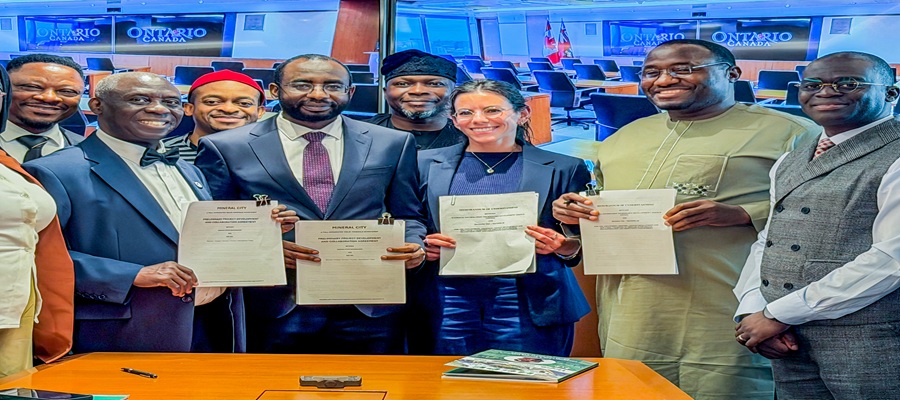
L-R: Ndifreke Ikokpu, COO, Sytemap, HRM Oba Akintoye Adeoye, President REDAN & Cholatte Odunlade-Akeji, Director, RightHome

That reality came into sharp focus on December 18, 2025, as the Real Estate Developers Association of Nigeria (REDAN) signed a Memorandum of Understanding (MoU) with Sytemap Technologies Limited, signaling a major industry endorsement of Sytemap’s land and real estate transaction infrastructure.

The partnership centers on RightHOME, a jointly developed digital real estate platform powered by Sytemap’s secure cloud infrastructure, mapping systems, transaction monitoring, and fraud-prevention architecture, with REDAN driving ecosystem adoption through its nationwide developer network.

Nigeria’s real estate sector processes transactions worth trillions of naira annually, yet remains heavily manual, fragmented, and vulnerable to disputes. Industry data suggests unresolved title issues alone lock up ₦36 trillion in dead capital, limiting access to finance and slowing development.

“This MoU represents a shift from fragmented digitization to coordinated infrastructure,” said Nnamdi Uba, CEO at Sytemap. “When the industry body itself aligns around shared standards, verification, and technology, innovation can finally scale responsibly.”

Under the agreement:

·       REDAN will onboard registered developers and promote adoption of the platform as a trusted digital channel.

·       Sytemap will deliver secure hosting, real-time monitoring, escrow-aligned transaction workflows, and compliance with Nigeria’s data protection regulations.

·       Joint standards will be developed for digital verification, transparency, and asset mapping.

From a technology perspective, the partnership reflects a growing consensus that solving African real estate challenges requires deep infrastructure, not surface-level marketplaces. Fraud detection, uptime reliability, auditability, and regulatory alignment, areas often overlooked in proptech, are central to Sytemap’s approach.

HRM Oba Akintoye Adeoye, representing REDAN noted, “This collaboration allows developers to operate in a system where trust is embedded, not assumed. That is critical for long-term growth.”

For the broader tech ecosystem, the MoU stands out as a rare example of industry-led validation, where a national association formally aligns with a technology provider to modernize an entire sector.

Ndifreke Ikokpu, COO at Sytemap signed on behalf of Sytemap while Cholatte Odunlade – Akeji, CEO of RightHome signed on behalf of the Special Purpose Vehicle.

As pressure mounts to unlock housing finance, attract institutional capital, and reduce transaction risk, the REDAN–Sytemap partnership positions digital land infrastructure not as an optional upgrade, but as a foundational requirement for the future of real estate in Nigeria.


Kindly share this post
Continue Reading

Trending